
Máy đo công suất đa chức năng có thể đơn giản hóa việc giám sát hệ thống điện và giảm chi phí bảo trì như thế nào?
Electrical monitoring becomes difficult when operators must navigate multiple menu layers using only a few buttons. Complicated settings, limited screen readability, và error-prone configuration can slow commissioning, batch setup, và fault diagnosis. These challenges increase labor costs, delay troubleshooting, và create risks of incorrect measurements. A Multifunction Power Meter with clear data displays, comprehensive measurement capabilities, và user-friendly configuration helps simplify daily operations. Read on to discover how to select the right meter for more efficient và reliable power management.
What is a Multifunction Power Meter?
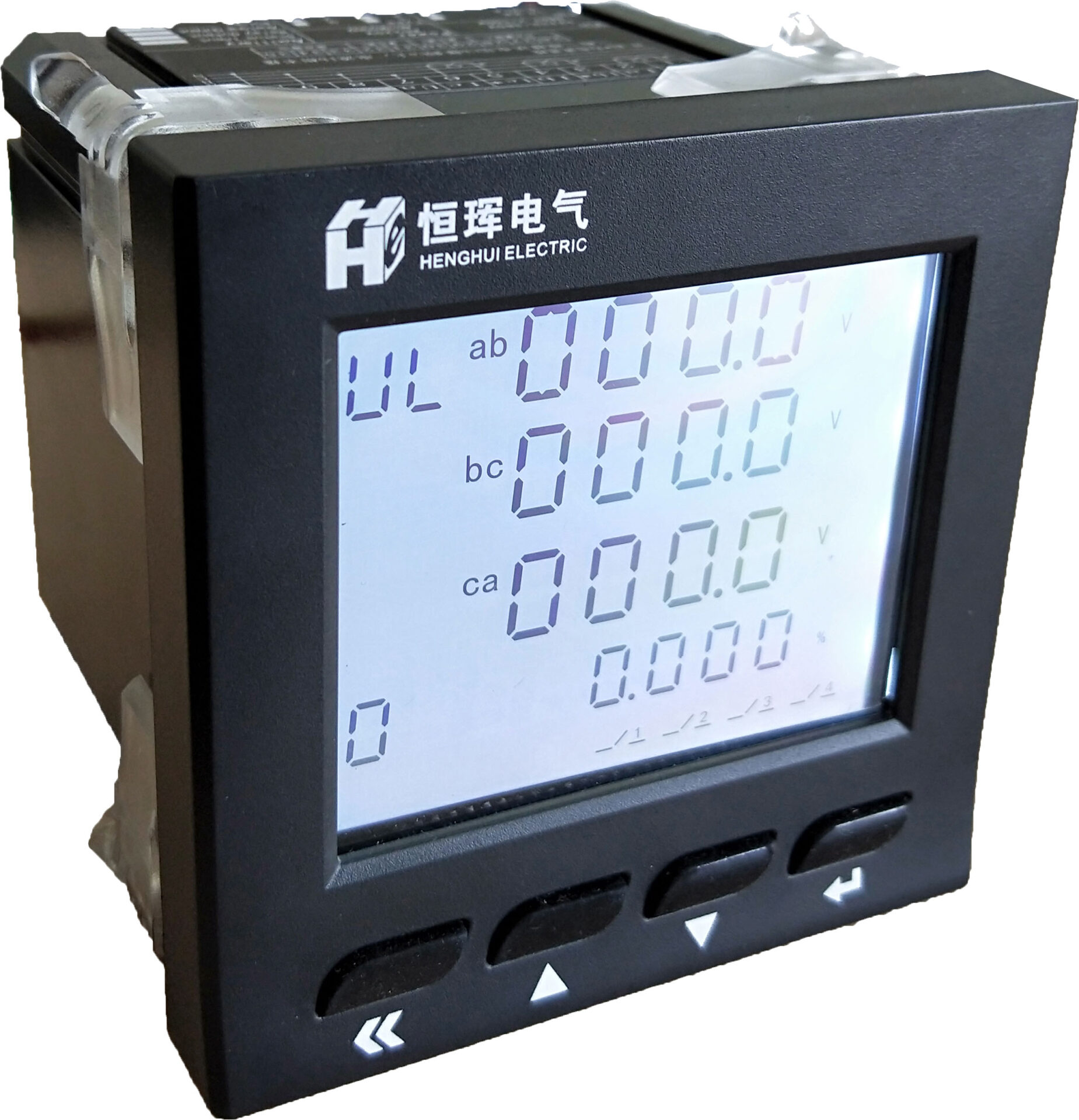
A Multifunction Power Meter is an all-in-one digital device that replaces multiple single-purpose analog or digital gauges to measure, calculate, and log electrical parameters in real time. It can monitor voltage, current, power, energy consumption, power factor, frequency, and other electrical values through a single instrument. Depending on the model, it may also support communication protocols, remote monitoring, alarm functions, and data integration, helping users improve energy management, identify abnormal operating conditions, and simplify electrical system maintenance.
Understanding its measurements, features, và applications will help you choose a meter that fits your project’s technical và operational requirements.
1. What Electrical Parameters Can a Multifunction Power Meter Measure?
The first step in choosing a Multifunction Power Meter is understanding which electrical parameters your system needs to monitor. Instead of installing separate instruments for voltage, current, power, và energy, one digital meter can integrate multiple measurement functions into a compact device.
This approach reduces panel space, simplifies wiring, và gives operators a more complete picture of electrical system performance.
Voltage và Current
Voltage indicates the electrical potential difference between two points, while current measures the flow of electric charge through a circuit. These are fundamental parameters for evaluating the operating conditions of electrical equipment.
Depending on the model và wiring configuration, a multifunction meter can measure:
-
Phase-to-phase voltage in three-phase systems.
-
Phase-to-neutral voltage in suitable four-wire systems.
-
Phase current for individual phases.
-
Neutral current, where supported.
-
Voltage và current imbalance between phases.
Monitoring these values helps operators identify abnormal operating conditions, unbalanced loads, và potential equipment problems.
For larger electrical systems, current transformers (CTs) are commonly used to adapt high primary currents to the meter’s supported input range. Voltage inputs must also match the meter’s rated specifications, with appropriate instrument transformers used where required.
When selecting a meter, buyers should verify its rated input voltage, current input, wiring configuration, measurement accuracy, và compatibility with the existing distribution system.
Active, Reactive, và Apparent Power
Power measurement provides additional information about how electricity is being used.
-
Active power (kW): The power converted into useful work, heat, hoặc other energy forms.
-
Reactive power (kvar): Power associated with the exchange of energy between sources và reactive components such as inductors và capacitors.
-
Apparent power (kVA): The combined effect of active và reactive power, representing the total electrical loading in AC systems.
These measurements are important in factories, commercial buildings, và industrial distribution networks. For example, a facility may have sufficient active power consumption but still experience poor power factor due to reactive loads.
By monitoring these values together, engineers can evaluate load conditions và determine whether power factor correction hoặc other electrical improvements may be necessary.
A multifunction meter can also help assess the loading of transformers, feeders, và distribution panels. However, it does not replace correctly rated protective devices hoặc a dedicated power quality analyzer when advanced diagnostics are required.
Energy Consumption và Power Factor
Active energy (kWh) records accumulated electricity consumption over time. This information supports energy accounting, cost allocation, consumption comparisons, và efficiency improvement projects.
Some models also measure reactive energy, apparent energy, và maximum demand. These functions are particularly useful for facilities that need to understand not only how much electricity they consume but also when và how their demand changes.
Power factor indicates how effectively electrical power is being used. A low power factor can increase current for a given level of active power, potentially contributing to higher losses và reduced available system capacity.
A meter that monitors power factor cùng với kW, kvar, và kVA helps maintenance teams identify changing load conditions và evaluate the performance of compensation equipment.
Frequency và Power Quality Indicators
For AC systems, frequency is another important measurement. Deviations from the expected frequency may indicate abnormal operating conditions hoặc problems within the supply system.
Depending on the model, additional measurements may include:
-
Voltage và current total harmonic distortion (THD).
-
Individual voltage hoặc current harmonics.
-
Voltage và current imbalance.
-
Demand và maximum demand.
-
Minimum và maximum recorded values.
These capabilities help users investigate power quality concerns, particularly in facilities with variable frequency drives, switching power supplies, industrial automation equipment, và other nonlinear loads.
However, not every multifunction meter offers advanced harmonic analysis. Buyers should distinguish between standard electrical measurement và dedicated power quality monitoring before placing an order.
2. Which Key Features Make a Multifunction Power Meter Easier to Operate?
Accurate measurement is essential, but ease of use, configuration, and data accessibility also influence the long-term value of a multifunction meter.
In practical installations, operators may need to configure dozens of devices, commission a new distribution panel, hoặc investigate faults under time pressure. A meter that requires complicated navigation can increase installation time và make routine maintenance more difficult.
Clear Display và Intuitive Navigation
A clear display allows operators to identify important electrical values without spending excessive time navigating menus.
Depending on the product design, useful interface features may include:
-
High-contrast digital displays for improved readability.
-
Clearly organized measurement pages.
-
Simple parameter-setting menus.
-
Status indicators và alarm information.
-
Direct access to frequently used measurements.
These features are especially valuable in electrical rooms where operators must inspect multiple panels quickly.
For buyers managing large projects, the user interface should be considered cùng với technical specifications. A meter that is easy to configure can reduce training requirements và help technicians complete commissioning more consistently.
Flexible Configuration và Batch Commissioning
A multifunction meter may require settings for CT ratios, voltage inputs, wiring modes, communication addresses, baud rates, và alarm thresholds.
When these settings are hidden within multiple menu layers, configuration can become time-consuming. Incorrect values may also lead to misleading readings hoặc communication failures.
A well-designed meter should make essential settings accessible và clearly indicate the selected configuration. Where supported, configuration software hoặc communication-based parameter setting can further simplify commissioning.
For projects with many identical meters, buyers should investigate whether the product supports parameter copying, batch configuration, or remote setup. These functions are model-dependent và should be confirmed before purchase.
Tiêu chuẩn hóa configuration procedures can also help maintenance teams reduce inconsistencies between devices và simplify future replacements.
Giao tiếp và Remote Monitoring
Modern multifunction meters often support communication interfaces that allow electrical data to be transferred to a monitoring platform.
Common options include RS-485 and Modbus RTU. Some models also support Ethernet, Modbus TCP, hoặc other protocols, depending on their design.
With a compatible supervisory control và data acquisition (SCADA) system, building management system, hoặc energy management platform, operators can monitor readings from a central location instead of checking every panel manually.
Remote access can help maintenance teams identify unusual load changes, compare energy consumption, và investigate alarms more efficiently.
Before selecting a meter, buyers should confirm:
-
The supported communication interface và protocol.
-
Giao tiếp parameters và addressing options.
-
Compatibility with the existing monitoring system.
-
The availability of registers và technical documentation.
-
Whether remote configuration is supported.
Communication compatibility matters as much as the presence of a communication port. A device should be evaluated against the actual requirements of the intended system.
Accuracy, Reliability, và Installation Compatibility
Measurement accuracy determines how closely the displayed value represents the actual electrical quantity. Buyers should examine the specified accuracy class for voltage, current, active power, và energy rather than assuming that every measurement has the same accuracy.
Other important considerations include operating temperature, humidity tolerance, electromagnetic compatibility, auxiliary power supply, panel dimensions, và mounting method.
A meter should also be compatible with the system’s nominal voltage, CT secondary rating, và three-phase three-wire hoặc three-phase four-wire configuration.
For industrial projects, checking these details before ordering helps avoid installation modifications và commissioning delays.
3. How Does a Multifunction Power Meter Improve Electrical Monitoring và Maintenance?
Beyond measuring electrical values, a multifunction power meter can help turn raw readings into information that supports operational decisions.
Its practical value depends on the measurement functions available, the quality of the installation, và how the collected data is used.
Real-Time Monitoring và Abnormal Condition Detection
Continuous measurement provides visibility into the operating conditions of feeders, distribution panels, motors, và other electrical loads.
Operators can review voltage, current, power, frequency, và other supported parameters to identify unusual changes. For example, a sudden increase in current may indicate a changing load, an overloaded circuit, hoặc an emerging equipment problem.
A multifunction meter with programmable alarms can notify operators when configured thresholds are exceeded. Communication-enabled models may transmit these events to a supervisory platform.
However, monitoring is not the same as protection. A standard meter should not be treated as a substitute for circuit breakers, protective relays, hoặc dedicated fault-detection equipment.
Instead, it complements those devices by providing measurement data that helps operators understand operating conditions và investigate potential issues.
Energy Management và Cost Control
Electricity consumption is a major operating expense for many industrial và commercial facilities. A multifunction meter can support energy management by recording kWh consumption and, where available, demand và power factor.
Facility managers can use this information to:
-
Compare consumption between production areas.
-
Identify equipment with unusually high energy use.
-
Evaluate energy-saving measures.
-
Track changes in peak demand.
-
Allocate energy costs across departments hoặc tenants.
For example, comparing consumption before và after replacing an inefficient motor can help assess whether the change produced measurable savings, provided operating conditions are considered.
For more comprehensive analysis, readings from multiple meters can be integrated into an energy management system. Historical data can then support trend analysis, reporting, và operational planning.
The meter itself does not automatically reduce energy consumption. The savings come from identifying problems and acting on the information it provides.
Data Logging và Fault Investigation
Some multifunction power meters provide internal data logging, event records, minimum và maximum values, hoặc demand history. Others rely on an external monitoring platform to retain historical measurements.
These records can help technicians investigate intermittent problems that may not be visible during a brief site inspection.
For example, if a machine repeatedly experiences unexpected shutdowns, recorded voltage và current trends may help determine whether the issue coincides with unusual loading hoặc supply conditions.
The depth of investigation depends on the sampling rate, logging interval, available memory, và supported event functions. Standard meters may not capture fast transients hoặc provide the detailed waveform analysis needed for complex power quality investigations.
When evaluating products, buyers should match the recording capability to the actual troubleshooting requirements rather than assuming that every digital meter stores the same level of detail.
Integration with Surge Protection và Other Electrical Equipment
Electrical monitoring is one part of a broader power distribution strategy. A complete installation may also require circuit breakers, protective relays, grounding arrangements, và a Surge Protective Device (SPD).
A Surge Protection Device, also known as a Surge Protector, helps limit transient overvoltages và divert surge current according to its design và installation requirements. SPDs are commonly considered where lightning-related surges hoặc switching transients could threaten electrical equipment.
A multifunction power meter can complement surge protection by monitoring relevant electrical parameters before và after an event, where its measurement capabilities và recording speed permit. It may also help operators review system conditions following an alarm hoặc equipment failure.
However, a standard multifunction meter does not replace an SPD và generally cannot be relied upon to capture every fast surge event. Dedicated surge monitoring hoặc power quality equipment may be needed for detailed analysis.
For procurement teams, the key is to understand how the meter fits into the overall electrical system và which separate devices are required for measurement, protection, và control.
4. Where Are Multifunction Power Meters Commonly Used?
Multifunction power meters are suitable for many installations that require consolidated electrical measurement, energy tracking, hoặc remote monitoring. The required functions vary according to the site’s electrical infrastructure và operating priorities.
Industrial Plants và Manufacturing Facilities
Factories often contain motors, pumps, compressors, production lines, và automation systems with changing electrical loads.
A multifunction power meter installed in a main distribution cabinet hoặc branch panel can help engineers monitor current, voltage, power, và energy consumption. Communication-enabled models can transmit readings to a central monitoring platform.
These measurements support load management, energy allocation, và troubleshooting. They can also help engineers identify changing consumption patterns during different production shifts.
Where nonlinear loads are common, a meter with suitable harmonic measurement capabilities may provide additional insight into power quality.
Commercial Buildings và Office Complexes
Office buildings, shopping centers, hotels, và other commercial properties may need to track electricity consumption across multiple floors, tenants, hoặc equipment rooms.
Multifunction meters can be installed at incoming feeders, distribution boards, HVAC panels, và selected branch circuits.
With appropriate communication và software, building operators can compare consumption between areas, identify abnormal demand, và prepare energy reports.
For projects involving tenant billing hoặc formal energy accounting, buyers should verify the meter’s energy accuracy, applicable certification requirements, và suitability for the intended billing arrangement.
Data Centers và Critical Facilities
Data centers, hospitals, và other critical facilities require close visibility into electrical distribution because unexpected power problems can interrupt important operations.
Multifunction power meters can help monitor feeders, switchboards, và distribution equipment by reporting loading, voltage, power, và energy values.
When integrated with a suitable monitoring system, they can contribute to centralized operational awareness và maintenance planning.
Nevertheless, a multifunction meter alone does not guarantee uninterrupted power. Critical facilities may also require redundant power supplies, protection coordination, UPS systems, detailed power quality monitoring, và other specialized equipment.
The selected meter should meet the project’s accuracy, communication, reliability, và integration requirements.
Renewable Energy và Solar Power Systems
Solar installations combine generation equipment, inverters, transformers, và distribution infrastructure. Monitoring electrical parameters helps operators understand power flows và assess system performance.
Depending on its ratings và installation point, a multifunction meter may measure AC-side voltage, current, active power, power factor, và energy.
Communication-enabled models can transmit readings to an energy monitoring platform for centralized review.
Buyers should confirm whether the meter is intended for AC hoặc DC measurement. A standard AC multifunction meter should not be assumed to measure photovoltaic DC circuits correctly.
The meter must also be selected according to the installation’s voltage, current, wiring configuration, và relevant safety requirements.
Electrical Distribution Panels và Substations
Multifunction meters are frequently used in low-voltage distribution panels và may also be installed in suitable medium-voltage measurement arrangements using compatible instrument transformers.
They provide a consolidated view of electrical operating conditions at incoming feeders, outgoing circuits, và other monitoring points.
In substations, the meter can complement protective relays và control systems by supplying operational measurements. It should not replace dedicated protection và control equipment unless the product is specifically designed và approved for those functions.
For panel builders và electrical contractors, the main advantages include reduced instrument count, simplified panel layout, centralized readings, and easier integration with monitoring systems.
Kết luận
A Multifunction Power Meter combines essential electrical measurements with monitoring và communication capabilities in one device. By selecting the right accuracy, interface, configuration features, và application-specific functions, buyers can simplify commissioning, improve energy visibility, và support more efficient maintenance. Always verify technical specifications và system compatibility before ordering.
 Tiếng Việt
 English (UK)
 Bahasa Indonesia
 Deutsch
 Español
 Français
 Português
 Русский