
Why Does Your Power System Need a Reverse Power Protection Device?
Many conventional Reverse Power Protection Devices fail to meet the demands of modern photovoltaic (PV) power systems. Users often struggle with slow response times, limited compatibility with different PV capacities, complicated communication with substation equipment, and time-consuming on-site parameter configuration. These shortcomings can lead to reverse power flowing into the utility grid, equipment damage, unexpected shutdowns, financial penalties, and even grid safety incidents. Fortunately, an advanced Reverse Power Protection Device with fast response, intelligent communication, flexible configuration, and simple commissioning can eliminate these risks. Continue reading to discover how reverse power protection works and why it has become an essential solution for modern power systems.
Table of Contents
ToggleWhat is a Reverse Power Protection Device?
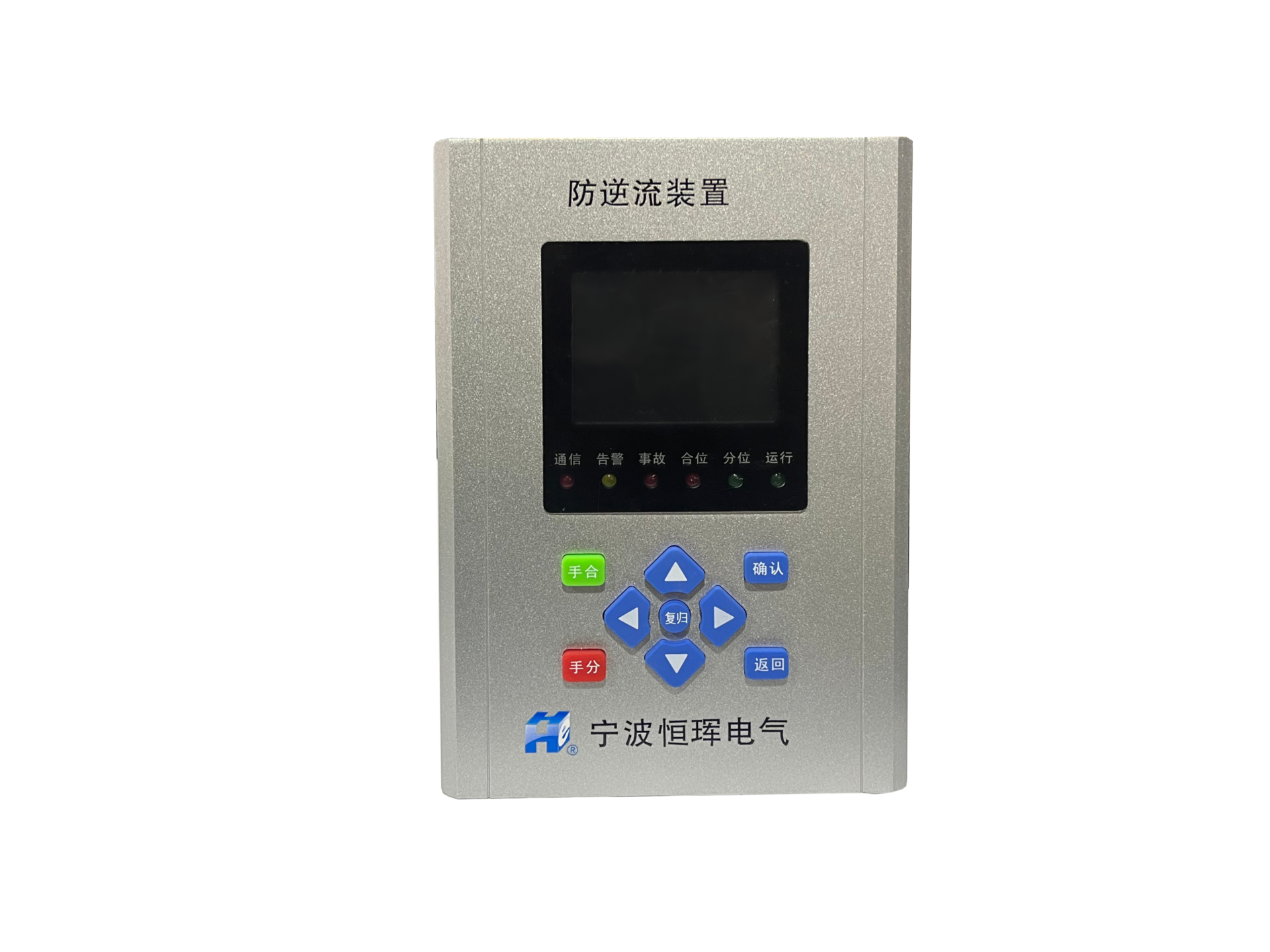
A Reverse Power Protection Device is designed to detect when electrical power flows in the opposite direction from its intended path. Reverse power protection works by detecting when a generator starts absorbing power from the grid instead of supplying it. It continuously monitors power flow direction to ensure the generator is operating correctly. This is achieved using a reverse power relay that supervises the generator in real time. In modern photovoltaic systems, advanced devices also monitor grid export, prevent unwanted backfeed, communicate with inverters and substations, and automatically regulate generation to maintain safe and compliant operation.
Understanding reverse power protection in greater detail will help you select the right solution for your power system.
What is the meaning of reverse power?
Reverse power refers to a condition in which electrical power flows opposite to its intended direction. Under normal operating conditions, generators or photovoltaic systems deliver electricity to connected loads or the utility grid. However, when operating conditions change, electricity may begin flowing backward toward the power source instead of toward the load.
In conventional generator applications, reverse power usually occurs when the prime mover loses mechanical input while the generator remains connected to the electrical network. Instead of producing electricity, the generator starts consuming electrical energy from the grid and effectively operates like a motor. This condition can quickly damage turbines, diesel engines, or other mechanical drive systems if not disconnected promptly.
In photovoltaic applications, reverse power has a different meaning. During periods of low local power consumption and high solar generation, surplus electricity may flow back into the utility grid. While some regions allow grid export, many industrial facilities, commercial buildings, and distributed generation projects require zero export operation. Reverse power flowing into the utility network may violate utility agreements, trigger penalties, or create safety concerns during maintenance.
This is why modern Photovoltaic Anti-Reverse Current Controller solutions have become increasingly important. Rather than simply disconnecting equipment after reverse power occurs, these intelligent controllers continuously monitor system output and dynamically adjust inverter generation to prevent reverse current before it happens.
A high-quality PV Anti-Reverse Flow Controller provides much more than simple protection. It delivers high-speed sampling, intelligent algorithms, real-time communication, flexible compatibility with different inverter brands, and seamless integration with substation automation systems. Compared with traditional products, advanced controllers significantly reduce commissioning complexity while improving operational reliability.
Selecting an experienced Reverse Power Protection manufacturer also ensures that the device complies with industrial standards, offers long-term stability, and supports customized communication protocols for different projects. As renewable energy penetration continues to increase, reverse power protection has evolved from an optional accessory into an essential component of intelligent power management.
How to test reverse power protection?
Proper testing is essential to verify that a Reverse Power Protection Device operates correctly before commissioning and throughout its service life. A well-executed testing procedure confirms that the protection system can detect reverse power quickly, communicate with associated equipment correctly, and execute the required protective actions without unnecessary delays.
The first step involves reviewing system documentation, wiring diagrams, and protection settings. Engineers should verify current transformer (CT) polarity, voltage transformer (VT) connections, communication interfaces, and parameter settings before energizing the system. Incorrect wiring is one of the most common causes of false reverse power indications.
Next, simulation testing is performed. Specialized relay testing equipment injects controlled voltage and current signals into the protection relay to simulate different operating conditions. Engineers gradually introduce reverse power conditions while monitoring whether the relay detects the correct power direction and activates the programmed output.
Functional testing should also verify communication between the Reverse Power Protection Device, photovoltaic inverters, supervisory control systems, and substation equipment. Modern controllers frequently use communication protocols such as Modbus RTU, Modbus TCP, IEC 61850, or other industrial protocols. Reliable communication is essential for coordinated system operation.
For photovoltaic installations, engineers typically perform dynamic load tests by varying local electrical loads while observing whether the Photovoltaic Anti-Reverse Current Controller automatically adjusts inverter output to maintain zero export. The response speed should remain fast enough to prevent measurable reverse power from entering the utility grid.
Field testing should also include alarm verification, event recording, fault logging, and recovery testing. After reverse power disappears, the controller should restore normal operation smoothly without unnecessary interruptions.
Periodic maintenance testing remains equally important after commissioning. Regular inspections verify sensor accuracy, communication reliability, firmware updates, and calibration performance. Preventive maintenance significantly reduces the risk of unexpected failures and extends equipment service life.
Working with a professional Reverse Power Protection supplier ensures access to comprehensive commissioning guidance, technical documentation, software support, and after-sales service, making testing and long-term operation considerably more reliable.
How should we install reverse power protection?
Correct installation is one of the most important factors affecting the performance of any Reverse Power Protection Device. Even the most advanced protection controller cannot deliver reliable operation if installed improperly.
The installation process begins with a detailed site survey. Engineers should identify the grid connection point, photovoltaic inverter locations, transformer configuration, distribution panels, and communication network architecture. Understanding the complete electrical topology allows proper placement of current transformers, voltage transformers, and monitoring equipment.
Current transformers should be installed at the main grid connection point where total import and export power can be accurately measured. Incorrect CT orientation is a common installation mistake that may cause false reverse power detection. Voltage measurement circuits should also be connected according to the manufacturer’s recommendations to ensure accurate power calculations.
The controller should be installed inside a suitable control cabinet with adequate ventilation, environmental protection, and electromagnetic compatibility. Proper grounding and shielding help minimize electrical interference that could affect measurement accuracy.
Communication wiring deserves particular attention. Modern PV Anti-Reverse Flow Controller products often communicate simultaneously with multiple photovoltaic inverters, energy management systems, smart meters, and substation automation equipment. Reliable communication wiring and correct protocol configuration are essential for stable operation.
One advantage of advanced products is simplified commissioning. Traditional reverse power controllers often require complicated parameter settings and lengthy on-site adjustments. New-generation intelligent controllers feature automatic device discovery, flexible communication compatibility, intuitive user interfaces, and simplified parameter configuration, greatly reducing installation time.
After physical installation, engineers perform system commissioning by verifying measurements, checking communication status, testing protection logic, and confirming coordinated operation under various load conditions. Documentation should include wiring records, parameter backups, communication addresses, and maintenance procedures for future reference.
Choosing a reputable Reverse Power Protection manufacturer provides significant advantages during installation. Experienced manufacturers typically offer engineering support, customized configuration services, detailed manuals, remote technical assistance, and professional training to help customers achieve reliable long-term operation with minimal commissioning effort.
What are the Practical applications of reverse power protection?
The applications of Reverse Power Protection Devices have expanded rapidly alongside the growth of renewable energy, distributed generation, industrial automation, and intelligent power distribution systems. Today, reverse power protection plays a critical role in maintaining grid stability, equipment safety, and regulatory compliance across numerous industries.
One of the most common applications is in photovoltaic power plants. Many commercial and industrial facilities install rooftop or ground-mounted solar systems primarily for self-consumption. When solar generation exceeds local demand, reverse power may flow into the public utility network. In locations where export is prohibited, a Photovoltaic Anti-Reverse Current Controller continuously regulates inverter output to maintain zero export while maximizing solar energy utilization.
Industrial manufacturing facilities also rely heavily on reverse power protection. Large factories often operate complex electrical systems with backup generators, photovoltaic systems, battery storage, and utility grid connections simultaneously. Intelligent reverse power protection coordinates these energy sources to ensure stable operation while preventing unwanted reverse power flow.
Data centers, hospitals, airports, and telecommunications facilities frequently utilize standby generators. During generator synchronization or abnormal operating conditions, reverse power protection prevents generators from motoring, protecting expensive mechanical equipment and ensuring uninterrupted critical power supplies.
Microgrids represent another rapidly growing application. These systems integrate solar generation, wind power, energy storage, diesel generators, and utility connections into a single intelligent energy management platform. Reverse power protection enables safe coordination among multiple distributed energy resources while maintaining stable power flow.
Utility substations also benefit from advanced reverse power protection technologies. Modern controllers provide high-speed monitoring, real-time communication, event recording, remote diagnostics, and integration with supervisory control systems. Compared with conventional protection schemes, intelligent devices simplify commissioning while improving operational reliability.
As renewable energy continues expanding worldwide, the demand for advanced PV Anti-Reverse Flow Controller solutions is expected to grow steadily. Organizations increasingly seek reliable Reverse Power Protection suppliers capable of providing customized solutions that support various inverter brands, communication protocols, and project requirements. Selecting the right supplier helps reduce engineering complexity, improve system efficiency, and ensure long-term operational stability across a wide range of power applications.
Conclusion
A reliable Reverse Power Protection Device is essential for protecting generators, photovoltaic systems, and utility connections from unsafe reverse power flow. By selecting an experienced Reverse Power Protection manufacturer or Reverse Power Protection supplier, users can achieve safer operation, easier commissioning, improved system efficiency, and long-term compliance with modern power distribution requirements.
 English (UK)
  Bahasa Indonesia
  Tiếng Việt
  Deutsch
  Español
  Français
  Português
  Русский