
What Is a Compact Substation and Why Is It the Smartest Choice for Modern Power Distribution?
Finding enough space for electrical infrastructure has become increasingly difficult in modern industrial parks, commercial buildings, renewable energy projects, and urban developments. Traditional substations often require large footprints, leave limited room for maintenance, and rely on conventional cooling and protection designs that accelerate equipment aging in hot, humid outdoor environments. The result is higher maintenance costs, more unexpected downtime, and reduced system reliability throughout the equipment lifecycle. Fortunately, a Compact Substation provides an integrated, space-saving, and highly reliable solution. Continue reading to discover why it has become the preferred choice for modern power distribution.
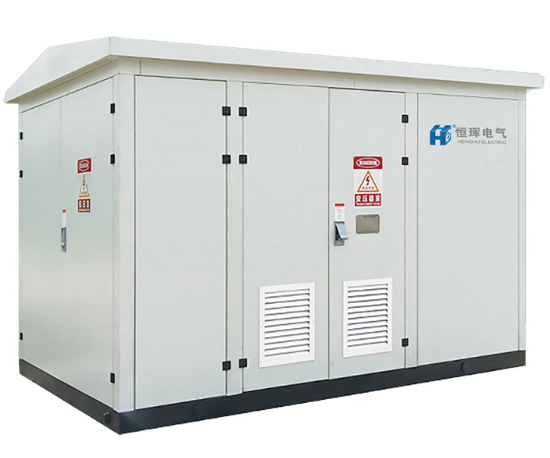
A Compact Substation is a factory-assembled, single-enclosure power distribution system that integrates medium-voltage switchgear, a distribution transformer, and low-voltage distribution equipment into one compact, weather-resistant enclosure. Designed to receive medium-voltage electricity and safely transform it into low-voltage power, it minimizes installation space, shortens construction time, improves operational safety, and reduces maintenance requirements. Also known as a Prefabricated Substation, European-type Compact Substation, box-type substation, or Box Substation, it is widely used in industrial facilities, renewable energy projects, commercial buildings, utilities, and infrastructure developments requiring efficient and reliable electrical distribution.
Let’s explore how a Compact Substation works, its key components, major advantages, different types, and why it continues to replace conventional substations worldwide.
What are the main components of Compact Substation?
A Compact Substation integrates multiple pieces of electrical equipment into one factory-built enclosure, significantly reducing installation complexity while improving overall system reliability. Instead of constructing individual electrical rooms and installing equipment separately on-site, every major component is assembled, tested, and verified before delivery.
The first major component is the medium-voltage switchgear, which serves as the incoming power control center. It receives electricity from the utility network, provides switching functions, isolates faults, and protects downstream equipment against overloads and short circuits. Modern switchgear also incorporates advanced protection relays and safety interlocks to ensure safe operation and maintenance.
The second essential component is the distribution transformer, which converts medium-voltage electricity into usable low-voltage power. Depending on project requirements, the transformer may be oil-immersed or dry-type. Oil-immersed transformers provide excellent cooling performance, high overload capacity, sealed maintenance-free construction, and long service life, making them ideal for outdoor applications. Dry-type transformers eliminate insulating oil, offer outstanding fire safety, require minimal maintenance, and are preferred for indoor installations or locations with stringent environmental requirements. Both transformer types are designed to deliver stable power conversion with high energy efficiency and reliable long-term operation.
The third major component is the low-voltage distribution panel, responsible for distributing electricity to multiple outgoing circuits while providing circuit protection, metering, monitoring, and operational control. High-quality low-voltage cabinets feature modular structures, robust grounding systems, excellent short-circuit withstand capability, and flexible configurations to meet different power distribution requirements.
In addition, the enclosure itself plays an important role. A European-type Compact Substation or Box Substation typically incorporates corrosion-resistant steel construction, weatherproof protection, natural or forced ventilation, internal cable compartments, and secure access doors. These features protect electrical equipment against rain, dust, salt spray, humidity, and temperature fluctuations while ensuring safe operation in demanding outdoor environments.
Many modern PV Compact Substations also integrate intelligent monitoring systems, temperature sensors, communication interfaces, remote diagnostics, and energy management functions, making them ideal for smart grids and renewable energy installations.
What are the key benefits of Compact Substation?
The popularity of the Compact Substation continues to grow because it addresses many of the challenges associated with conventional substations. Its integrated design delivers significant benefits throughout planning, installation, operation, and maintenance.
Perhaps the most obvious advantage is its space-saving design. Since the medium-voltage switchgear, transformer, and low-voltage distribution equipment are housed within one enclosure, the installation footprint is dramatically reduced. This makes the solution particularly valuable in crowded urban developments, commercial complexes, industrial plants, and renewable energy sites where land availability is limited.
Another important benefit is rapid installation. Because every component is assembled, wired, and factory-tested before shipment, only foundation work, cable connections, and commissioning are required on-site. Compared with traditional substations requiring multiple contractors and extensive civil engineering, installation time can often be reduced significantly, allowing projects to begin operation much faster.
Operational reliability is another major advantage. Factory manufacturing ensures consistent quality control, standardized assembly procedures, and comprehensive testing before delivery. This minimizes installation errors while improving long-term equipment reliability.
Maintenance requirements are also considerably lower. Modern oil-immersed transformers feature fully sealed corrugated tanks that prevent moisture and contaminants from entering the insulation system, greatly reducing maintenance needs. Dry-type transformers eliminate oil-related servicing altogether and require only routine inspections and cleaning.
Safety is equally important. Compact substations incorporate enclosed live parts, reliable grounding systems, mechanical and electrical interlocks, fault protection devices, and weatherproof enclosures that reduce risks to both operators and equipment. Advanced medium-voltage switchgear further enhances operational safety through independent compartments, arc-resistant designs, and multiple safety interlocks.
For renewable energy projects, a PV Compact Substation offers additional value by integrating seamlessly with photovoltaic power generation systems. It simplifies grid connection, reduces installation costs, shortens project schedules, and supports efficient power export.
Whether referred to as a Prefabricated Substation, European-type Compact Substation, box-type substation, or Box Substation, the integrated approach consistently delivers lower lifecycle costs, improved reliability, faster deployment, and better operational efficiency.
What are the four types of substations?
Electrical substations can be classified in several ways depending on their function, voltage level, or installation method. From an application perspective, four major categories are commonly encountered.
1. Transmission Substation
Transmission substations operate at high voltages and serve as connection points between power generation facilities and long-distance transmission networks. Their primary purpose is to switch transmission circuits, improve grid reliability, and manage power flow across regional electrical systems.
2. Distribution Substation
Distribution substations reduce transmission voltages to medium-voltage levels suitable for local distribution networks. They supply electricity to residential communities, commercial facilities, manufacturing plants, hospitals, schools, and public infrastructure before power reaches end users.
3. Compact (Prefabricated) Substation
A Compact Substation, also called a Prefabricated Substation, integrates medium-voltage switchgear, transformers, and low-voltage distribution equipment into one factory-built enclosure. Compared with conventional substations, it requires much less construction work, occupies significantly less land, and offers faster installation.
Within this category, several designs exist, including the European-type Compact Substation, which typically provides separate compartments for switchgear, transformer, and low-voltage equipment while maintaining excellent accessibility for maintenance. The box-type substation and Box Substation terminology are often used interchangeably to describe these enclosed integrated systems.
Compact substations have become especially common in renewable energy installations, commercial developments, industrial parks, airports, railway systems, and data centers due to their flexibility and high reliability.
4. Mobile Substation
Mobile substations are installed on trailers or transportable platforms, allowing rapid deployment during emergencies, temporary construction projects, disaster recovery, or scheduled maintenance. They provide temporary power while permanent substations are repaired or upgraded.
Each type serves different operational requirements, but the Compact Substation has experienced the fastest growth because it combines efficient power distribution, reduced installation costs, high safety standards, and exceptional flexibility within a highly integrated package.
What does a small substation do?
Although physically smaller than conventional substations, a small substation performs the same essential electrical functions. Its primary role is to receive medium-voltage electricity from the utility network, safely transform it into usable low-voltage power, and distribute that electricity to multiple loads.
Inside a Compact Substation, incoming power first passes through the medium-voltage switchgear, where protection devices monitor electrical conditions and isolate faults when necessary. Electricity then flows into the distribution transformer, which reduces the voltage to levels suitable for industrial equipment, commercial buildings, residential facilities, or renewable energy systems. Finally, the low-voltage distribution panel safely distributes power through multiple outgoing feeders while providing circuit protection, metering, and operational control.
Modern compact substations often include intelligent monitoring technologies that enable operators to remotely supervise transformer temperatures, switchgear status, energy consumption, and equipment health. These digital capabilities support predictive maintenance, reduce unexpected failures, and improve overall operational efficiency.
In renewable energy projects, especially solar farms, a PV Compact Substation performs an additional function by collecting power generated by photovoltaic inverters, transforming voltage to utility requirements, and delivering electricity safely into the public grid. This integration reduces engineering complexity while accelerating project commissioning.
A European-type Compact Substation further enhances reliability through separate equipment compartments, efficient ventilation systems, corrosion-resistant enclosures, and weatherproof construction. These features ensure dependable performance even under harsh outdoor conditions, including high temperatures, humidity, dust, and coastal environments.
Because of their compact footprint, factory-tested quality, low maintenance requirements, and reliable operation, Compact Substations, Prefabricated Substations, box-type substations, and Box Substations have become indispensable solutions for modern electrical distribution across industries worldwide.
Conclusion
A Compact Substation combines efficient power transformation, integrated protection, rapid installation, and reliable long-term operation within a compact footprint. Whether deployed as a PV Compact Substation, European-type Compact Substation, Prefabricated Substation, box-type substation, or Box Substation, it provides a smarter, safer, and more cost-effective solution for today’s evolving power distribution needs.
 English (UK)
  Bahasa Indonesia
  Tiếng Việt
  Deutsch
  Español
  Français
  Português
  Русский