
How Can an E-House Substation Reduce Costs, Accelerate Deployment, and Stay Flexible for Future Expansion?
Power-intensive projects often struggle with high upfront investment, expensive transportation and lifting of oversized equipment, condensation and heat dissipation issues in enclosed spaces, and limited scalability once the design is finalized. Poor planning can result in costly site modifications, construction delays, increased maintenance expenses, and reduced operational efficiency over the system’s lifetime. Fortunately, an E-House Substation, also known as a Prefabricated Substation, Containerized Substation, or Box Substation, offers a practical solution by integrating critical power equipment into a factory-built enclosure, reducing construction risks, shortening schedules, and improving long-term flexibility.
What is an E-House Substation?
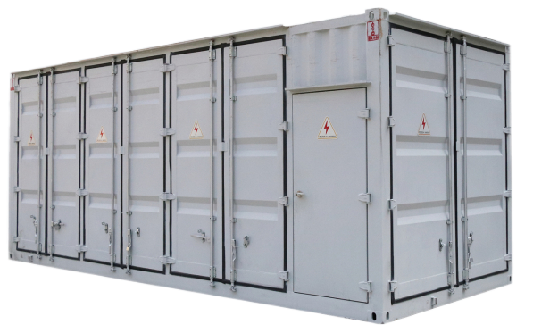
An E-House Substation is a prefabricated, transportable power facility designed to house medium-voltage switchgear, low-voltage switchgear, transformers, protection systems, automation cabinets, and auxiliary equipment within a factory-assembled enclosure. As a modern Prefabricated Substation solution, it provides a cost-effective and lower-risk alternative to conventional concrete power buildings. By shifting construction activities from the job site to a controlled manufacturing environment, a Containerized Substation significantly reduces project timelines, improves quality consistency, and simplifies installation while maintaining reliable power distribution performance.
Before investing in a large-scale power infrastructure project, understanding the advantages and limitations of an E house Substation can prevent costly mistakes.
How Much Time and Construction Cost Can a Containerized Prefabricated Substation Save Compared with Traditional On-Site Power Rooms?
One of the biggest reasons utilities, industrial facilities, renewable energy developers, and mining operators choose an E house Substation is the significant reduction in project schedules and construction costs.
Traditional substations typically require multiple stages of work, including architectural design, civil engineering, foundation construction, building erection, electrical installation, cable routing, equipment commissioning, and site acceptance testing. These activities often occur sequentially, meaning delays in one phase can affect the entire project schedule.
A Containerized Substation, however, changes this approach entirely. Most equipment installation and testing are completed inside the factory before shipment. Medium-voltage switchgear such as KYN28 metal-clad switchgear, low-voltage distribution systems such as GGD switchboards, transformers, protection relays, monitoring systems, lighting, HVAC equipment, and communication cabinets can all be integrated before delivery. This substantially reduces site labor requirements and minimizes installation uncertainties.
For many projects, construction schedules can be reduced by 30% to 60%, depending on project complexity. Site work and factory assembly can occur simultaneously, allowing civil works and equipment manufacturing to progress in parallel rather than sequentially.
Cost savings are equally important. Traditional power buildings require:
- Extensive concrete structures
- Large construction crews
- Long-term equipment storage
- Weather-dependent construction schedules
- Multiple contractor coordination
By contrast, a Prefabricated Substation significantly lowers labor expenses and minimizes weather-related delays.
Additionally, integrated equipment solutions simplify procurement. A typical Box Substation may include:
- Medium-voltage switchgear
- Low-voltage switchgear
- Dry-type or oil-immersed transformers
- Protection and control systems
- SCADA interfaces
- HVAC systems
- Fire protection systems
Factory integration reduces installation errors and lowers commissioning costs.
For renewable energy projects such as solar farms, wind farms, and battery energy storage systems, faster energization directly translates into earlier revenue generation. Every month saved during construction can have a measurable impact on project profitability, making the E House Substation an attractive investment for developers seeking rapid deployment.
Can Walk-in E-Houses Adapt to Harsh Environments Such as Coastal Salt Fog, Mountain Cold and High-Temperature Desert Solar Farms?
Environmental adaptability is a major concern when evaluating any Containerized Substation solution. Many power projects are located in remote and demanding conditions where conventional buildings are difficult or expensive to construct.
Modern E house Substations are specifically engineered to operate under a wide range of environmental conditions. The enclosure can be customized with specialized materials, insulation systems, coatings, and climate-control technologies to match site requirements.
For coastal regions exposed to salt fog and high humidity, corrosion-resistant designs are essential. Galvanized steel structures, marine-grade coatings, stainless-steel hardware, and anti-corrosion treatments help extend equipment life while protecting sensitive electrical components from moisture intrusion.
In mountainous regions where temperatures may fall below freezing, additional thermal insulation and heating systems can maintain stable operating conditions. Advanced environmental control systems reduce condensation risk, which is critical for switchgear reliability and insulation integrity.
For desert solar farms, the primary challenge is extreme heat. Internal temperatures can rise significantly if cooling systems are not properly designed. To address this issue, manufacturers often incorporate:
- High-performance insulation
- Forced ventilation systems
- Air-conditioning units
- Intelligent temperature monitoring
- Solar-reflective exterior coatings
Transformers used within these systems can also be selected according to environmental requirements. Oil-immersed transformers provide excellent heat dissipation and overload capability, making them suitable for demanding outdoor applications. Their sealed construction and corrosion-resistant treatment enable reliable operation in harsh climates.
Where fire safety and environmental protection are priorities, dry-type transformers offer an attractive alternative. Their oil-free design eliminates leakage risks and provides excellent performance in humid, dusty, or salt-laden environments.
Because the enclosure itself functions as a protective barrier, a Prefabricated Substation can often outperform traditional site-built structures in extreme environments. Proper engineering allows the system to maintain reliable operation throughout its service life, even under severe climatic conditions.
What Hidden Extra Fees Will You Face During Transportation, Hoisting and Foundation Construction of Large Prefabricated Power Cabins?
Although an E-House Substation offers many advantages, buyers should understand potential hidden costs that may arise during transportation, lifting, and site preparation.
The first area often overlooked is transportation. Large Containerized Substations may exceed standard shipping dimensions, resulting in:
- Oversized freight permits
- Escort vehicle requirements
- Route surveys
- Temporary road modifications
- Port handling surcharges
Transportation costs can increase significantly when project sites are located in remote regions or areas with infrastructure limitations.
Hoisting and unloading costs represent another potential expense. Large modules may require:
- Heavy-duty cranes
- Specialized rigging equipment
- Extended lifting operations
- Certified lifting personnel
If site access is restricted or ground conditions are poor, crane selection becomes more complex and expensive.
Foundation construction can also generate unexpected costs. Many project owners assume that a Prefabricated Substation requires minimal site preparation. While foundation requirements are generally lower than those of conventional buildings, proper engineering remains critical.
Potential foundation-related expenses include:
- Soil testing
- Geotechnical analysis
- Ground improvement
- Concrete pads
- Cable trenches
- Drainage systems
- Grounding networks
Inadequate foundation design may result in structural deformation, equipment misalignment, water intrusion, or long-term maintenance issues.
Environmental control systems are another frequently underestimated cost category. Since E-Houses operate as enclosed environments, additional investments may be required for:
- HVAC equipment
- Condensation control systems
- Dehumidifiers
- Temperature monitoring devices
These systems help protect medium-voltage switchgear and control equipment from moisture-related failures.
A comprehensive supplier proposal should clearly identify all transportation, installation, lifting, foundation, and commissioning responsibilities. Early planning helps eliminate surprises and allows project owners to evaluate the true lifecycle cost of a Box Substation rather than focusing solely on purchase price.
Is It Possible to Expand Power Capacity Later Without Replacing the Whole Container Substation?
Scalability is one of the most frequently discussed topics among power project developers. Business growth, renewable energy expansion, and increasing electrical demand often require future capacity upgrades.
The answer depends largely on how the E House Substation is designed from the beginning.
Many modern Prefabricated Substations are built using modular architecture. Instead of creating a single fixed structure, manufacturers can design separate compartments or future expansion interfaces that accommodate additional equipment later.
Several expansion strategies are commonly used:
Adding Additional Switchgear Sections
Medium-voltage switchgear systems such as KYN28 switchgear can often be extended through additional feeder panels or busbar sections. This approach allows operators to add circuits without replacing existing equipment.
Installing Additional Transformers
If future load growth is anticipated, extra space can be reserved for additional transformers. Depending on project requirements, operators may choose:
- Oil-immersed transformers
- Dry-type transformers
- Higher-capacity replacement units
The flexibility of transformer selection enables capacity increases while maintaining operational continuity.
Expanding Low-Voltage Distribution Systems
Low-voltage distribution cabinets such as GGD switchboards can be configured with spare sections for future feeders and loads. This reduces upgrade complexity and minimizes operational disruption.
Modular E-House Expansion
Some projects use multiple interconnected modules rather than one oversized structure. Additional modules can be added later to accommodate:
- Battery energy storage systems
- Solar power integration
- Additional process loads
- New production lines
- Future substations
This modular strategy is particularly popular in mining operations, industrial plants, and renewable energy facilities where future demand is difficult to predict.
However, expansion flexibility must be incorporated during the initial design phase. Critical considerations include:
- Spare floor space
- Busbar capacity
- HVAC reserve capacity
- Cable routing allowances
- Foundation loading margins
- Protection system scalability
Without these provisions, future expansion may require substantial modifications or partial replacement.
A well-engineered Containerized Substation can therefore provide both immediate power distribution needs and long-term growth capability, helping operators avoid costly infrastructure replacement projects.
Conclusion
An E-House Substation, whether configured as a Prefabricated Substation, Containerized Substation, or Box Substation, offers faster deployment, reduced construction risk, strong environmental adaptability, and scalable future expansion. When properly designed and planned, it can significantly improve project economics while delivering reliable long-term power infrastructure.
 Tiếng Việt
  English (UK)
  Bahasa Indonesia
  Deutsch
  Español
  Français
  Português
  Русский