
How Can a PLC Control Cabinet Improve Industrial Automation, Safety, and Maintenance?
Modern industrial equipment depends on stable, responsive, and well-organized automation systems. However, traditional PLC control cabinets can struggle with limited I/O expansion, incompatible communication protocols, poor heat dissipation, messy wiring, and incomplete protection. These issues can lead to communication failures, unexpected equipment shutdowns, difficult troubleshooting, higher maintenance costs, and production downtime. A properly engineered PLC control cabinet solves these challenges by integrating control, protection, communication, and monitoring in one organized enclosure. Keep reading to discover what to look for when selecting an Automatic Control Cabinet for your industrial project.
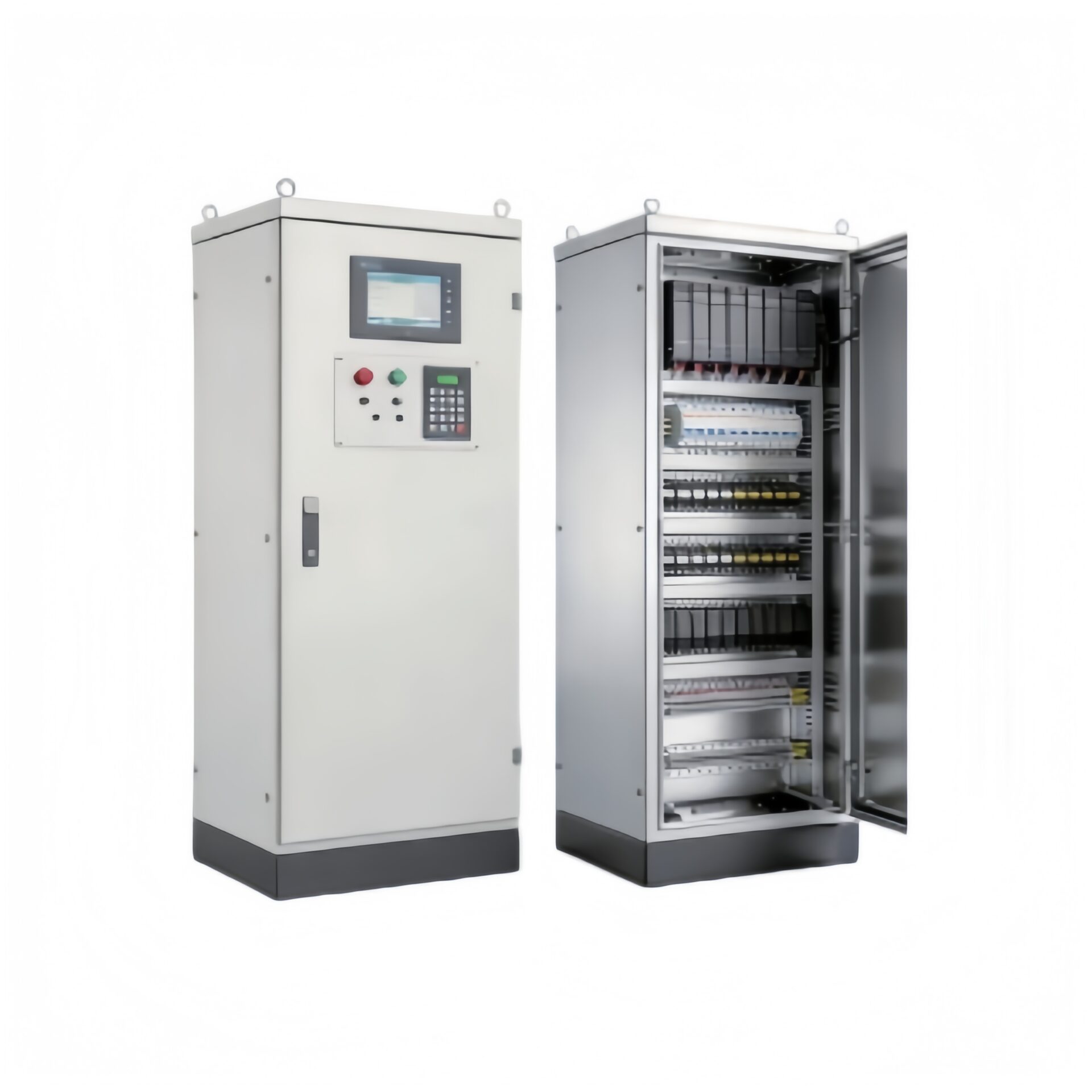
A programmable logic controller (PLC) control cabinet is a specialized metal enclosure that houses and protects industrial automation systems, acting as the central command center for machinery and processes. It integrates a PLC, power supplies, circuit protection, relays, terminals, communication devices, and operator interfaces to control equipment, collect signals, and coordinate automated operations. A well-designed PLC control cabinet provides organized wiring, reliable protection, flexible expansion, efficient heat management, and convenient maintenance for industrial automation applications.
The right PLC control cabinet does more than house components—it creates a reliable foundation for the entire automation system.
Why Is a PLC Control Cabinet Important for Reliable Industrial Automation?
A PLC control cabinet is the connection point between the control system and the physical equipment operating in an industrial environment. Sensors collect field information, the PLC processes programmed logic, and output devices execute commands. Without a properly designed cabinet, even high-quality automation components may not operate reliably.
One major consideration is system stability. Industrial environments may expose electrical components to dust, humidity, vibration, electromagnetic interference, and temperature fluctuations. A suitable metal enclosure protects internal components from these external conditions while providing an organized environment for electrical installation.
Another important factor is electrical protection. Circuit breakers, fuses, protective devices, relays, and other components can be integrated into the cabinet to help protect the automation system against conditions such as short circuits, overloads, and abnormal electrical events.
The cabinet also improves maintenance efficiency. When components are clearly arranged and wires are properly labeled and routed, technicians can identify problems more quickly. This can reduce troubleshooting time and make routine inspection easier.
For industrial users, the value of an Automation Control Cabinet therefore goes beyond basic equipment housing. It combines control, protection, signal management, communication, and maintenance accessibility into one structured solution.
A well-engineered cabinet can also provide room for future upgrades. As production requirements change, additional I/O modules, communication devices, or control functions may be required. Designing the cabinet with sufficient space and expansion capability can make future modifications easier.
What Key Functions and Design Features Should a PLC Control Cabinet Provide?
A modern PLC Control Panel should be designed around the actual control requirements of the equipment rather than simply placing electrical components inside a metal box. Its functions should support stable operation, efficient communication, convenient maintenance, and future expansion.
1. Centralized PLC Control
The PLC acts as the central control unit. It receives signals from sensors and field devices, processes the programmed logic, and sends commands to actuators, motors, valves, contactors, and other equipment.
This centralized architecture allows different parts of a production system to work together according to predefined control logic.
2. Flexible I/O Expansion
Industrial projects often change after commissioning. Additional sensors, motors, alarms, or control points may be added later.
A flexible PLC cabinet can reserve I/O expansion space and use a modular PLC architecture. Digital input, digital output, analog input, analog output, and communication modules can be configured according to project requirements.
This approach makes the cabinet easier to upgrade without completely redesigning the control system.
3. Communication Compatibility
Modern automation systems rarely operate independently. The PLC may need to communicate with an HMI, industrial computer, SCADA system, remote monitoring platform, inverter, or other automation equipment.
Therefore, communication compatibility is an important design consideration.
Depending on the project, the PLC control cabinet can support industrial communication protocols such as Modbus, Profibus, Ethernet-based communication, or other protocols required by the customer’s automation architecture.
Reliable communication allows operators to monitor operating conditions, receive alarms, modify parameters, and collect production data.
4. Efficient Heat Management
Electrical components generate heat during operation. If excessive heat accumulates inside the enclosure, component performance and service life may be affected.
A professional Automatic Control Cabinet should therefore consider internal heat generation, cabinet size, ventilation, cooling fans, air-conditioning requirements, and component layout.
Heat-producing components should be arranged appropriately, while ventilation and cooling equipment should be selected according to the actual thermal load.
5. Organized Wiring and Maintenance
Messy wiring makes troubleshooting difficult and increases the possibility of installation errors.
A well-designed cabinet uses standardized wire routing, terminal blocks, labels, cable ducts, and logical component arrangement. Power circuits, control circuits, communication cables, and signal wiring should be organized according to the system design.
This makes commissioning and maintenance more efficient.
6. Safety and Protection
Safety is another core function. Depending on the project, the cabinet may incorporate circuit breakers, overload protection, short-circuit protection, grounding arrangements, emergency-stop circuits, and other protective measures.
The exact protection configuration should be selected according to the electrical system, equipment requirements, applicable standards, and project specifications.
Which Core Components Are Installed Inside a PLC Control Cabinet?
The internal configuration of a PLC control cabinet varies according to the application, but several components are commonly used to create a complete industrial control system.
PLC Controller
The PLC is the core control component. It processes input signals according to programmed logic and generates output commands.
The PLC can be configured with different numbers and types of I/O points according to the application. Modular systems are particularly useful when the project requires future expansion.
Circuit Breaker
Circuit breakers provide electrical protection and allow individual circuits or equipment sections to be isolated when necessary.
They are typically arranged according to the power distribution structure of the cabinet.
Switched-Mode Power Supply
A switched-mode power supply converts incoming electrical power into the appropriate control voltage required by PLCs, sensors, relays, and other low-voltage control components.
Stable control power is essential for reliable automation operation.
Contactors and Relays
Contactors are commonly used for controlling motors and other higher-power electrical loads, while relays can provide signal switching and electrical isolation between different control circuits.
Their selection depends on the voltage, current, switching frequency, and equipment characteristics.
HMI Touch Screen
An HMI provides an interface between operators and the automation system. Operators can view operating parameters, receive alarms, modify settings, and manually control certain functions when permitted by the control logic.
Integrating the HMI with the PLC creates a more convenient operator experience.
Terminal Blocks
Terminal blocks provide organized connection points between internal cabinet wiring and external field devices.
They simplify wiring, inspection, troubleshooting, and future modifications.
Communication Modules
Communication modules or interfaces connect the PLC with devices such as industrial computers, SCADA systems, HMIs, inverters, remote monitoring systems, and other controllers.
The communication architecture should be selected according to the customer’s existing automation network.
Cooling and Ventilation Components
Depending on the cabinet’s internal heat load, cooling fans, ventilation filters, heat exchangers, or air-conditioning systems may be required.
Proper thermal management helps maintain a suitable operating environment for sensitive electronic components.
Cabinet Enclosure
The metal enclosure provides mechanical protection and organizes the entire electrical system. Its dimensions, material, protection level, mounting structure, cable entry arrangement, and installation method should be determined according to the application environment.
The enclosure is therefore not simply an external shell—it is part of the overall control cabinet design.
How Can a PLC Control Cabinet Support Flexible Expansion and System Integration?
One common challenge in industrial automation is that a system designed for today’s requirements may need to support additional functions tomorrow. A production line may add sensors, motors, pumps, monitoring points, or communication devices after the initial installation.
This is why expandability should be considered during the initial PLC cabinet design.
A modular PLC system can provide additional I/O modules when more signals are required. Sufficient cabinet space can also be reserved for future components.
Communication flexibility is equally important. A PLC control cabinet may need to exchange data with different systems throughout the facility. For example, the PLC can collect field signals and transfer operating information to an HMI or industrial computer for visualization and monitoring.
For larger automation systems, communication with SCADA or supervisory systems can enable centralized monitoring and data collection.
Another advantage is integration with variable frequency drives and motor control equipment. The PLC can send control commands to drives while receiving feedback such as running status, speed, alarms, or fault information.
This creates a coordinated control structure rather than isolated electrical devices.
For customers purchasing an Automation Control Cabinet, it is therefore useful to consider not only the current component list but also future I/O requirements, communication architecture, equipment compatibility, and potential system upgrades.
How Does a PLC Control Cabinet Make Installation and Maintenance Easier?
Maintenance efficiency directly affects the long-term operating cost of industrial equipment. When a control cabinet contains poorly organized wiring and unclear component layouts, technicians may spend considerable time identifying circuits and locating faults.
A professionally designed PLC Control Panel addresses this problem through structured internal organization.
Components can be arranged according to their functions. For example, incoming power and protection devices can be separated from PLC modules, signal terminals, and communication equipment. This improves visibility and reduces unnecessary interference between different circuits.
Cable ducts and terminal blocks help keep wiring organized, while clear labels allow technicians to identify individual circuits more quickly.
Maintenance access is another important consideration. Components that require regular inspection or replacement should be positioned where technicians can reach them without unnecessary disassembly.
The cabinet should also provide sufficient wiring space. Overcrowding can make installation difficult and may affect heat dissipation.
Documentation is equally important. Electrical schematics, terminal lists, PLC I/O tables, communication configurations, and component identification can help maintenance personnel understand the system.
When these design elements work together, troubleshooting becomes more systematic. Technicians can trace a signal from the field device through the terminal block and PLC input, then follow the control logic to the output device.
This can make the entire maintenance process more structured and efficient.
Where Can a PLC Control Cabinet Be Used?
The flexibility of PLC technology allows PLC control cabinets to be applied across many industrial and commercial automation scenarios.
Manufacturing Production Lines
Production lines require coordinated operation between sensors, motors, conveyors, actuators, and other equipment. A PLC cabinet can integrate these devices into one automated control system.
Water Supply and Wastewater Treatment
Pumps, valves, level sensors, pressure sensors, and other equipment can be controlled through PLC logic. The cabinet can also communicate operating data to an HMI or supervisory system.
HVAC Systems
HVAC applications may require coordinated control of fans, pumps, valves, temperature sensors, and other equipment. A PLC-based system can monitor operating conditions and automatically adjust equipment according to programmed logic.
Power and Electrical Projects
PLC control cabinets can be integrated into electrical automation systems for monitoring, control, and equipment coordination.
Depending on the project architecture, the cabinet may communicate with protective devices, monitoring equipment, variable frequency drives, and supervisory systems.
Metallurgy and Chemical Industries
Industrial processes often require precise sequencing and monitoring. PLC systems can coordinate multiple pieces of equipment while collecting signals from field devices.
For these environments, cabinet protection, component selection, cooling, wiring, and communication design should be adapted to actual site conditions.
Environmental and Utility Projects
Water treatment, environmental protection, pumping stations, and other utility applications often require automatic operation combined with remote monitoring.
A PLC-based Automatic Control Cabinet can integrate control logic, data acquisition, communication, and equipment protection within one system.
Intelligent Manufacturing
As factories become more connected, PLC control cabinets can serve as an important interface between field equipment and higher-level digital systems.
Through suitable communication interfaces, the cabinet can help connect machines, sensors, HMIs, industrial computers, and supervisory platforms.
What Should Buyers Consider When Selecting a PLC Control Cabinet?
Choosing a PLC control cabinet should begin with the actual requirements of the project.
First, determine the number and type of I/O points, including digital and analog signals. Then consider whether future expansion will be necessary.
Second, confirm the required communication protocols and ensure compatibility with existing PLCs, HMIs, SCADA systems, industrial computers, and other equipment.
Third, evaluate the operating environment. Temperature, humidity, dust, vibration, installation location, and cabinet protection requirements can all affect the design.
Fourth, consider thermal management. The cabinet should have sufficient space and an appropriate cooling solution for the installed components.
Finally, review the internal layout, wiring organization, protection configuration, maintenance accessibility, and customization requirements.
For OEMs, system integrators, contractors, and industrial equipment manufacturers, a customized PLC Control Panel can be configured around specific project requirements rather than relying on a one-size-fits-all solution.
Conclusion
A properly engineered PLC control cabinet combines PLC control, electrical protection, communication, signal management, cooling, and organized wiring in one reliable system. With flexible expansion, compatible communication, and customized design, it can support stable automation operation across manufacturing, power, HVAC, water treatment, and other industrial applications.
 Tiếng Việt
  English (UK)
  Bahasa Indonesia
  Deutsch
  Español
  Français
  Português
  Русский