
How Does a Grid Connected Energy Storage Cabinet Improve the Performance of an Energy Storage System?
Unstable grid protection, poor compatibility with different energy storage inverters, and complicated operation and maintenance remain common challenges in modern Energy Storage System (ESS) deployments. Frequent switching between the utility grid and battery storage can increase the risk of equipment failures, reduce system availability, and lead to unexpected downtime. These issues not only raise operating costs but also compromise power reliability for commercial and industrial facilities. A Grid Connected Energy Storage Cabinet provides an integrated, intelligent solution that simplifies grid connection, enhances system compatibility, improves operational safety, and enables reliable bidirectional power management. This article explains how it works, its key features, and why it has become an essential component of modern Energy Storage Systems.
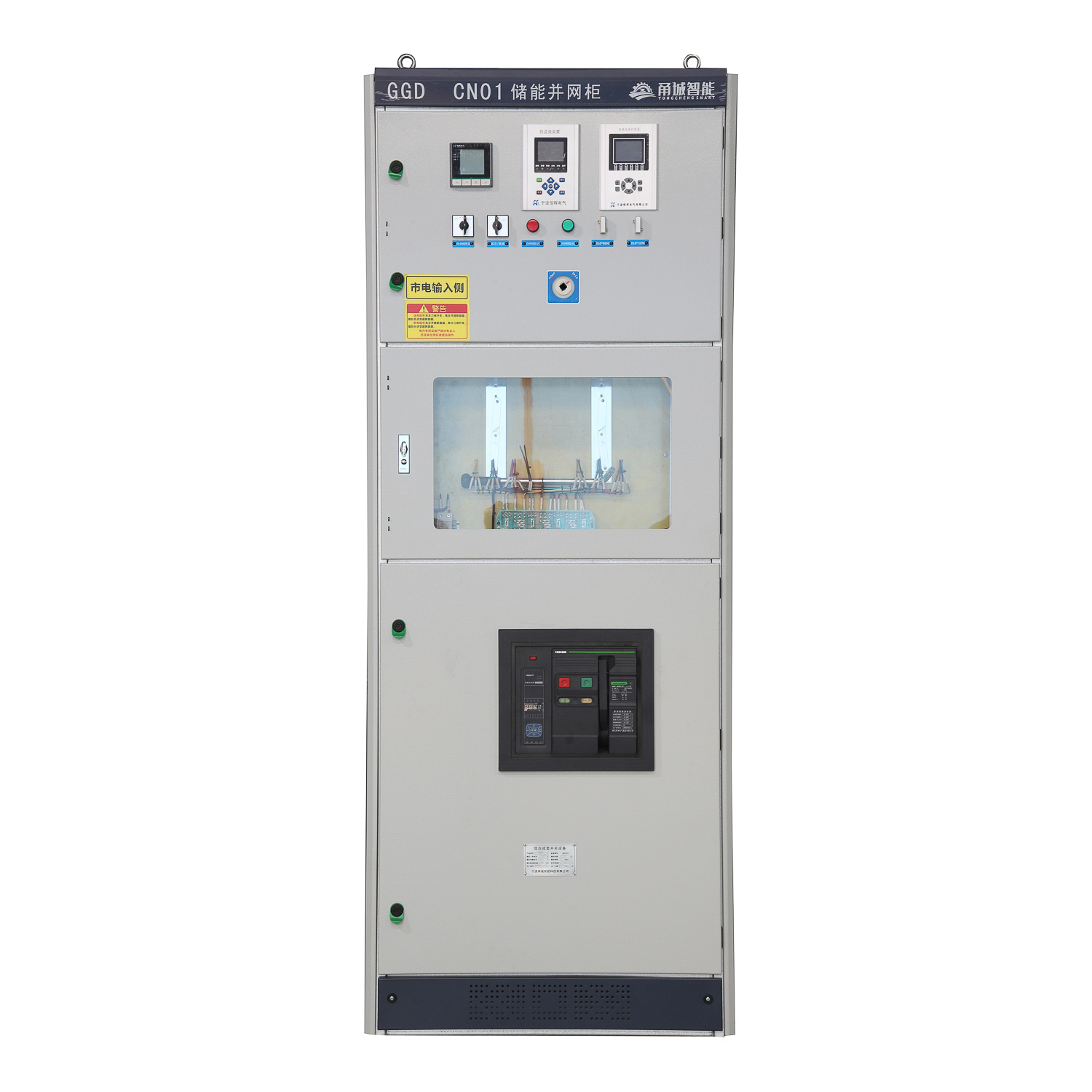
A Grid Connected Energy Storage Cabinet is a centralized, plug-and-play enclosure that integrates batteries, power conversion systems, protection devices, monitoring equipment, communication modules, and electrical control components into one intelligent unit. Connected to the local utility grid, it enables seamless energy exchange between renewable generation, battery storage, and grid power. As a critical part of an Energy Storage System (ESS), it supports peak shaving, load shifting, emergency backup, frequency regulation, and power quality improvement while simplifying installation, reducing maintenance complexity, and ensuring safe, reliable, and efficient energy management.
Let’s explore how a Grid Connected Energy Storage Cabinet enhances the efficiency, reliability, and intelligence of today’s Energy Storage Systems.
What Is the Function of a Grid Connected Energy Storage Cabinet in an Energy Storage System?
A Grid Connected Energy Storage Cabinet serves as the operational hub of an Energy Storage System (ESS). Rather than functioning as a simple electrical enclosure, it coordinates the interaction between battery storage, power conversion equipment, renewable energy sources, and the public utility grid.
One of its primary functions is bidirectional power management. During periods of low electricity demand or when renewable generation exceeds consumption, excess electricity is stored inside the battery system. When electricity demand rises or grid prices increase, the stored energy is discharged back to facility loads or exported to the utility grid. This intelligent charging and discharging strategy significantly reduces energy costs while improving renewable energy utilization.
Another essential function is grid synchronization. The cabinet continuously monitors voltage, frequency, and phase angle to ensure the Energy Storage System remains synchronized with the electrical grid. Intelligent protection systems automatically detect abnormal conditions and isolate faults before they affect connected equipment.
The cabinet also plays a major role in power quality management. Advanced control systems help stabilize voltage fluctuations, compensate for power imbalances, reduce harmonic distortion, and improve overall grid stability. These capabilities are particularly valuable in facilities operating sensitive manufacturing equipment, data centers, hospitals, and renewable power plants.
Modern Grid Connected Energy Storage Cabinets also provide comprehensive monitoring through integrated communication systems. Operators can remotely monitor battery status, inverter performance, energy flow, alarms, and operating parameters using supervisory control platforms. Predictive diagnostics help identify potential issues before failures occur, reducing maintenance costs and improving equipment availability.
In commercial and industrial applications, the cabinet supports peak shaving, load shifting, backup power, and participation in demand response programs. These functions enable organizations to reduce electricity expenses while maintaining continuous power during unexpected outages.
Ultimately, the Grid Connected Energy Storage Cabinet transforms a collection of electrical components into a coordinated, intelligent, and highly reliable Energy Storage System capable of delivering both operational efficiency and long-term value.
What Are the Features of a Grid Connected Energy Storage Cabinet?
Modern Grid Connected Energy Storage Cabinets incorporate numerous advanced technologies designed to improve safety, flexibility, efficiency, and long-term operational reliability.
One of the most important features is the integrated modular design. Batteries, power conversion systems (PCS), switchgear, protection relays, communication modules, metering devices, and intelligent controllers are housed within a single enclosure. This compact configuration minimizes installation space while simplifying engineering, transportation, commissioning, and future expansion.
Another key characteristic is wide inverter compatibility. Many traditional energy storage solutions experience integration difficulties because different inverter manufacturers use varying communication protocols and control methods. A well-designed Energy Storage Cabinet supports multiple inverter brands and standardized communication protocols, allowing greater flexibility for system integrators and project developers.
Comprehensive protection functions further distinguish these cabinets. Intelligent protection continuously monitors overvoltage, undervoltage, overcurrent, short circuits, insulation faults, temperature rise, and abnormal operating conditions. Fast response mechanisms isolate electrical faults quickly, protecting both personnel and connected equipment.
Advanced thermal management systems help maintain stable battery temperatures under changing environmental conditions. Depending on project requirements, cooling may be achieved through natural ventilation, forced air cooling, or liquid cooling systems. Effective thermal control extends battery life, improves charging efficiency, and enhances operational safety.
The cabinet also supports intelligent communication and remote monitoring. Ethernet, RS485, Modbus, IEC communication protocols, and cloud connectivity enable operators to supervise system performance remotely. Real-time operational data, historical records, fault logs, and predictive maintenance information improve maintenance planning and reduce downtime.
Scalability is another major advantage. Modular cabinet architecture allows users to expand battery capacity or system power without redesigning the entire installation. This flexibility makes the ESS suitable for projects ranging from small commercial facilities to large utility-scale energy storage plants.
Durability also plays a significant role. High-quality steel enclosures, corrosion-resistant coatings, and appropriately rated protection levels allow the Energy Storage Cabinet to operate reliably in industrial environments, renewable energy sites, coastal areas, and harsh outdoor conditions.
Together, these features create a highly integrated, intelligent, and dependable solution for modern Energy Storage Systems.
What Is the Purpose of the Grid Connected Energy Storage Cabinet?
The primary purpose of a Grid Connected Energy Storage Cabinet is to provide a safe, intelligent, and standardized interface between battery storage systems and the utility grid while maximizing the operational value of stored energy.
Energy cost optimization is one of its most important objectives. Electricity prices often fluctuate throughout the day. By charging batteries during off-peak periods and discharging stored energy during peak demand, businesses can significantly reduce electricity expenses through peak shaving и energy arbitrage.
Another critical purpose is improving the integration of renewable energy. Solar photovoltaic systems and wind turbines generate electricity intermittently due to changing weather conditions. A Grid Connected Energy Storage Cabinet stores surplus renewable electricity and releases it when generation decreases, improving energy utilization and reducing renewable energy curtailment.
The cabinet also enhances power supply reliability. During utility interruptions, intelligent switching mechanisms enable the Energy Storage System to supply critical loads without lengthy interruptions. This capability is essential for facilities where continuous power is required, including hospitals, manufacturing plants, telecommunications infrastructure, transportation systems, and data centers.
Supporting grid stability represents another important purpose. Modern electrical grids increasingly rely on distributed renewable generation, creating new operational challenges. Energy storage helps balance supply and demand while providing frequency regulation, voltage support, and fast-response reserve capacity. These services improve overall grid resilience and operational efficiency.
The cabinet also simplifies engineering implementation. Instead of integrating multiple independent devices on-site, users receive a factory-tested, pre-engineered solution that reduces installation time, commissioning complexity, and maintenance requirements. Standardized designs also improve long-term serviceability.
In addition, many utilities encourage energy storage participation in demand response and ancillary service markets. Intelligent ESS solutions equipped with Grid Connected Energy Storage Cabinets can respond automatically to utility dispatch signals, creating additional revenue opportunities for system owners.
Ultimately, the purpose of the Grid Connected Energy Storage Cabinet extends beyond electrical protection. It enables efficient energy management, improves renewable energy utilization, enhances power reliability, supports grid modernization, and delivers long-term economic benefits for commercial, industrial, and utility customers.
What Is the Structure of a Grid Connected Energy Storage Cabinet?
The structure of a Grid Connected Energy Storage Cabinet is carefully engineered to combine electrical safety, operational reliability, intelligent control, and maintenance convenience within a compact enclosure.
The outer cabinet is typically manufactured from high-strength steel with corrosion-resistant surface treatment. Depending on installation requirements, the enclosure may provide dustproof, waterproof, and weather-resistant protection suitable for indoor or outdoor environments. Proper ventilation or integrated cooling systems maintain stable operating temperatures.
Inside the cabinet, the power conversion system (PCS) serves as one of the core components. The PCS performs bidirectional conversion between alternating current (AC) and direct current (DC), allowing batteries to both charge from the utility grid and discharge electricity back into the grid or connected loads.
The battery management system (BMS) continuously monitors battery voltage, current, temperature, and state of charge. Intelligent balancing algorithms optimize battery performance while preventing overcharging, excessive discharge, overheating, and abnormal operating conditions, thereby extending battery service life.
Electrical protection components form another essential section of the cabinet. Circuit breakers, disconnect switches, protective relays, surge protection devices, grounding systems, and isolation equipment ensure safe operation under both normal and fault conditions. These protective devices rapidly isolate faults and minimize equipment damage.
The control and communication compartment contains programmable controllers, monitoring devices, industrial communication gateways, meters, and human-machine interfaces (HMI). These systems collect operating data, execute control strategies, communicate with supervisory systems, and support remote diagnostics.
Modern Energy Storage Cabinets often include environmental monitoring devices such as smoke detectors, humidity sensors, temperature sensors, and fire suppression systems to further enhance operational safety.
Power distribution sections organize incoming and outgoing electrical connections between the utility grid, renewable energy systems, battery banks, and facility loads. Standardized cable management simplifies installation while improving maintenance accessibility.
The integrated structure enables all major subsystems to operate as one coordinated platform, reducing engineering complexity while improving reliability, safety, and operational efficiency. This modular architecture also allows future capacity expansion without major redesign, making the Grid Connected Energy Storage Cabinet a highly adaptable solution for evolving Energy Storage System requirements.
Conclusion
A Grid Connected Energy Storage Cabinet is far more than an electrical enclosure. It is the intelligent control center of a modern Energy Storage System (ESS), delivering reliable grid integration, enhanced safety, simplified maintenance, improved renewable energy utilization, and long-term operational efficiency for commercial, industrial, and utility-scale applications.
 Русский
  English (UK)
  Bahasa Indonesia
  Tiếng Việt
  Deutsch
  Español
  Français
  Português