
How Can a 35 kV Transformer Deliver Reliable Power for Renewable Energy and Industrial Projects?
Unstable voltage, complex maintenance, and unexpected transformer faults can quickly increase operating costs. A 35kV on-load tap-changing transformer has a more complex structure and higher maintenance requirements, especially for oil monitoring and tap changer maintenance. Poor maintenance can reduce voltage regulation reliability, accelerate component wear, and even cause unplanned shutdowns. Choosing a properly configured transformer with suitable cooling, capacity, and voltage regulation can significantly improve system stability and operating efficiency. This guide explains the key factors buyers should consider before selecting a 35 kV power transformer for demanding power projects.
What is a 35 kV Transformer?
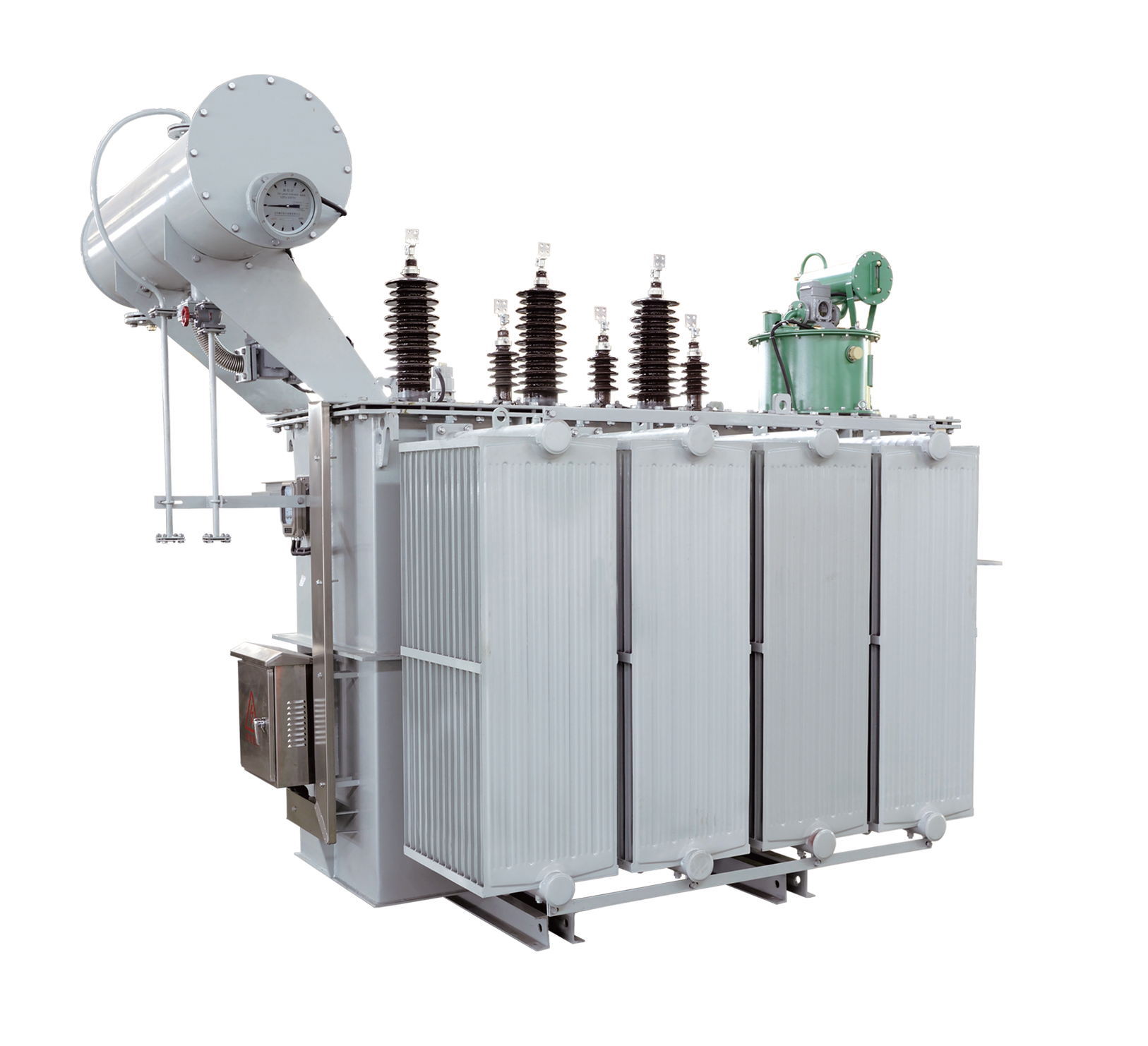
A 35 kV transformer is a medium-voltage electrical device designed to step up or step down voltage around 35,000 volts (35 kilovolts), serving as a crucial transition point between regional transmission grids and local distribution or industrial systems. A 35kV transformer may be designed as an oil-immersed, distribution, or power transformer depending on the application, rated capacity, voltage ratio, cooling method, and regulation requirements.
Choosing the right specifications can make a major difference in efficiency, safety, service life, and project performance.
What Voltage Conversion Capabilities Does a 35 kV Transformer Offer for Renewable Energy and Industrial Power Supply Projects?
Voltage conversion is one of the most important functions buyers should evaluate when selecting a 35kV power transformer. Renewable energy plants, industrial facilities, and substations rarely operate at a single voltage level. Electricity must often be transformed between generation, transmission, distribution, and end-use systems.
A 35 kV transformer can be configured for different voltage conversion requirements according to the electrical architecture of the project. In a typical distribution application, it can step down medium voltage to a lower distribution voltage for factories, commercial facilities, infrastructure, or local power networks. In renewable energy projects, the transformer can also support the opposite direction by stepping up the voltage generated by equipment before electricity enters a higher-voltage collection or grid connection system.
This flexibility is particularly useful for solar and wind power projects. Renewable energy systems frequently produce electricity at relatively low generator or inverter output voltages, while the grid connection requires a much higher voltage level. A properly designed transformer provides the necessary voltage interface while maintaining electrical isolation and stable power transfer.
For industrial projects, the transformer may also be integrated into a larger substation system to supply motors, production equipment, control systems, and auxiliary loads. Depending on the project design, buyers can specify an appropriate primary and secondary voltage combination, winding configuration, impedance, and regulation method.
Another important consideration is voltage stability. Projects with changing loads may benefit from a 35kV on-load tap-changing transformer, which can adjust the transformer ratio while the transformer remains energized. This helps compensate for voltage fluctuations and maintain a more consistent output voltage.
For buyers, the key point is that voltage conversion should not be selected independently. It should be considered together with grid voltage, load characteristics, connection requirements, short-circuit conditions, and future expansion plans. A correctly matched transformer can reduce conversion losses, improve power quality, and provide a more reliable foundation for the entire electrical system.
How Can You Select the Right Rated Capacity and Voltage Options for Your Site’s Power Load?
After defining the voltage conversion requirement, the next major question is transformer capacity. Selecting a transformer that is too small can create thermal stress and overload risks, while choosing an unnecessarily large unit can increase initial investment and reduce economic efficiency.
A 35kV power transformer can be supplied with different rated capacities to suit project-specific load requirements. The appropriate rating depends on the site’s actual demand, load growth, operating conditions, duty cycle, and the characteristics of connected equipment.
For example, industrial facilities may have large motors, pumps, compressors, furnaces, or other equipment with significant starting currents and changing operating loads. Renewable energy projects can have different requirements because output varies with solar irradiance or wind conditions. A transformer selected only according to present average load may not provide enough margin for peak operating conditions or future expansion.
Buyers should therefore evaluate maximum demand rather than simply average electricity consumption. It is also important to consider whether the load includes motors, power electronics, variable-frequency drives, or other equipment that may introduce harmonics or dynamic load variations.
Voltage options should be selected just as carefully. The primary side must match the incoming grid or collection system, while the secondary side must match the downstream distribution network. Depending on the project, the transformer may be configured for different voltage ratios and insulation requirements.
For larger or more complex applications, a 35kV on-load tap-changing transformer can provide additional voltage regulation flexibility. The tap changer can adjust the transformation ratio according to system voltage conditions, helping maintain an appropriate secondary voltage under changing loads.
Capacity planning should also include future expansion. Industrial plants often add production lines, while solar and wind projects may expand generation capacity. A reasonable design margin can help avoid early transformer replacement when the site’s electrical demand increases.
The most suitable configuration is therefore not simply “the biggest transformer available.” Buyers should consider the relationship between rated capacity, voltage ratio, load profile, ambient conditions, overload expectations, power factor, harmonics, and future demand.
When these variables are evaluated together, it becomes easier to select a 35kV distribution transformer or 35kV power transformer that balances reliability, efficiency, and investment cost.
Which Cooling Methods Are Used in a 35 kV Transformer, and How Do They Affect Long-Term Reliability?
Cooling performance has a direct influence on transformer life. During operation, the transformer generates heat through winding losses, core losses, and other electrical losses. Without effective heat dissipation, excessive temperature can accelerate insulation aging and reduce long-term reliability.
For this reason, many 35kV oil immersed transformers use transformer oil as both an insulating and cooling medium. Oil transfers heat away from the windings and core toward the tank and cooling surfaces, where that heat can be released into the surrounding environment.
The cooling method can vary according to the transformer’s rated capacity and operating conditions. Natural oil circulation and natural air cooling may be suitable for certain applications, while larger transformers can require more advanced cooling arrangements, such as forced air circulation or other enhanced heat-dissipation methods.
The selected cooling system should be matched to the transformer’s capacity, installation environment, ambient temperature, load profile, and required operating performance. A transformer installed in a hot industrial environment may face very different thermal conditions from one installed in a cooler climate.
Cooling design also affects maintenance. With an oil-immersed transformer, oil quality is an important part of routine service. Regular oil inspection can help identify moisture, contamination, insulation deterioration, or other conditions that may affect transformer performance. In addition, seals, bushings, radiators, and other components should be checked according to the maintenance schedule.
For a 35kV on-load tap-changing transformer, maintenance becomes even more important because the tap changer adds mechanical and electrical components to the transformer structure. Proper inspection of the tap changer, combined with effective oil management and temperature monitoring, helps maintain reliable voltage regulation.
Temperature protection and monitoring can also provide valuable operating information. Excessive temperature may indicate overload, inadequate cooling, abnormal operating conditions, or developing faults. Early detection allows operators to take corrective action before serious damage occurs.
From a purchasing perspective, buyers should not evaluate transformer cooling simply by asking which method is used. Instead, they should consider how effectively the cooling method supports the transformer’s rated capacity, operating environment, expected loading, and maintenance strategy.
A well-designed 35kV oil immersed transformer with appropriate cooling and monitoring can achieve dependable operation over a long service period, provided that maintenance requirements are followed. Good thermal management is therefore not just a technical feature—it is a key factor in controlling lifecycle costs and reducing unplanned downtime.
Where Is a 35 kV Transformer Suitable for Substations, Mines, Data Centers, Solar Farms, and Wind Farms?
A 35 kV transformer is widely suited to applications where medium-voltage electrical networks need dependable voltage conversion, distribution, or grid integration. Its versatility makes it useful across infrastructure, industrial, and renewable energy projects.
Substations
Substations are one of the most common applications. A transformer can serve as an important interface between higher-voltage networks and local medium-voltage distribution systems. In these installations, stable voltage conversion and reliable protection are critical because transformer failure can affect a large number of downstream users.
A 35kV distribution transformer can be used where electricity needs to be distributed to local loads, while a larger 35kV power transformer may be selected for higher-capacity substations and industrial power networks.
Mining Projects
Mines often operate under demanding electrical and environmental conditions. Large motors, crushers, conveyors, pumps, ventilation systems, and processing equipment can create substantial and variable loads.
For these projects, transformer selection should consider load fluctuations, harsh operating environments, protection requirements, and continuous-duty performance. Proper cooling and sufficient capacity are particularly important when the transformer supplies heavy industrial equipment.
Data Centers
Data centers place a strong emphasis on power reliability. Even a short interruption can affect critical servers, cooling equipment, networking systems, and business operations.
A 35 kV transformer can be incorporated into the facility’s medium-voltage power infrastructure to provide reliable voltage transformation between the utility supply and internal distribution network. Buyers may pay particular attention to redundancy, monitoring, thermal performance, protection, and voltage stability.
Where the load is sensitive to voltage variation, an appropriate regulation strategy can provide additional operational benefits.
Solar Farms
Large solar farms require transformers to collect power from multiple inverter systems and deliver it to the medium-voltage collection network or grid connection point.
A 35 kV transformer is particularly suitable for applications where the solar plant’s electrical architecture uses a 35 kV collection system. The transformer can help step up inverter output voltage, reduce current in the collection network, and support efficient transmission toward the grid connection point.
For renewable projects, buyers should also consider the variable nature of solar generation, system harmonics, environmental conditions, and the required grid connection characteristics.
Wind Farms
Wind farms face similar grid-integration requirements. Wind turbines generate electricity through power conversion systems, and the resulting power normally needs to be transformed before entering the collection network.
A properly selected 35kV power transformer can provide the required voltage interface and support efficient energy collection across the wind farm. For large projects, several transformer units may be deployed across different turbine groups or collection areas.
Industrial and Infrastructure Projects
Beyond these applications, 35 kV transformers can also support chemical plants, manufacturing facilities, water treatment systems, commercial infrastructure, energy storage facilities, and other high-demand electrical systems.
For every application, the best configuration depends on project-specific requirements rather than the voltage rating alone. Capacity, voltage ratio, cooling, insulation, protection, regulation, installation conditions, and maintenance access should all be evaluated before purchase.
Conclusion
A 35 kV transformer provides a reliable medium-voltage solution for substations, industrial facilities, mines, data centers, solar farms, and wind farms. By carefully matching voltage ratio, rated capacity, cooling method, and regulation requirements, buyers can achieve reliable operation, lower maintenance risks, and better long-term power system performance.
 Русский
  English (UK)
  Bahasa Indonesia
  Tiếng Việt
  Deutsch
  Español
  Français
  Português