
What Is a PLC Control Cabinet and How Does It Improve Industrial Automation Efficiency?
Unexpected equipment failures can bring an entire production line to a standstill. When a PLC control cabinet operates in dusty, humid, or high-temperature environments, electrical components are more likely to fail, making troubleshooting slow and costly. Without remote monitoring and maintenance capabilities, downtime can quickly escalate into production delays, missed delivery schedules, and significant financial losses. The right PLC control cabinet solves these challenges by providing reliable control, organized electrical protection, intelligent monitoring, and stable automation performance. This guide explains how PLC control cabinets work, their structure, applications, operating conditions, and the principles behind their efficient operation.
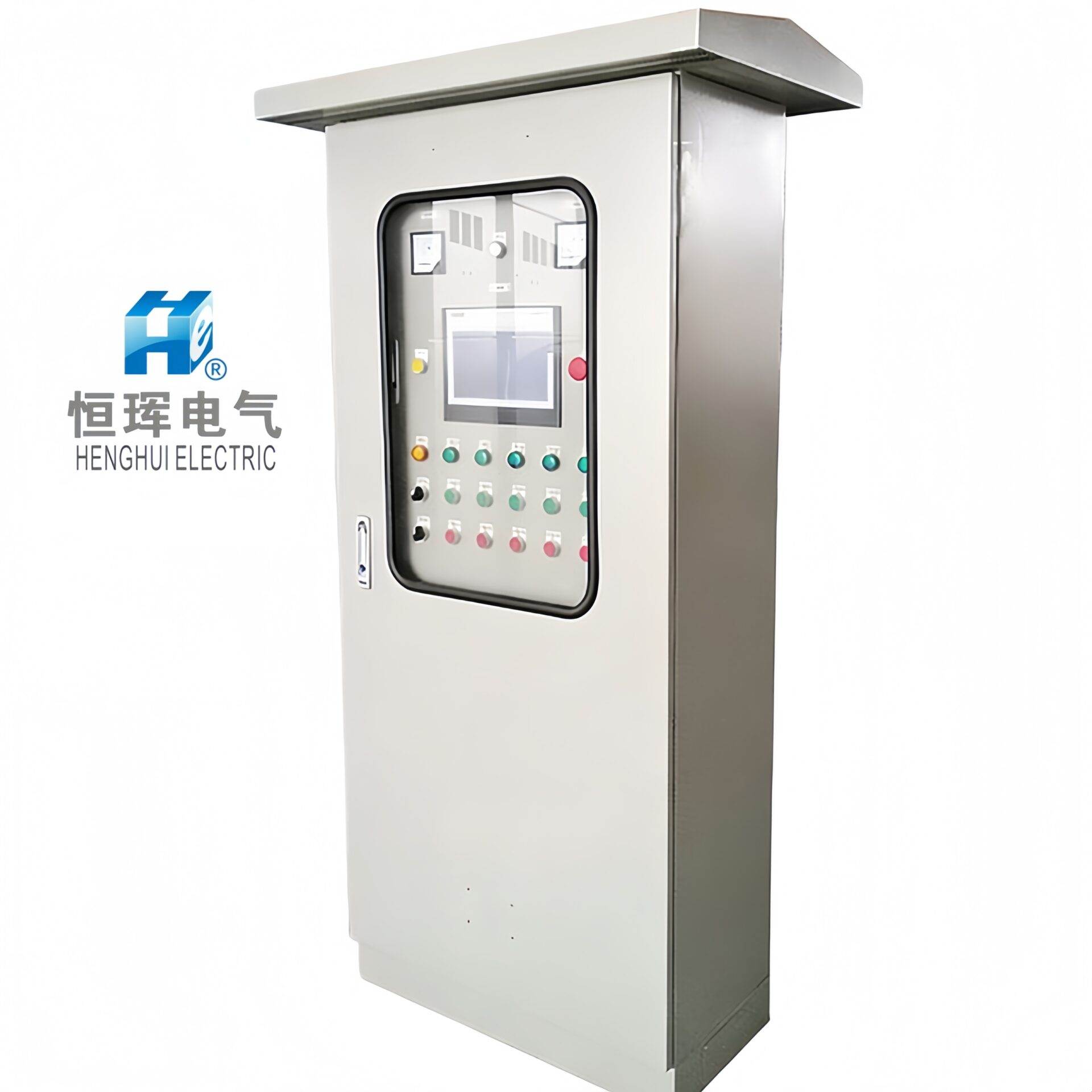
What is a PLC control cabinet? A PLC control cabinet is an enclosed metal cabinet that houses a programmable logic controller (PLC), power supplies, input/output (I/O) modules, circuit protection devices, communication modules, and other electrical components. It functions as the central brain of industrial automation systems by receiving signals from sensors, executing PLC programming logic, and controlling motors, valves, relays, and other field devices safely, accurately, and continuously. Proper cabinet design also improves electrical safety, simplifies maintenance, and enhances the reliability of automated production processes.
Now that you understand the basics, let’s explore how a PLC control cabinet is designed and why it plays such a critical role in modern industrial automation.
Table of Contents
ToggleWhat are the Core Components and Basic Structure of PLC Control Cabinet?
A PLC Control cabinet consists of multiple electrical and automation components working together as an integrated control system. Each component performs a specific function to ensure reliable machine operation, safe electrical distribution, and accurate process control.
At the heart of every cabinet is the PLC controller, which executes the PLC programming logic developed by automation engineers. The controller continuously receives input signals from sensors, processes the programmed instructions, and sends output commands to field devices within milliseconds.
The power supply unit converts incoming AC power into the stable DC voltage required by the PLC, communication modules, sensors, and auxiliary devices. Stable power is essential because voltage fluctuations can interrupt controller operation or damage sensitive electronics.
Input and Output (I/O) modules create the communication bridge between field devices and the PLC controller. Digital inputs collect ON/OFF signals from push buttons, limit switches, and proximity sensors, while analog inputs measure variables such as pressure, temperature, level, and flow. Output modules activate motors, solenoid valves, indicator lamps, contactors, and relays according to the control program.
Circuit breakers, miniature circuit breakers (MCBs), fuses, surge protection devices, and overload relays protect the electrical system against short circuits, overloads, and voltage surges. These protective components greatly improve equipment safety while minimizing downtime caused by electrical faults.
Communication modules allow the PLC control system to exchange data with HMIs, SCADA systems, industrial Ethernet networks, remote I/O stations, and cloud monitoring platforms. Common communication protocols include Modbus, Profinet, EtherNet/IP, Profibus, and CANopen.
Human Machine Interfaces (HMIs) provide operators with real-time visualization of machine status, alarms, production data, and operating parameters. Operators can start, stop, monitor, and adjust equipment through intuitive touchscreens.
The cabinet itself is manufactured from powder-coated steel or stainless steel with appropriate IP protection ratings. Ventilation fans, filters, air conditioners, or heaters maintain suitable internal temperatures while preventing dust and moisture from damaging electrical components.
Proper cable management, DIN rails, terminal blocks, grounding systems, and clear wiring identification further improve installation quality, maintenance efficiency, and long-term operational reliability.
What are the Applications of PLC Control Cabinet?
Today, the PLC Control cabinet has become one of the most widely used automation solutions across numerous industries because it offers flexible, reliable, and programmable machine control.
Manufacturing facilities rely heavily on PLC control cabinets to automate assembly lines, conveyor systems, robotic cells, packaging machines, CNC equipment, and material handling systems. Through advanced PLC programming, manufacturers can improve production consistency, reduce manual labor, and increase equipment utilization.
Water and wastewater treatment plants use PLC control systems to monitor pumps, valves, chemical dosing equipment, filtration units, and water level sensors. Continuous monitoring helps maintain water quality while reducing energy consumption and operational costs.
Power generation and electrical distribution systems also depend on PLC control cabinets for substation automation, switchgear monitoring, generator synchronization, transformer protection, and intelligent power management. Integration with supervisory control systems enables centralized monitoring and faster fault diagnosis.
Food and beverage manufacturers use PLC cabinets to control mixing, filling, sterilization, packaging, labeling, refrigeration, and quality inspection processes. Automated control ensures consistent product quality while meeting strict hygiene requirements.
Chemical processing plants require highly reliable PLC control systems to monitor temperature, pressure, flow rate, liquid level, and safety interlocks. Automated control minimizes process variation and improves operational safety when handling hazardous materials.
Oil and gas facilities use PLC control cabinets for pumping stations, compressor systems, storage terminals, offshore platforms, and pipeline monitoring. Remote communication allows operators to supervise equipment located in isolated environments.
Building automation systems also benefit from PLC technology by controlling HVAC systems, elevators, lighting, access control, fire protection, and energy management.
Renewable energy projects, including solar power plants, wind farms, battery energy storage systems, and microgrids, increasingly integrate PLC control cabinets to coordinate equipment operation, monitor energy production, and communicate with utility networks.
Because PLC systems are highly scalable, they can be customized for both small standalone machines and large industrial facilities with thousands of input and output points.
What is the Operating Conditions of PLC Control Cabinet?
The long-term reliability of a PLC Control cabinet depends not only on component quality but also on maintaining suitable operating conditions throughout its service life.
The installation environment should remain clean, dry, and well ventilated. Excessive dust accumulation may reduce cooling efficiency and increase the risk of electrical failures. In heavy industrial environments, sealed cabinets with filtered ventilation or air conditioning systems are commonly used to maintain stable internal temperatures.
Ambient temperature is another critical factor. Most standard PLC controllers operate reliably between approximately 0°C and 55°C, although industrial-grade components may support wider temperature ranges. Extremely high temperatures accelerate component aging, while freezing temperatures can reduce electronic performance.
Relative humidity should generally remain below condensation levels. Moisture entering electrical equipment may lead to corrosion, insulation degradation, and short circuits. Anti-condensation heaters are often installed in regions with large temperature fluctuations.
Proper electrical grounding is essential for stable PLC programming execution and communication performance. A reliable grounding system reduces electromagnetic interference (EMI), minimizes signal noise, and protects personnel and equipment during electrical faults.
Stable power quality is equally important. Voltage fluctuations, harmonics, lightning strikes, and power surges may interrupt controller operation or damage electronic components. Uninterruptible Power Supplies (UPS), surge protection devices, and voltage regulators are frequently installed to improve system stability.
Mechanical vibration should also be minimized. Continuous vibration can loosen terminal connections, damage electronic modules, and shorten equipment lifespan. Cabinets are usually mounted on rigid foundations away from heavy vibration sources whenever possible.
For outdoor installations, cabinets typically require higher ingress protection ratings, corrosion-resistant coatings, UV-resistant materials, and environmental control systems to withstand rain, sunlight, dust, salt spray, and extreme weather conditions.
Routine preventive maintenance—including cleaning filters, tightening electrical terminals, inspecting cooling fans, testing backup batteries, updating PLC software, and verifying communication networks—helps maximize equipment availability while reducing unexpected failures.
What are the Working Principles of PLC Control Cabinet?
Understanding the operating principle of a PLC Control cabinet helps explain why it has become the preferred automation solution across modern industries.
The control process begins when field sensors continuously detect physical conditions such as temperature, pressure, proximity, speed, position, liquid level, or flow rate. These signals are transmitted through input modules to the PLC controller.
The controller repeatedly executes a cyclic scanning process. During each scan cycle, it first reads all input signals, then executes the user-developed PLC programming, updates internal memory, performs logical calculations, and finally refreshes all output signals. This entire cycle typically completes within only a few milliseconds.
The PLC program may include logical operations, timers, counters, mathematical calculations, sequencing, PID control, communication instructions, alarm management, and data processing. Modern PLC platforms support multiple programming languages, including Ladder Logic, Function Block Diagram (FBD), Structured Text (ST), Sequential Function Chart (SFC), and Instruction List (IL).
Once processing is complete, output modules send commands to actuators such as motors, contactors, relays, servo drives, variable frequency drives (VFDs), pneumatic valves, hydraulic systems, and indicator lights. These devices then perform the required physical actions automatically.
Meanwhile, communication modules continuously exchange operational data with HMIs, SCADA systems, manufacturing execution systems (MES), and enterprise resource planning (ERP) platforms. Operators can monitor production status, modify operating parameters, acknowledge alarms, and analyze performance data in real time.
Many modern PLC control cabinets also support Industrial Internet of Things (IIoT) technologies. Remote diagnostics, predictive maintenance, cloud-based data analysis, and mobile monitoring allow maintenance personnel to identify potential problems before equipment failures occur, significantly reducing downtime and maintenance costs.
This continuous cycle of sensing, processing, decision-making, communication, and control enables the PLC control system to deliver accurate, repeatable, and highly reliable automation across virtually every industrial application.
Conclusion
A well-designed PLC Control cabinet combines reliable hardware, intelligent PLC programming, robust protection, and efficient communication into one centralized automation solution. By improving equipment reliability, simplifying maintenance, and enabling precise PLC control, it has become an essential component for safe, efficient, and scalable industrial automation.
 Português
  English (UK)
  Bahasa Indonesia
  Tiếng Việt
  Deutsch
  Español
  Français
  Русский