
How Can You Choose the Right Cable Tray for Safe and Organized Cable Management?
Modern electrical systems often become difficult to manage as more power, communication, and control cables are added. Disorganized cable routing can lead to damaged cables, difficult maintenance, poor ventilation, and costly downtime. In industrial plants, commercial buildings, and infrastructure projects, these issues may even compromise operational safety and system reliability. Fortunately, selecting the right Cable Tray provides an efficient solution by protecting cables, improving organization, and simplifying future expansion. This guide explains everything you need to know before choosing a cable tray for your project.
Table of Contents
ToggleWhat Is a Cable Tray?
A Cable Tray is a structural cable management system designed to support, protect, and organize power cables, communication cables, and electrical wiring throughout industrial, commercial, and infrastructure installations. It provides a secure routing path that improves cable safety, enhances ventilation, simplifies inspection and maintenance, and allows flexible expansion or modification of cable networks. Available in ladder, perforated, and solid-bottom designs with multiple material options, cable trays offer a reliable alternative to conduit systems for efficient cable management.
Continue reading to discover how to select the ideal cable tray system for maximum safety, durability, and long-term performance.
What Are the Three Types of Cable Trays?
Cable trays are generally divided into three primary types, each designed for different installation environments and cable requirements. Understanding their characteristics helps engineers, contractors, and facility managers choose the most suitable solution.
1. Ladder Cable Tray
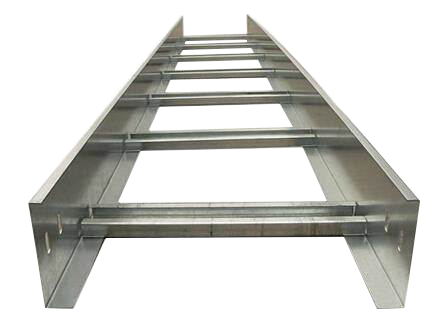
A Ladder Cable Tray features two longitudinal side rails connected by evenly spaced rungs, resembling a ladder. This open structure provides excellent airflow, making it the preferred choice for power cables that generate heat during operation.
Key advantages include:
- Excellent heat dissipation
- High load-bearing capacity
- Lightweight construction
- Easy cable installation
- Simple maintenance and inspection
Because of its superior ventilation, ladder cable trays are widely used in:
- Power plants
- Manufacturing facilities
- Petrochemical plants
- Data centers
- Outdoor cable installations
Large-diameter power cables and high-voltage cables particularly benefit from ladder cable trays because the open design prevents excessive heat accumulation.
2. Perforated Cable Tray
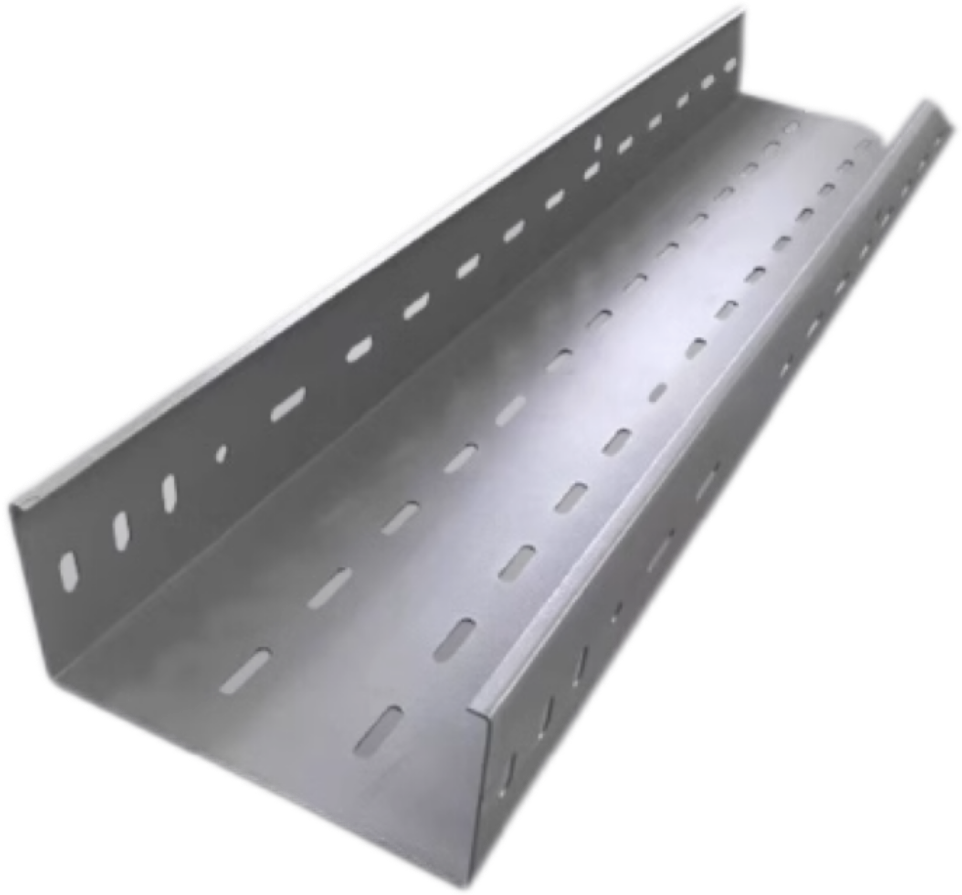
A Perforated Cable Tray, sometimes called a ventilated cable tray, has a flat bottom with ventilation holes. It combines structural support with moderate protection while maintaining sufficient airflow.
Its advantages include:
- Attractive appearance
- Strong mechanical support
- Moderate ventilation
- Easy cable routing
- Suitable for both power and control cables
Perforated cable trays are commonly installed in:
- Office buildings
- Shopping malls
- Hospitals
- Schools
- Commercial facilities
- Industrial workshops
Surface finishes may include:
- Hot-dip galvanized
- Powder-coated
- Stainless steel
- Aluminum alloy
Depending on the environment, additional anti-corrosion treatments can significantly extend service life.
3. Solid Bottom Cable Tray
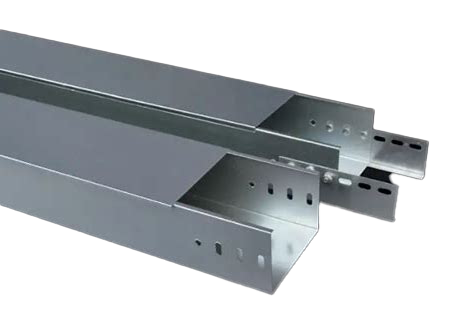
A Solid Bottom Cable Tray provides complete enclosure for cables, offering the highest level of protection among all cable tray types.
Unlike ladder trays, its enclosed structure effectively protects sensitive cables from:
- Dust
- Moisture
- Electromagnetic interference
- Falling debris
- Chemical contamination
Solid bottom cable trays are especially suitable for:
- Communication cables
- Fiber optic cables
- Instrumentation cables
- Computer network cables
- Control systems
Industries requiring high signal integrity often prefer this type because it minimizes external interference while providing enhanced cable protection.
Choosing among these three types depends on cable weight, ventilation requirements, installation environment, maintenance accessibility, and future expansion plans.
What Holds a Cable Tray?
A cable tray system is only as reliable as its supporting structure. Proper support ensures mechanical stability, maintains safe load capacity, and prevents excessive deflection over long cable runs.
Several components work together to support a cable tray installation.
Wall Brackets
Wall-mounted brackets are commonly used where cable trays run along building walls. These brackets save floor space while providing secure support.
Ceiling Hangers
Threaded rods combined with trapeze hangers suspend cable trays from ceilings. This installation method is frequently used in factories, airports, commercial buildings, and warehouses where overhead cable routing maximizes usable space.
Floor Supports
In utility tunnels and equipment rooms, floor-mounted supports provide excellent stability for heavy cable loads.
Cantilever Arms
Cantilever support arms extend from structural columns or walls to carry cable trays while minimizing installation complexity.
Support Spacing
Support intervals depend on several engineering factors:
- Tray material
- Cable weight
- Span length
- Environmental conditions
- Applicable electrical standards
Improper support spacing may cause tray deformation, excessive sagging, or structural failure.
A professional cable tray manufacturer carefully designs support accessories to match the tray system’s load ratings and installation requirements. High-quality support components also simplify installation while reducing maintenance costs over the system’s service life.
Reliable support systems ultimately improve safety, reduce vibration, and maintain cable organization even under demanding industrial conditions.
How to Prepare Cable Tray Layout?
Designing a cable tray layout requires careful planning before installation begins. A well-designed layout improves cable management, simplifies maintenance, reduces installation costs, and accommodates future system expansion.
Step 1: Study the Building Layout
Review architectural drawings, structural plans, and equipment locations before determining cable routes.
Important considerations include:
- Electrical rooms
- Equipment locations
- Ceiling height
- Pipe routing
- HVAC systems
- Fire protection systems
Avoid conflicts with other building services whenever possible.
Step 2: Calculate Cable Capacity
Estimate both current cable quantities and future expansion requirements.
Industry practice typically reserves 20–40% spare capacity to allow additional cables without replacing the entire tray system.
Step 3: Select the Appropriate Tray Type
Choose the tray based on application:
- Ladder Cable Tray for heavy power cables
- Perforated Cable Tray for mixed power and control cables
- Solid Bottom Cable Tray for sensitive communication systems
Step 4: Determine Support Locations
Support spacing should comply with manufacturer recommendations and engineering standards.
Special attention should be given near:
- Horizontal bends
- Vertical risers
- Tee connections
- Cross intersections
- Heavy cable concentration points
Step 5: Consider Environmental Conditions
Material selection greatly affects long-term performance.
Common choices include:
- Stainless Steel Cable Tray
- Hot-Dip Galvanized Cable Tray
- Aluminum Alloy Cable Tray
- FRP Cable Tray
- Powder-Coated Cable Tray
Corrosive environments may require additional protective coatings.
Step 6: Plan Future Maintenance
A good cable tray layout allows technicians to:
- Inspect cables
- Replace damaged cables
- Add new circuits
- Clean accumulated debris
- Upgrade electrical systems
Working with an experienced cable tray supplier during the design stage helps optimize routing efficiency while ensuring compliance with local installation standards.
How to Check Cable Tray Size?
Selecting the proper cable tray size is essential for maintaining cable safety, reducing installation costs, and allowing future network expansion.
Several important factors determine the correct tray dimensions.
Cable Quantity
Count all planned cables rather than only current installations.
Future expansion should always be considered.
Cable Diameter
Measure the outside diameter of every cable.
Large power cables require significantly more tray space than communication cables.
Fill Ratio
Electrical standards often limit tray fill percentages to maintain adequate ventilation and simplify cable maintenance.
Overfilled trays can cause:
- Heat buildup
- Difficult cable replacement
- Reduced airflow
- Increased mechanical stress
Load Capacity
Besides internal space, engineers must verify that the tray can safely support the combined cable weight across the required span.
Tray Width
Common widths include:
- 100 mm
- 150 mm
- 200 mm
- 300 mm
- 450 mm
- 600 mm
- 800 mm
The selected width depends on cable volume and expansion requirements.
Tray Height
Typical side rail heights include:
- 50 mm
- 75 mm
- 100 mm
- 150 mm
Greater side rail height improves cable containment for larger cable bundles.
Material Thickness
Tray thickness directly influences structural strength.
Heavier cable loads require thicker steel or aluminum construction.
Professional Selection
A reputable cable tray factory or experienced cable tray seller can calculate suitable tray dimensions based on:
- Cable schedules
- Load calculations
- Installation environment
- Support spacing
- Applicable electrical codes
Proper sizing not only improves safety but also minimizes unnecessary material costs while extending the service life of the entire cable management system.
Conclusion
Choosing the right Cable Tray involves selecting the appropriate type, support system, layout, and size. A well-designed cable tray system improves cable protection, simplifies maintenance, and supports future expansion. Working with an experienced cable tray manufacturer, cable tray supplier, cable tray seller, or cable tray factory helps ensure reliable, efficient, and long-lasting cable management solutions.
 Português
  English (UK)
  Bahasa Indonesia
  Tiếng Việt
  Deutsch
  Español
  Français
  Русский