
How Can MNS Low Voltage Switchgear Improve Power Distribution Efficiency While Reducing Maintenance Costs?
Power distribution failures often begin with seemingly minor issues, such as overheated withdrawable plug contacts, incompatible replacement components, and bulky switchgear cabinets that consume valuable installation space. Over time, these problems can result in unexpected downtime, increased maintenance expenses, reduced operational efficiency, and costly interruptions to industrial production or commercial facilities. Choosing the right switchgear system is essential for ensuring long-term reliability. This article explains how MNS Low Voltage Switchgear addresses these challenges through its modular design, dependable performance, and flexible applications, helping buyers make informed purchasing decisions.
Table of Contents
ToggleWhat Is an MNS Low Voltage Switchgear?
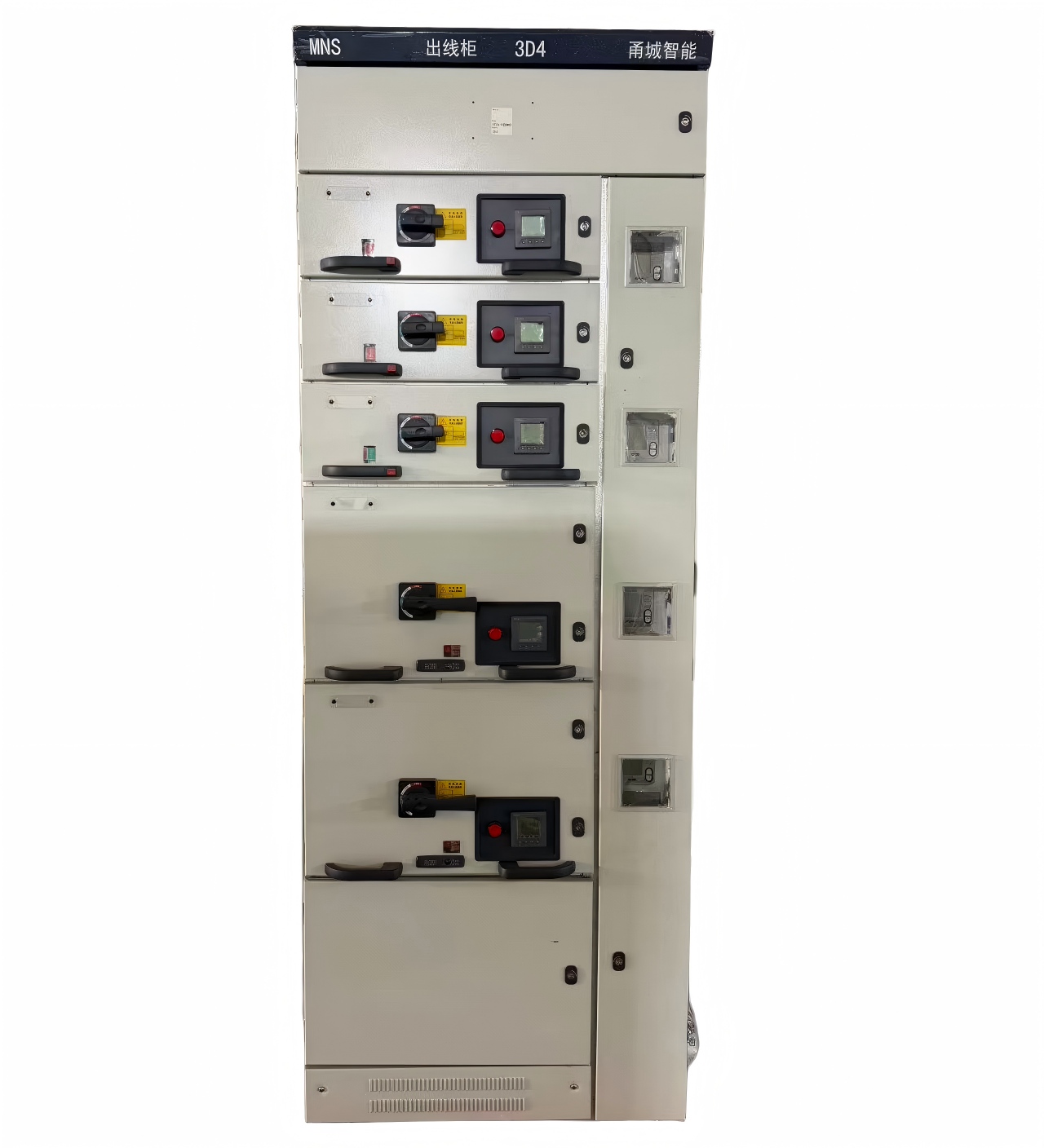
MNS low-voltage withdrawable switchgear is suitable for power systems operating at AC 50Hz with a rated working voltage of 400V. It is primarily used for the conversion, distribution, and control of electrical energy within low-voltage distribution systems. Featuring a modular withdrawable structure, high operational safety, and flexible expansion capabilities, MNS switchgear is widely installed in industrial plants, commercial buildings, utilities, infrastructure projects, and renewable energy systems where reliable power distribution and simplified maintenance are required.
Reliable power distribution requires more than quality equipment—it demands the right system design. Continue reading to discover why MNS Low Voltage Switchgear has become a preferred solution worldwide.
What Is a Low-Voltage Switchgear?
A low-voltage switchgear is a complete electrical distribution assembly designed to receive, distribute, protect, control, and monitor electrical power within low-voltage networks. Typically operating at voltages up to 1000V AC, it serves as the central hub that safely manages electrical circuits while protecting equipment and personnel from overloads, short circuits, and electrical faults.
Modern low-voltage switchgear integrates multiple electrical components into a single enclosure, including:
- Circuit breakers
- Busbar systems
- Protective relays
- Metering instruments
- Motor control units
- Cable compartments
- Control devices
These assemblies are commonly installed in manufacturing plants, commercial buildings, hospitals, data centers, utility substations, airports, water treatment facilities, and renewable energy projects.
Unlike traditional fixed-panel systems, many modern switchgear solutions adopt withdrawable modules, allowing operators to remove individual functional units without shutting down the entire distribution system. This significantly improves maintenance efficiency while reducing operational interruptions.
Another important characteristic is compliance with international standards such as IEC 61439, ensuring electrical safety, mechanical reliability, temperature rise limits, and fault resistance.
Businesses selecting a switchgear factory typically evaluate factors including product reliability, safety certification, modular flexibility, ease of maintenance, and lifecycle operating costs rather than simply focusing on initial purchase price.
As industries continue adopting intelligent manufacturing and digital power management, low-voltage switchgear has evolved from simple electrical panels into highly integrated power distribution systems capable of supporting automation, energy monitoring, and future expansion.
What Are the Features and Benefits of MNS Low Voltage Switchgear?
The MNS Low Voltage Switchgear has become one of the world’s most recognized low-voltage distribution systems because it combines safety, flexibility, reliability, and cost efficiency in one modular platform.
Modular Design
Perhaps its biggest advantage is its fully modular construction. Each functional unit is standardized, allowing different cabinet configurations to be assembled according to project requirements. This modular approach simplifies engineering design, production, installation, future upgrades, and spare parts management.
For organizations seeking a dependable Modular Low Voltage Switchgear seller, modularity directly translates into reduced inventory costs and easier future expansion.
Withdrawable Functional Units
Withdrawable drawers allow maintenance personnel to replace or inspect individual feeders without dismantling the entire cabinet. This minimizes production interruptions and greatly reduces maintenance time.
Compared with conventional fixed switchboards, the MNS system significantly improves operational continuity.
Excellent Electrical Safety
Safety remains one of the strongest selling points of MNS switchgear.
Its design typically incorporates:
- Complete compartmentalization
- Reliable mechanical interlocks
- Arc-resistant structures
- High-quality insulation
- Effective grounding systems
These features help reduce operational risks while protecting maintenance personnel.
High Mechanical Strength
The cabinet framework uses robust steel construction with excellent rigidity, allowing it to withstand transportation, installation, vibration, and demanding industrial environments.
The structure also supports multiple cabinet combinations for larger distribution systems.
Superior Heat Dissipation
Proper ventilation channels and optimized internal layouts help reduce temperature rise.
This directly addresses one of the industry’s common problems—overheated drawer plug contacts—which often shorten equipment life in poorly designed switchgear.
Interchangeable Components
Many traditional switchgear systems require model-specific spare parts.
By comparison, MNS switchgear uses standardized components, making maintenance faster and reducing spare parts inventory.
This resolves another common customer concern regarding non-universal accessories.
Lower Lifetime Cost
Although initial investment may vary depending on configuration, reduced downtime, simplified maintenance, easier expansion, and long service life contribute to lower total ownership costs.
Professional buyers frequently evaluate lifecycle value instead of purchase price alone, making MNS systems attractive for long-term infrastructure investments.
For companies searching for an experienced MNS switchgear manufacturer, these technical advantages often become decisive purchasing factors.
What Is MNS Low Voltage Switchgear’s Structure and Composition?
Understanding the internal structure helps buyers evaluate product quality and compare different manufacturers more effectively.
An MNS Low Voltage Switchgear cabinet is generally divided into several functional sections, each designed to maximize operational safety and maintenance convenience.
Cabinet Framework
The cabinet frame forms the structural foundation.
Manufactured from galvanized or high-strength steel profiles, it provides excellent mechanical stability while supporting standardized modular assembly.
Its compact footprint also helps solve another common customer concern—large cabinet space requirements.
Busbar System
The main horizontal and vertical busbars distribute electrical power throughout the cabinet.
High-conductivity copper busbars are commonly used because they provide:
- Lower electrical resistance
- Reduced temperature rise
- Improved current carrying capacity
- Better long-term reliability
Busbars are insulated and arranged to minimize electromagnetic forces during short-circuit conditions.
Withdrawable Functional Units
These are the core of the MNS system.
Each drawer may contain:
- Molded case circuit breakers
- Contactors
- Motor starters
- Protection relays
- Control devices
- Metering instruments
Drawers usually support multiple operating positions such as:
- Connected
- Teste
- Isolated
- Withdrawn
This greatly enhances maintenance safety.
Cable Compartment
Separate cable chambers simplify cable routing while preventing interference with live components.
This improves installation quality and future cable modifications.
Protection and Control Section
The control compartment houses:
- Protection relays
- PLC interfaces
- Communication modules
- Intelligent monitoring devices
- Digital meters
Many modern MNS systems support industrial communication protocols, allowing integration into intelligent building management systems and industrial automation platforms.
Mechanical Interlocking System
Mechanical interlocks prevent unsafe operations such as opening energized compartments or withdrawing drawers under load.
These mechanisms significantly improve operator safety.
Enclosure
The enclosure protects internal electrical components from dust, accidental contact, and environmental influences.
Depending on application requirements, various protection ratings can be provided.
The modular cabinet architecture allows an experienced MNS low voltage switchgear supplier to customize solutions for nearly every industrial application while maintaining standardized production efficiency.
The Application of MNS Low Voltage Switchgear
Because of its reliability and flexible configuration, MNS Low Voltage Switchgear is widely used across numerous industries.
Industrial Manufacturing
Factories require uninterrupted electrical power to maintain continuous production.
MNS switchgear distributes power to:
- Production lines
- Motor control centers
- Compressors
- Pumps
- Conveyors
- CNC equipment
Its withdrawable design minimizes downtime during maintenance.
Commercial Buildings
Office towers, shopping centers, hotels, hospitals, and convention centers rely on MNS systems to supply stable electrical distribution for lighting, HVAC systems, elevators, fire protection, and backup power systems.
Power Plants and Substations
Utility companies use MNS switchgear for auxiliary power distribution and equipment control because of its proven reliability and standardized modular design.
Renewable Energy Projects
Solar farms, wind power stations, and battery energy storage systems require dependable low-voltage distribution equipment.
MNS switchgear provides reliable energy distribution between transformers, inverters, storage systems, and local loads.
Data Centers
Modern data centers demand extremely high power availability.
The modular nature of MNS switchgear supports redundant power architectures while allowing maintenance without disrupting critical operations.
Infrastructure Projects
Airports, rail transit systems, water treatment plants, mining facilities, petrochemical complexes, and municipal utilities all benefit from the flexibility and high operational safety of MNS systems.
Intelligent Power Distribution
As Industry 4.0 expands globally, many users integrate MNS switchgear with intelligent monitoring platforms for:
- Remote diagnostics
- Energy management
- Predictive maintenance
- Fault analysis
- Real-time operating data
Working with an experienced switchgear factory enables customers to customize communication interfaces, intelligent monitoring functions, and cabinet layouts according to project requirements.
Conclusion
MNS Low Voltage Switchgear delivers safe, modular, reliable, and efficient power distribution for modern electrical systems. Its withdrawable design, standardized components, and flexible applications help reduce maintenance costs while improving operational reliability, making it an excellent choice for organizations seeking a trusted MNS low voltage switchgear supplier, MNS switchgear manufacturer, Modular Low Voltage Switchgear seller, or professional switchgear factory.
 Português
  English (UK)
  Bahasa Indonesia
  Tiếng Việt
  Deutsch
  Español
  Français
  Русский