
Does Your VFD Need a Line Reactor? A Buyer’s Guide to Choosing the Right Reactor
A line reactor can run hot and generate noticeable noise, especially when a VFD operates in a high-harmonic environment or inside a poorly ventilated electrical cabinet. Excessive temperature and vibration can accelerate insulation aging, reduce equipment life, and raise the thermal burden on the entire cabinet. The good news is that proper reactor sizing, cooling design, installation, and harmonic assessment can significantly improve operating conditions. This guide explains what a line reactor does, when a VFD needs one, and how to choose the right reactor for different electrical applications.
What Is a Reactor?
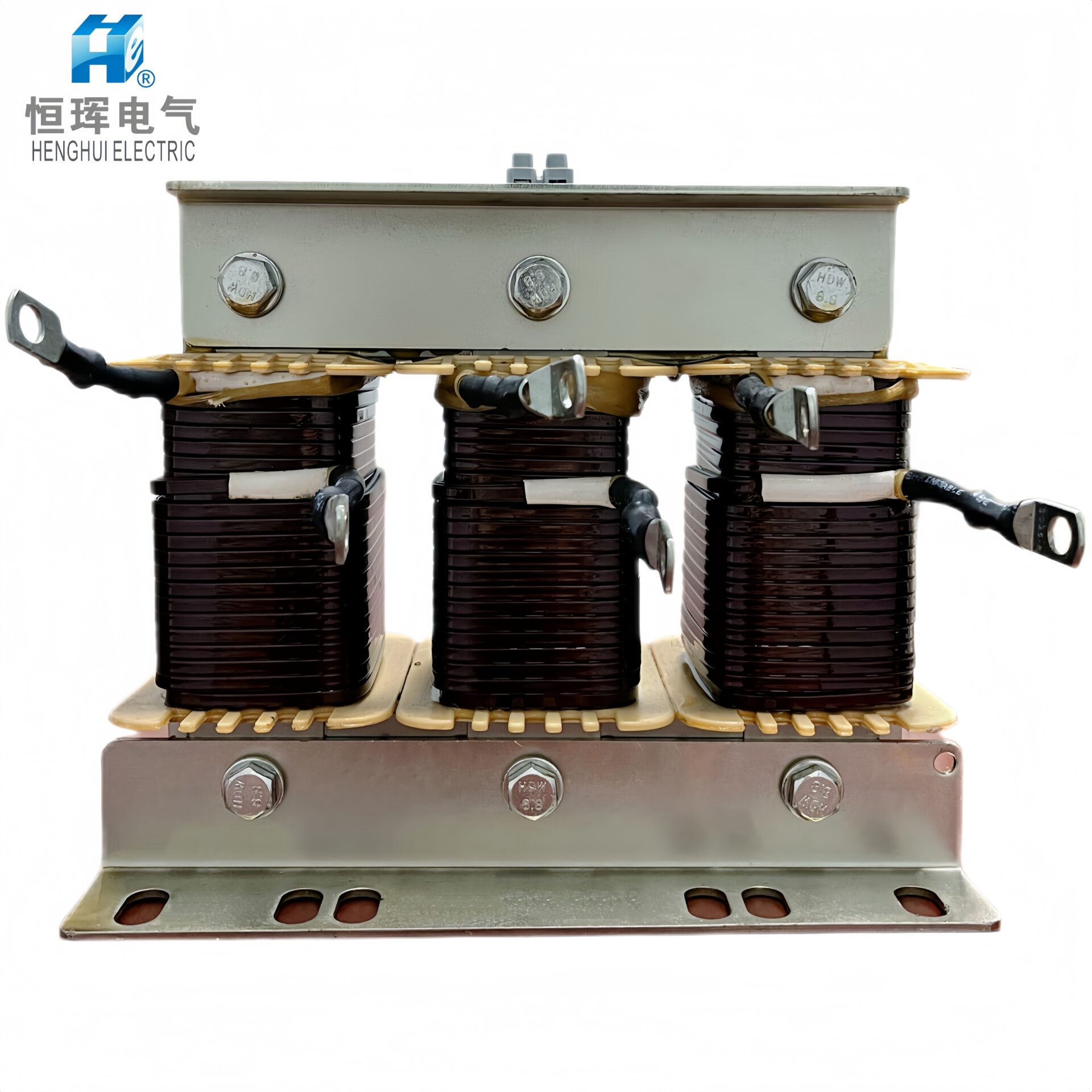
A line reactor, also known as a line choke, is an inductive device installed on the input side of a variable frequency drive (VFD). By adding impedance to the power circuit, it limits rapid changes in current, reduces input current harmonics and electrical disturbances, and helps protect the VFD from voltage and current transients.
Understanding the basic function of a reactor is important because different reactor designs are intended for different electrical conditions.
Before choosing one, it is necessary to understand how reactors are classified and where they are used.
What Will a Line Reactor Be Used For?
A line reactor is primarily used to add controlled inductance to an electrical circuit. In a VFD application, it is normally installed between the incoming power supply and the drive. Its inductive impedance changes how quickly current can change, helping the drive operate under less stressful electrical conditions.
One of the most common reasons for installing a line reactor is to reduce the impact of electrical disturbances on the VFD. Industrial power systems can experience voltage fluctuations, switching events, current spikes, and other transient conditions. A reactor does not eliminate these events, but its impedance can help limit the rate and magnitude of certain current disturbances reaching the drive.
Another important application is harmonic reduction. VFDs use power electronic switching devices to convert incoming AC power into the voltage and frequency required by the motor. Because the input current is not perfectly sinusoidal, the drive can introduce harmonic currents into the electrical system. A properly selected line reactor can increase the impedance seen by the drive and help reduce the resulting input current distortion.
This can be particularly useful when several VFDs operate in the same facility. Multiple drives can contribute to the overall harmonic level of a distribution system, potentially affecting transformers, cables, capacitors, and other electrical equipment.
A line reactor can also help limit current changes during certain abnormal or transient conditions, reducing electrical stress on the drive’s input components.
However, it is important to understand what a line reactor does not do. It is not a complete surge protection device, and it should not be treated as a replacement for an appropriate SPD or other protection equipment where such protection is required.
Thermal performance is another practical consideration. Because a reactor is an inductive component with winding resistance and magnetic losses, it naturally produces heat during operation. If the reactor is undersized, heavily loaded, exposed to significant harmonics, or installed in a poorly ventilated enclosure, its temperature can rise substantially.
Therefore, the application environment is just as important as the electrical rating.
When selecting a line reactor, engineers and buyers should consider:
- Rated voltage
- Rated current
- Frequency
- Required impedance or reactance
- Harmonic conditions
- VFD capacity
- Installation environment
- Cooling and ventilation
- Available cabinet space
- Continuous operating conditions
For this reason, a line reactor should not be selected only by matching the VFD’s nominal power. The electrical system and actual operating conditions should also be evaluated.
What Are the Different Types and Classifications of Reactor in Different Electrical Situations?
The term reactor covers a relatively broad range of inductive equipment. A line reactor is only one type. Depending on where it is installed and what electrical problem it is intended to address, reactors can have significantly different designs, ratings, and functions.
1. Line Reactor
A line reactor is generally installed on the AC input side of a VFD or other power electronic equipment.
Its main purposes include:
- Adding impedance to the incoming circuit
- Reducing current transients
- Helping reduce input current harmonics
- Limiting electrical disturbances
- Reducing stress on VFD input components
Line reactors are particularly common in industrial motor-control systems where VFDs are widely used.
The key selection parameters normally include rated current, voltage, frequency, and impedance/reactance percentage.
2. Series Reactor
A Series Reactor is connected in series with the electrical circuit. In fact, a line reactor can be considered a type of series reactor when viewed from its circuit connection and application.
Series reactors are used when additional impedance is needed to control current or influence system behavior.
Depending on the application, a series reactor may be used for:
- Current limiting
- Harmonic control
- Capacitor bank protection
- Switching transient reduction
- Power quality improvement
In capacitor-based power factor correction systems, for example, a series reactor can be combined with capacitors to help prevent undesirable resonance conditions and reduce the influence of harmonic currents.
This is one reason buyers should not select a reactor simply by searching for a generic “reactor.” The connection method and intended electrical function are critical.
3. Shunt Reactor
A shunt reactor has a different purpose from a typical VFD line reactor.
A shunt reactor is connected in parallel with the electrical system rather than in series. It is commonly used in high-voltage transmission and distribution applications to absorb excess reactive power, particularly when long transmission lines or cables are lightly loaded.
This means a shunt reactor is not normally a substitute for a VFD line reactor.
The two products may both contain windings and magnetic cores, but their electrical roles are fundamentally different.
4. Power Reactor
The term power reactor can refer more broadly to reactors designed for power-system applications and higher electrical ratings. Depending on the manufacturer and industry context, the term may cover different reactor configurations and applications.
Power reactors can be designed for applications involving:
- Current limitation
- Harmonic mitigation
- Reactive power control
- Power system protection
- Voltage regulation
- Industrial power distribution
Therefore, buyers should always verify the electrical function, connection method, voltage level, current rating, and intended application rather than relying only on the product name.
Choosing by Electrical Situation
A simple way to understand the differences is to start with the electrical problem:
| Electrical Situation | Common Reactor Type | Main Purpose |
|---|---|---|
| VFD input | Line Reactor | Limit disturbances and reduce input current harmonics |
| Series-connected circuit | Series Reactor | Add impedance and control current |
| Capacitor compensation system | Series Reactor | Reduce resonance and harmonic interaction |
| Long transmission line | Shunt Reactor | Absorb excess reactive power |
| High-power electrical system | Power Reactor | Current control, power quality, or system protection |
The most important purchasing principle is therefore simple: select the reactor according to the electrical application, not just according to its name or physical appearance.
Does a VFD Need a Line Reactor?
Not every VFD installation automatically requires a line reactor, but many industrial applications can benefit from one.
Whether a VFD needs a line reactor depends on the characteristics of the power system, the drive, the motor load, and the surrounding electrical equipment.
For a simple installation with a stable power supply, relatively low electrical disturbance, and suitable operating conditions, a line reactor may not always be necessary.
However, the case for using one becomes stronger when the VFD operates in a demanding industrial environment.
When a Line Reactor Is More Beneficial
A line reactor should be considered when the facility has significant electrical disturbances or harmonic concerns.
For example, it can be useful when:
- Multiple VFDs are connected to the same distribution system.
- The facility contains a large amount of power electronic equipment.
- Voltage fluctuations or switching disturbances are present.
- The VFD is connected to a relatively stiff electrical supply.
- The drive manufacturer recommends or requires additional input impedance.
- Harmonic current distortion needs to be controlled.
- The VFD input components require additional protection from electrical disturbances.
The phrase “stiff power system” is particularly relevant. When the source impedance is very low, current can change rapidly during certain electrical events. Adding an appropriate line reactor increases impedance and can help moderate these current changes.
What Happens Without a Line Reactor?
Without a line reactor, the VFD remains directly exposed to the characteristics of the incoming electrical supply, subject to the protection already provided by the drive and the overall system.
That does not mean the VFD will immediately fail.
Instead, the concern is that under unfavorable conditions, the drive may experience higher electrical stress, greater input current distortion, or stronger transient currents.
Over time, repeated electrical stress can contribute to component heating and aging.
This is why the decision should not be based only on the question:
“Will the VFD run without a line reactor?”
A better purchasing question is:
“Would a properly selected line reactor improve the electrical environment and operating reliability of this VFD?”
How Should a Buyer Decide?
The best approach is to evaluate the actual electrical conditions rather than automatically adding a reactor to every VFD.
The assessment should consider:
VFD rating → supply voltage → input current → harmonic environment → short-circuit characteristics → operating load → installation conditions → cooling requirements.
This approach also helps avoid another common problem: oversizing or incorrectly selecting the reactor.
A reactor that is too small may not provide the desired impedance and thermal performance. A reactor that is unnecessarily large may increase cost, voltage drop, losses, physical size, and heat generation.
Therefore, the right reactor is not necessarily the largest reactor.
It is the reactor that provides the appropriate electrical impedance while maintaining acceptable voltage drop, losses, temperature rise, and operating reliability.
What Is the Purpose of a Line Reactor?
The fundamental purpose of a line reactor is to introduce controlled inductive impedance into the power circuit.
That simple function creates several practical benefits for VFD applications.
1. Reducing Input Current Harmonics
One of the most important applications is helping to reduce input current harmonics generated by power electronic equipment.
A VFD does not draw perfectly sinusoidal current from the utility supply. The nonlinear nature of its input rectifier creates harmonic components.
A line reactor increases the impedance between the source and the VFD, which can help smooth the input current waveform and reduce harmonic distortion.
However, if the facility has strict harmonic requirements, a line reactor may not be sufficient by itself. Additional harmonic mitigation equipment or system-level solutions may be required.
2. Limiting Current Transients
A line reactor resists rapid changes in current.
This characteristic can help limit certain current spikes and electrical disturbances reaching the VFD.
As a result, the reactor can provide an additional level of protection for sensitive input components.
Again, it should be viewed as part of a protection strategy, rather than a universal replacement for surge protection.
3. Improving VFD Operating Conditions
A properly selected reactor can make the electrical environment seen by the VFD more controlled.
This is especially valuable in industrial systems where many motors, drives, transformers, capacitor banks, and other loads operate simultaneously.
By adding impedance, the reactor can reduce the severity of certain interactions between the VFD and the upstream power system.
4. Supporting System Reliability
Electrical reliability is rarely determined by a single component.
A VFD, motor, transformer, cable, capacitor, protection device, and reactor all interact within the same electrical system.
A line reactor can therefore contribute to overall system reliability by helping control current disturbances and harmonic effects.
But its performance depends heavily on correct sizing and installation.
5. Managing the Practical Problem of Heat
There is an important trade-off that buyers should understand.
A reactor helps control electrical current, but it is not lossless. Its windings and magnetic core generate heat during operation.
This means thermal design is an essential part of reactor design.
If a reactor is installed inside a compact VFD cabinet, the heat it generates can affect surrounding components. Poor ventilation can further increase its operating temperature.
For this reason, reactor manufacturers and system designers should consider:
- Winding design
- Core material
- Conductor size
- Insulation system
- Temperature-rise control
- Enclosure ventilation
- Ambient temperature
- Harmonic current
- Continuous load conditions
This is particularly important because harmonic current can increase heating.
A reactor that performs well under a clean sinusoidal current may experience different thermal conditions when exposed to significant harmonic currents.
That brings the discussion back to one of the most common user pain points: heat and noise.
A line reactor should not only meet its electrical rating on paper. It should also provide acceptable thermal and acoustic performance under the actual conditions in which it will operate.
Conclusion
A line reactor is more than a simple coil installed in front of a VFD. Properly selected, it can help control current transients, reduce input harmonics, and improve the electrical environment of the drive. The key is to match the reactor type, impedance, thermal design, and installation conditions to the actual electrical system.
 Português
  English (UK)
  Bahasa Indonesia
  Tiếng Việt
  Deutsch
  Español
  Français
  Русский