
Why Is an Oil Transformer Still the Most Reliable Choice for Modern Power Distribution?
Unexpected transformer failures are difficult to diagnose, especially in harsh environments where heat, moisture, dust, and voltage fluctuations accelerate component damage. Without remote monitoring and predictive maintenance, minor issues can quickly develop into costly outages, equipment damage, and production downtime. These failures not only increase maintenance costs but also threaten the reliability of the entire power distribution system. Choosing a high-quality Oil Transformer with robust design, premium insulation, and intelligent monitoring helps minimize risks and maximize operational reliability. Read on to discover why oil transformers remain the industry’s preferred solution.
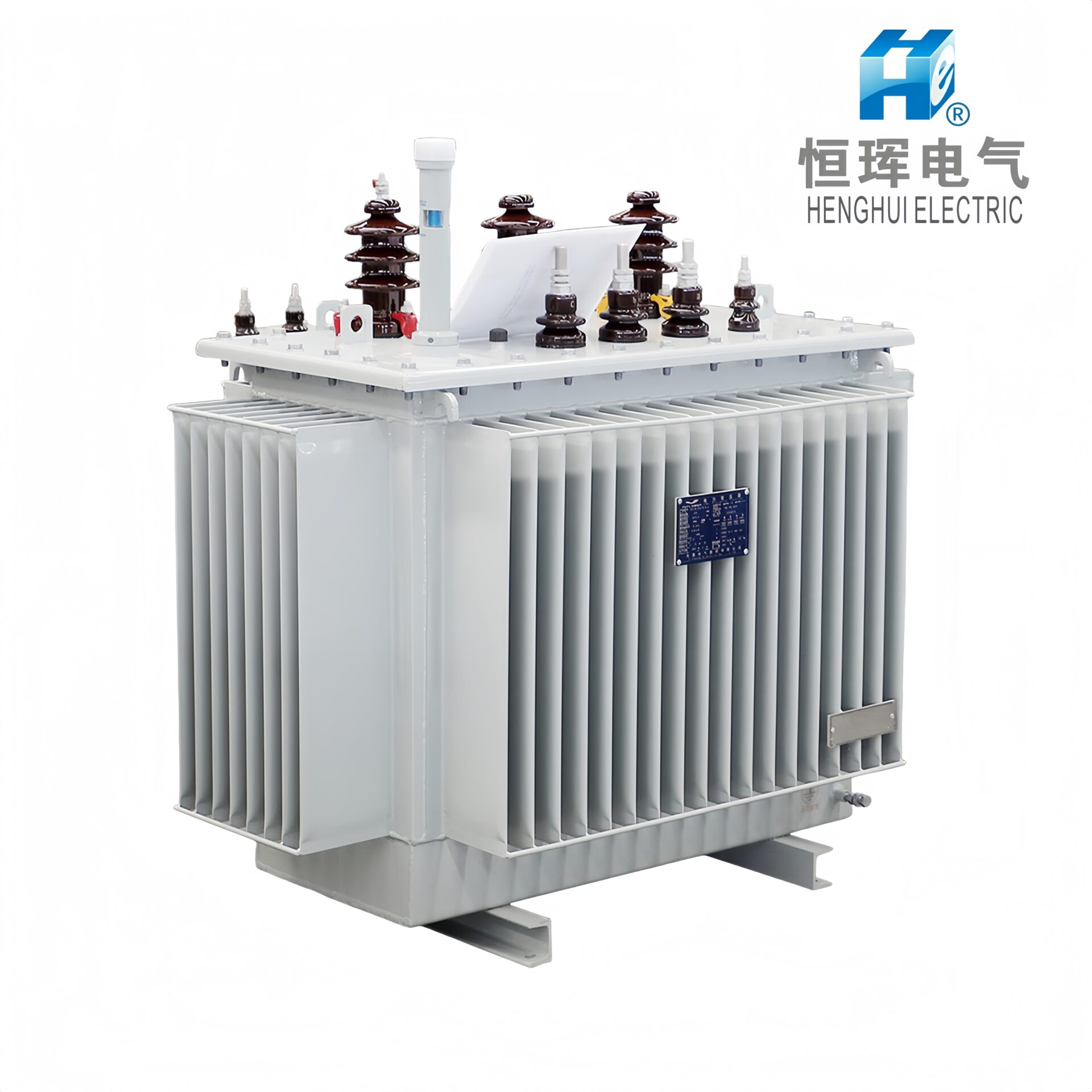
An oil-immersed transformer is one of the most commonly used types of transformers in power distribution systems. These transformers use transformer oil (usually mineral oil) to cool the transformer and insulate its internal components, ensuring efficient and reliable operation. Transformer oil plays a vital role in heat dissipation, electrical insulation, and arc suppression. Without high-quality insulating oil, transformers may overheat, experience insulation failure, and suffer unexpected outages that compromise the safety and stability of the entire electrical network.
Let’s explore how oil transformers work, why transformer oil is indispensable, and what makes their structure highly reliable for modern power systems.
How Does an Oil Transformer Work?
An Oil Transformer transfers electrical energy from one circuit to another through the principle of electromagnetic induction. It changes voltage levels without altering the operating frequency, making it one of the most essential devices in electrical transmission and distribution networks.
The operation begins when alternating current flows through the transformer’s primary winding. This current generates a continuously changing magnetic field inside the laminated silicon steel core. The magnetic flux passes through the secondary winding, inducing a new voltage according to the turns ratio between the two windings.
Unlike dry-type transformers, the windings and core of an Oil Immersed Distribution Transformer are completely submerged in transformer oil. This oil continuously absorbs heat generated during operation and transfers it to the tank walls or cooling radiators, preventing excessive temperature rise.
The process involves several coordinated components:
- Primary winding receives electrical power.
- Magnetic core transfers magnetic flux efficiently.
- Secondary winding outputs the transformed voltage.
- Transformer oil removes heat while providing insulation.
- Cooling system dissipates heat into the surrounding environment.
- Protective devices monitor pressure, oil level, and temperature.
For larger Power transformer installations, advanced monitoring systems continuously measure operating parameters such as winding temperature, oil temperature, dissolved gas content, moisture level, and loading conditions. These systems provide predictive maintenance data, allowing operators to detect developing faults before they become critical.
Modern Three-Phase Oil-Immersed Power Transformer designs also incorporate online diagnostics, intelligent cooling control, and remote communication systems. These technologies significantly improve reliability while reducing maintenance costs.
Because of their outstanding efficiency, excellent overload capability, and long service life, oil transformers remain the preferred solution for utilities, industrial facilities, renewable energy plants, substations, mining operations, and commercial infrastructure worldwide.
What Is the Purpose of Transformer Oil?
Transformer oil performs multiple essential functions that directly affect the safety, efficiency, and lifespan of an Oil Transformer. It is far more than a simple cooling liquid—it serves as the transformer’s primary insulating and protective medium.
The most important function is electrical insulation. The oil fills every space between energized conductors and grounded metal components, preventing electrical discharge and insulation breakdown. High dielectric strength allows transformers to operate safely under high voltages.
The second critical role is heat removal. During normal operation, copper losses and core losses generate considerable heat. Transformer oil absorbs this thermal energy and transports it to the cooling surfaces where it is released into the surrounding air.
Transformer oil also provides:
- Arc suppression
- Moisture protection
- Oxidation reduction
- Internal component preservation
- Contamination isolation
- Extended insulation life
High-quality mineral oil maintains stable chemical properties over many years. Proper oil treatment minimizes moisture, dissolved gases, sludge formation, and oxidation products that could otherwise reduce dielectric strength.
Routine oil testing is equally important. Maintenance teams regularly analyze:
- Dielectric breakdown voltage
- Moisture content
- Dissolved Gas Analysis (DGA)
- Acidity
- Interfacial tension
- Oil color
- Furan content
These tests help identify internal faults such as overheating, insulation aging, partial discharge, and winding defects long before catastrophic failures occur.
For mission-critical Power transformer applications, transformer oil effectively becomes a diagnostic tool as well as an insulating medium, making predictive maintenance significantly more accurate.
How Does Transformer Oil Provide Cooling for the Transformer?
Cooling is one of the primary reasons why the Oil Transformer remains widely used in medium- and high-power electrical systems. Without efficient cooling, winding insulation would rapidly deteriorate, dramatically shortening transformer life.
Heat is produced mainly from:
- Copper winding resistance
- Core hysteresis losses
- Eddy current losses
- Stray magnetic losses
Transformer oil naturally circulates through the tank by convection.
The cooling cycle typically follows these steps:
- Windings generate heat.
- Surrounding oil absorbs thermal energy.
- Heated oil rises toward the top of the tank.
- Cooler oil flows downward.
- Heat transfers through radiators or cooling fins.
- Ambient air removes the heat.
- Cooled oil returns to the windings.
Larger Three-Phase Oil-Immersed Power Transformer units often employ additional cooling methods, including:
- ONAN (Oil Natural Air Natural) – Natural oil and air circulation.
- ONAF (Oil Natural Air Forced) – Fans improve heat dissipation.
- OFAF (Oil Forced Air Forced) – Oil pumps and fans enhance cooling.
- OFWF (Oil Forced Water Forced) – Water-cooled heat exchangers support high-capacity transformers.
These cooling methods enable transformers to carry significantly higher loads while maintaining acceptable operating temperatures.
Temperature monitoring devices—including winding temperature indicators, oil temperature gauges, fiber optic sensors, and intelligent monitoring systems—ensure safe operation under changing load conditions.
Efficient cooling not only improves transformer performance but also slows insulation aging. Since insulation life decreases rapidly with excessive temperature, maintaining proper cooling dramatically extends equipment lifespan while reducing maintenance expenses.
What Are the Composition and Structure of Oil Transformer?
The reliability of an Oil Transformer depends on the careful integration of several mechanical, electrical, and thermal components. Each part is designed to maximize efficiency, safety, and long-term durability.
The major structural components include:
Magnetic Core
The laminated silicon steel core provides a low-loss magnetic path while minimizing hysteresis and eddy current losses.
Primary and Secondary Windings
Copper or aluminum conductors are precisely wound and insulated to achieve the required voltage transformation ratio.
Transformer Oil
High-quality insulating oil fills the tank, providing excellent electrical insulation and continuous cooling.
Transformer Tank
The steel tank protects internal components from environmental contamination while containing the insulating oil.
Radiators or Cooling Fins
Radiators increase the cooling surface area, allowing heat to dissipate efficiently into the atmosphere.
Conservator Tank
Many Oil Immersed Distribution Transformer models include a conservator tank that accommodates oil expansion caused by temperature changes.
Breather
A silica gel breather removes moisture from incoming air, preventing water contamination inside the transformer.
Bushings
Bushings safely connect internal windings to external electrical conductors while maintaining insulation integrity.
Tap Changer
Tap changers adjust voltage ratios to compensate for fluctuations in system voltage.
Protection Devices
Modern transformers often include:
- Buchholz relay
- Pressure relief valve
- Oil level indicator
- Temperature sensors
- Gas monitoring equipment
- Online condition monitoring systems
Advanced Three-Phase Oil-Immersed Power Transformer solutions increasingly integrate IoT-based diagnostics, SCADA communication, remote alarms, and cloud-based asset management platforms. These intelligent systems enable utilities to monitor transformer health in real time, reducing unplanned outages and optimizing maintenance schedules.
Careful selection of insulation materials, magnetic steel, cooling equipment, and protective devices ensures that today’s Power transformer delivers decades of reliable service even under demanding operating conditions.
Conclusion
Oil Transformers continue to be the preferred solution for reliable power distribution thanks to their outstanding cooling performance, excellent insulation, high efficiency, and long service life. With proper design, quality transformer oil, and intelligent monitoring, they provide safe, stable, and cost-effective operation across modern electrical networks.
 Bahasa Indonesia
  English (UK)
  Tiếng Việt
  Deutsch
  Español
  Français
  Português
  Русский