
What Is a Ring Main Unit and Why Is It Essential for Modern Medium-Voltage Distribution?
Traditional medium-voltage switchgear solutions often create operational challenges. SF6-based Ring Main Unit (RMU) designs may face gas leakage risks, complicated maintenance requirements, and limited flexibility during expansion or retrofit projects. Meanwhile, pure air insulation solutions usually require larger installation space and may experience higher temperature rise due to weaker heat dissipation performance. These issues can increase maintenance costs, reduce system reliability, and affect continuous power supply. Modern Ring Main Unit solutions, such as the HXGN15-12 12kV Ring Main Unit, provide a compact, reliable, and flexible alternative for safe medium-voltage distribution.
A Ring Main Unit (RMU) is a compact, metal-enclosed switchgear used in medium-voltage distribution networks. It integrates switches and circuit breakers to safely connect, control, and protect transformers and cables in a ring-type power loop, allowing utilities to isolate faults without interrupting service to the entire grid.
Understanding RMU functions and applications helps customers choose the right medium-voltage solution.
What is the function of a ring main unit?
A Ring Main Unit (RMU) is designed to control, protect, and distribute electrical power in medium-voltage networks. Its primary function is to ensure reliable power transmission between incoming and outgoing feeders while maintaining system safety during normal operation and fault conditions.
In a typical distribution network, the RMU connects multiple cable sections into a ring structure, creating an alternative power path. Compared with traditional radial distribution systems, this ring-type design improves power supply continuity because when one section experiences a fault, the affected part can be isolated while the remaining network continues operating.
The core functions of an RMU switchgear system include:
1. Power connection and distribution
The Ring Main Unit provides electrical connection points between medium-voltage cables, transformers, and distribution equipment. It allows operators to manage the flow of electricity from substations to different loads, ensuring stable energy delivery for industrial, commercial, and public facilities.
2. Fault isolation and protection
One of the most important functions of an RMU is fault protection. When a short circuit or cable fault occurs, the RMU can quickly disconnect the damaged section through load switches, circuit breakers, or fuse protection components. This prevents faults from spreading throughout the entire power network.
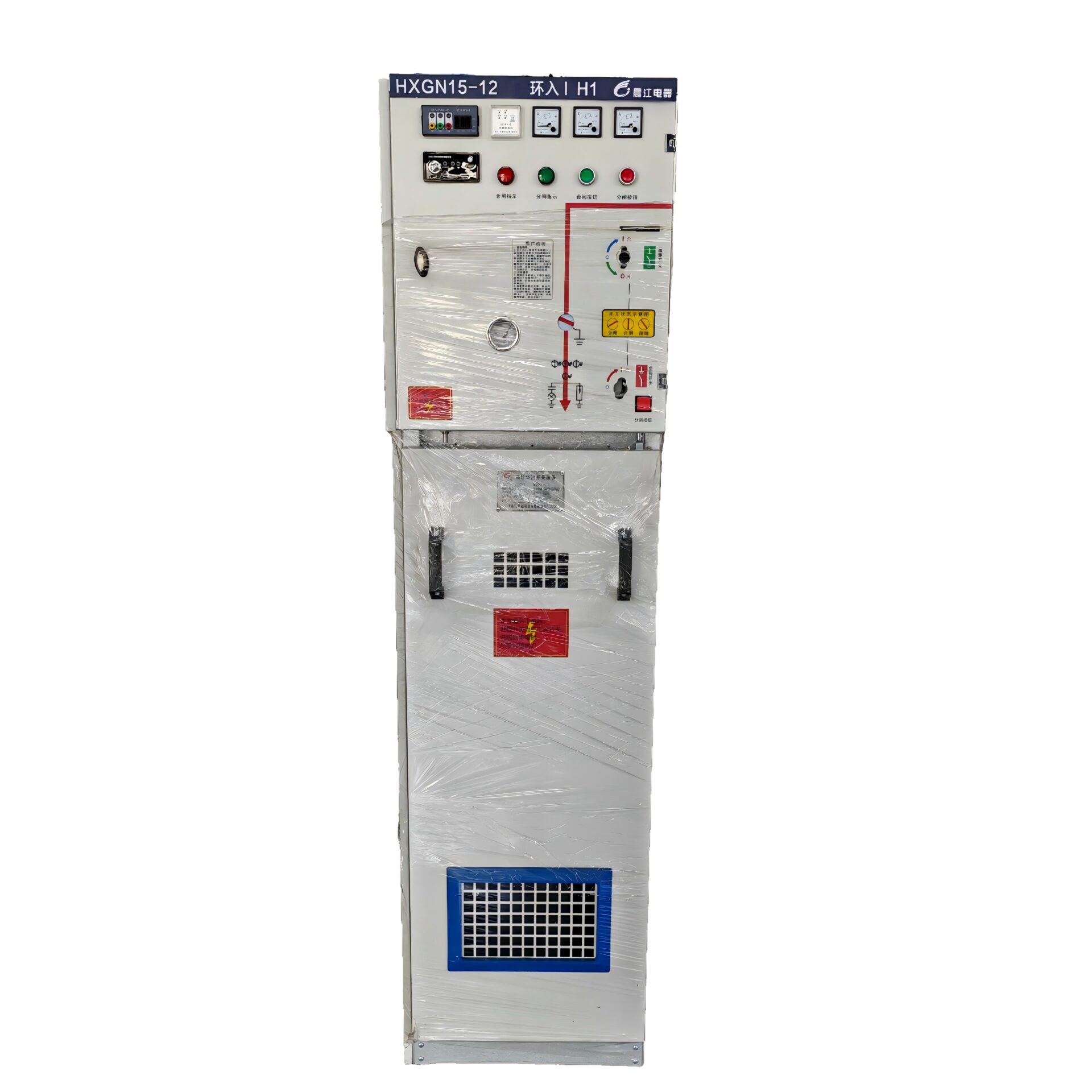
For example, the HXGN15-12 12kV Ring Main Unit integrates compact switching components inside a metal-enclosed cabinet, providing reliable protection for 12kV distribution systems. Its design supports safe operation, simplified maintenance, and improved system stability.
3. Improving power supply reliability
Electricity users such as factories, hospitals, commercial buildings, and transportation facilities require continuous power. The ring structure supported by RMU equipment allows utilities to transfer power supply routes after a fault occurs, reducing outage time and improving electricity reliability.
4. Safe operation and maintenance
Modern RMU designs focus on operator safety. Metal-enclosed structures protect internal electrical components, while interlocking systems reduce the risk of incorrect operation. Similar to other advanced medium-voltage equipment, RMUs can be designed with protection, monitoring, and operational functions to support safer maintenance processes.
The HXGN15-12 series follows the development trend of compact and reliable medium-voltage equipment. It combines space-saving structure, standardized design, and convenient operation, making it suitable for modern distribution projects.
Where are RMUs commonly used?
Ring Main Units are widely used in medium-voltage distribution networks where stable, safe, and flexible power supply is required. Their compact structure makes them especially suitable for locations with limited installation space and high requirements for electrical reliability.
Common application areas include:
1. Urban power distribution networks
Cities require reliable electricity systems for residential communities, commercial buildings, and public infrastructure. RMUs are commonly installed in urban substations, underground distribution rooms, and compact transformer stations because they provide efficient medium-voltage switching while occupying less space.
For modern city development, equipment such as the HXGN15-12 12kV Ring Main Unit can support reliable electricity distribution by integrating switching, protection, and cable connection functions into one compact cabinet.
2. Industrial facilities
Manufacturing plants, factories, and industrial parks depend on continuous power supply to maintain production efficiency. Unexpected electrical failures can lead to equipment shutdowns and significant economic losses.
RMUs help industrial users divide electrical networks into independent sections. When a fault happens, only the affected area needs to be disconnected, while other production areas can continue receiving power.
3. Commercial buildings and public facilities
Shopping centers, office buildings, airports, railway stations, and hospitals require highly reliable electrical systems. RMUs provide safe medium-voltage distribution solutions that support stable operation of critical electrical loads.
Especially in hospitals and data-related facilities, minimizing power interruption is essential. The fault isolation capability of an RMU helps improve overall electrical system resilience.
4. Renewable energy and distributed power systems
With the development of solar power, wind energy, and energy storage projects, medium-voltage collection networks require flexible switching equipment. RMUs can be used in renewable energy distribution systems to connect transformers, feeders, and grid connection points.
5. Industrial and infrastructure projects
Large-scale projects such as mining areas, transportation systems, and municipal power upgrades often require durable medium-voltage equipment. RMUs provide a practical solution because of their compact size, strong protection capability, and easy integration with existing networks.
The application range of RMU equipment continues expanding as power systems move toward smarter, safer, and more efficient operation.
What is the purpose of the ring main?
The purpose of the ring main is to create a closed-loop power distribution structure that improves electrical reliability and operational flexibility. Unlike a traditional single-direction power supply line, a ring main allows electricity to reach connected loads through different paths.
In a conventional radial network, one cable failure may interrupt power to all downstream users. However, in a ring main system, operators can isolate the damaged section and maintain power supply through another direction of the ring.
The main purposes of a ring main include:
1. Reducing power interruption risks
The biggest advantage of a ring main system is improved continuity of supply. When one feeder section fails, the RMU can disconnect the faulty part while keeping the healthy sections energized.
This function is especially valuable for hospitals, factories, commercial centers, and other facilities where unexpected downtime creates major losses.
2. Increasing network flexibility
Power demand changes over time. New buildings, production lines, and electrical equipment may require network expansion. A ring main structure provides additional flexibility because new feeders and distribution points can be integrated more easily.
Equipment like the HXGN15-12 Ring Main Unit supports flexible medium-voltage network configurations, helping customers adapt to future electrical requirements.
3. Improving maintenance efficiency
With ring main technology, maintenance teams can isolate specific sections without shutting down the entire distribution system. This reduces maintenance impact and improves operational efficiency.
4. Supporting modern smart grid development
Modern electrical networks are moving toward automation and intelligent management. Ring main systems provide the foundation for advanced monitoring, remote control, and automated fault management.
Combined with intelligent monitoring devices, RMU systems can help utilities achieve more efficient power management and faster fault response.
Overall, the ring main creates a safer and more reliable medium-voltage distribution environment by combining multiple power paths with effective protection technology.
Is a ring main unit a circuit breaker?
A Ring Main Unit is not the same as a circuit breaker, although some RMU configurations can include circuit breaker functions. The two devices serve different roles within medium-voltage electrical systems.
A circuit breaker is mainly designed to automatically interrupt electrical current during abnormal conditions, such as short circuits or overloads. It has strong breaking capability and is often used as a primary protection device.
A Ring Main Unit, on the other hand, is a complete medium-voltage switchgear assembly that combines several functions, including cable connection, switching, protection, and fault isolation.
A typical RMU may include:
- Load break switches for controlling normal current flow;
- Circuit breakers for advanced fault protection;
- Fuses for transformer protection;
- Earthing switches for safe maintenance operations.
Therefore, an RMU can contain a circuit breaker, but an RMU itself is a broader electrical system rather than a single protection component.
For example, the HXGN15-12 12kV Ring Main Unit is designed as a complete medium-voltage distribution cabinet. It provides switching and protection functions within a metal-enclosed structure, helping improve safety, reliability, and installation efficiency.
Compared with standalone circuit breakers, RMUs offer greater system integration. They simplify distribution network construction, reduce installation space requirements, and provide a complete solution for medium-voltage power distribution applications.
In modern electrical projects, selecting the correct combination of RMU and protection equipment is essential to achieve reliable operation, efficient maintenance, and long-term system performance.
Conclusion
A Ring Main Unit (RMU) provides a compact, reliable, and flexible solution for medium-voltage distribution networks. With advantages in fault isolation, power continuity, and space efficiency, solutions such as the HXGN15-12 12kV Ring Main Unit support safer and smarter electrical systems.
 Bahasa Indonesia
  English (UK)
  Tiếng Việt
  Deutsch
  Español
  Français
  Português
  Русский