
How Can a Cooling Tower Control Cabinet Reduce Downtime and Simplify Industrial Cooling System Management?
Traditional cooling tower control cabinets often suffer from difficult fault diagnosis, complicated multi-device coordination, and premature failure caused by harsh outdoor environments. These issues can lead to unexpected shutdowns, rising maintenance costs, reduced cooling efficiency, and even production interruptions. For facilities that depend on stable cooling performance, these risks can become extremely expensive. Fortunately, a modern cooling tower control cabinet provides centralized automation, intelligent monitoring, and reliable protection, helping operators improve system efficiency while minimizing operational risks. Read on to discover how these cabinets optimize cooling tower performance and long-term reliability.
What is a Control Cabinet?
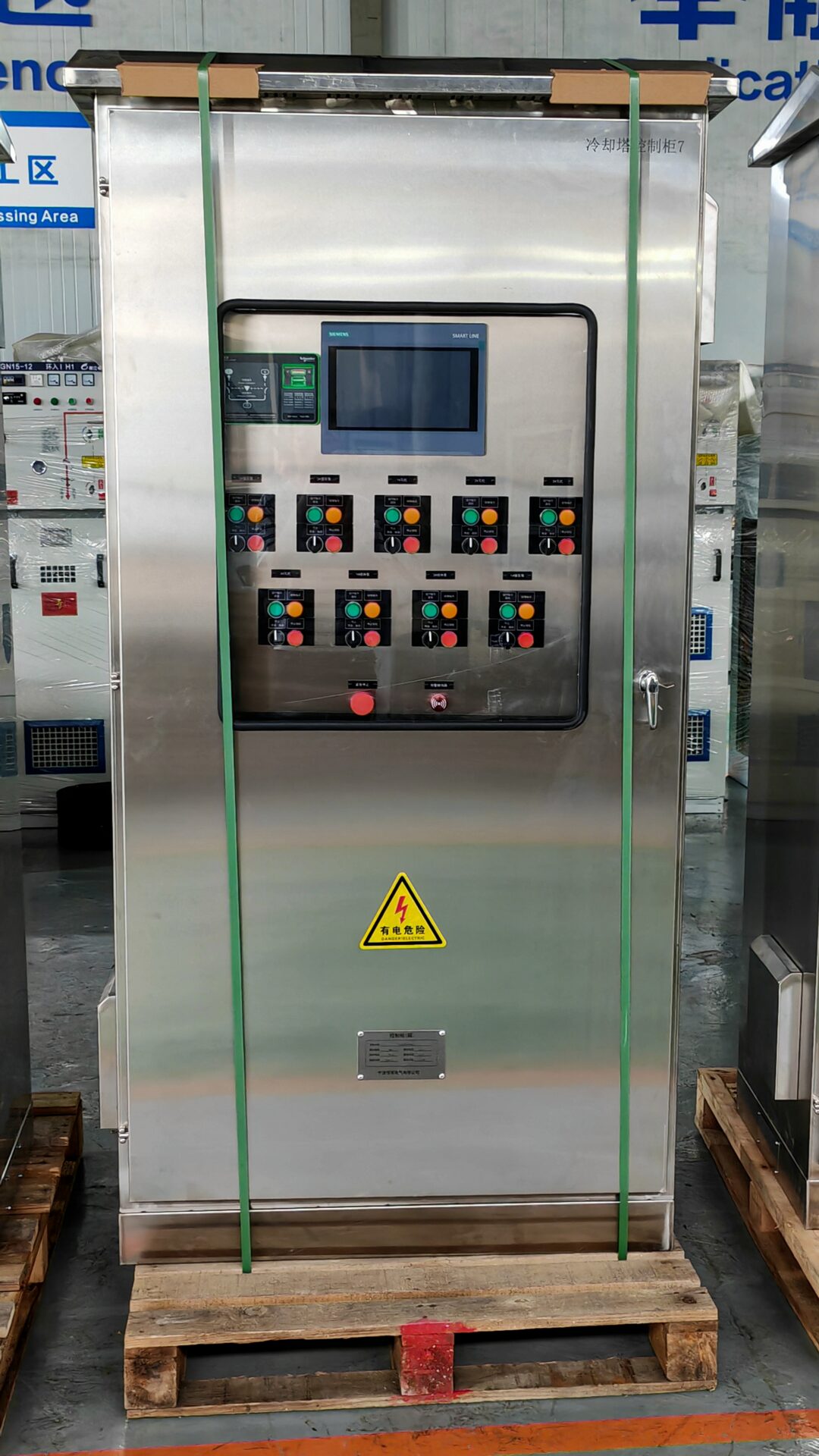
A control cabinet is a specialized protective enclosure that houses automation, power distribution, and electrical components. It acts as the central brain of industrial machinery and commercial facilities, designed to organize complex electronics, supply power, and protect vital systems from environmental hazards like dust and moisture. In cooling tower applications, a control cabinet coordinates pumps, fans, sensors, alarms, and protection devices, ensuring safe, efficient, and automated system operation while simplifying maintenance and troubleshooting.
Modern cooling systems rely heavily on intelligent control. Understanding the cabinet’s functions, components, and applications helps businesses choose the right solution.
What are Core Functions of Cooling Tower Control Cabinet?
A cooling tower control cabinet serves as the operational center of the entire cooling system. Its primary purpose is to monitor, regulate, and protect equipment while ensuring efficient heat rejection and stable operation.
One of its most important functions is automatic fan control. By receiving signals from temperature sensors, pressure transmitters, or programmable controllers, the cabinet adjusts fan operation according to cooling demand. This prevents energy waste while maintaining optimal water temperature.
Another key function is pump management. The cabinet can start, stop, and sequence multiple pumps automatically. In large cooling tower installations, lead-lag pump control balances equipment wear and improves reliability. If one pump fails, a standby unit can be activated automatically.
The cabinet also provides electrical protection. Circuit breakers, overload relays, surge protection devices, and fault monitoring systems protect valuable equipment from short circuits, voltage fluctuations, overloads, and phase failures. This significantly reduces downtime and repair expenses.
Modern cabinets additionally support remote monitoring and automation. Integrated PLCs and communication modules allow operators to monitor performance through building management systems (BMS), SCADA platforms, or industrial IoT networks. Real-time alarms help maintenance teams identify issues before they become critical failures.
Environmental protection is equally important. Since cooling towers are often installed outdoors, cabinets are designed with weather-resistant enclosures that protect sensitive electrical components from moisture, dust, corrosion, and temperature fluctuations.
For facilities seeking higher efficiency, intelligent control strategies can optimize fan speed, water flow, and energy consumption. As a result, the cooling tower operates more efficiently while extending equipment lifespan and reducing operating costs.
What are Typical Components of Cooling Tower Control Cabinet?
The effectiveness of a cooling tower control cabinet depends largely on the quality and integration of its internal components. Each component performs a specific function that contributes to safe and efficient operation.
The foundation of the cabinet is the power distribution system, which includes incoming breakers, MCCBs, MCBs, busbars, and distribution terminals. These devices safely distribute electrical power throughout the cooling tower equipment.
At the heart of the automation system is the Programmable Logic Controller (PLC). The PLC processes input signals from sensors and executes programmed control sequences. It enables automated fan staging, pump switching, alarm generation, and system optimization.
Another critical component is the Variable Frequency Drive (VFD). VFDs regulate motor speed according to actual cooling demand. Instead of operating fans and pumps continuously at full speed, the VFD adjusts output dynamically, delivering substantial energy savings.
The cabinet also contains numerous monitoring instruments and sensors. These may include:
- Water temperature sensors
- Flow meters
- Pressure transmitters
- Level switches
- Conductivity sensors
- Humidity sensors
Collected data allows precise control and predictive maintenance.
For operator interaction, the cabinet often includes a Human Machine Interface (HMI). Touchscreen displays provide real-time system status, alarm logs, operating parameters, and maintenance information.
Protection devices form another essential category. Common examples include:
- Motor protection relays
- Overload relays
- Surge protection devices
- Emergency stop circuits
- Phase failure relays
Communication modules further enhance functionality by connecting the cabinet to centralized monitoring platforms through Modbus, Ethernet, BACnet, or other industrial protocols.
A high-quality cabinet enclosure is equally important. Durable steel construction, corrosion-resistant coatings, sealed doors, and appropriate IP ratings ensure long-term performance in demanding outdoor environments.
When sourced from an experienced cooling tower control cabinet manufacturer, these components are integrated into a reliable and user-friendly solution that simplifies operation and maintenance.
What are Common Types of Cooling Tower Control Cabinet?
Different cooling systems require different control strategies. As a result, several types of cooling tower control cabinets are commonly available to meet varying operational requirements.
Manual Control Cabinets
Manual cabinets provide basic switching and protection functions. Operators manually start and stop fans and pumps using push buttons and selector switches. While affordable, they require continuous operator involvement and are typically used in small-scale installations.
Automatic PLC Control Cabinets
PLC-based cabinets represent the most widely used solution today. They automate fan sequencing, pump control, alarm management, and system protection. These cabinets improve efficiency while reducing labor requirements and operational errors.
VFD Cooling Tower Control Cabinets
Variable Frequency Drive cabinets are designed for maximum energy efficiency. Instead of operating motors at fixed speeds, VFD technology continuously adjusts fan and pump speed according to cooling load. This significantly reduces power consumption and mechanical stress.
Smart Remote Monitoring Cabinets
These advanced systems incorporate IoT technology, cloud connectivity, and remote diagnostics. Facility managers can monitor cooling tower performance from any location and receive real-time notifications when abnormalities occur.
Multi-Tower Integrated Control Cabinets
Large industrial facilities often operate multiple cooling towers simultaneously. Integrated cabinets coordinate all towers through centralized control logic, balancing load distribution and maximizing overall efficiency.
Custom-Engineered Control Cabinets
Many industrial projects have unique requirements involving specialized control logic, communication protocols, environmental conditions, or equipment configurations. In such cases, a professional cooling tower control cabinet supplier can provide customized solutions tailored to specific applications.
Many buyers worldwide source customized control cabinets from a reputable cooling tower control cabinet factory because of the flexibility, engineering expertise, and cost advantages available through made in China manufacturing.
What is Cooling Tower Control Cabinet Used for? And Application?
A cooling tower control cabinet is used wherever cooling towers are installed to dissipate heat from industrial processes, HVAC systems, or power generation equipment. Its primary role is to automate and coordinate all cooling tower operations while ensuring safety, reliability, and efficiency.
One of the most common applications is in commercial HVAC systems. Large office buildings, shopping centers, hotels, hospitals, and airports depend on cooling towers to support central air conditioning systems. Control cabinets maintain proper water temperatures while minimizing energy consumption.
Industrial manufacturing facilities also rely heavily on cooling tower automation. Industries such as steel production, plastics processing, food manufacturing, pharmaceuticals, chemical plants, and electronics manufacturing generate substantial heat during production. Accurate cooling control helps maintain product quality and equipment reliability.
Power generation facilities represent another important application area. Thermal power plants, combined-cycle facilities, and energy infrastructure projects use cooling towers to remove excess process heat. Reliable control systems are essential for maintaining continuous operation and regulatory compliance.
Data centers have become a rapidly growing market for advanced cooling tower control systems. As computing loads increase, precise temperature control becomes critical for server reliability and energy efficiency. Intelligent control cabinets help optimize cooling performance while reducing operating expenses.
Water treatment plants, district cooling systems, universities, sports complexes, and large municipal facilities also utilize cooling tower control cabinets to manage complex cooling infrastructure.
Modern systems increasingly incorporate predictive maintenance, energy analytics, and remote monitoring capabilities. These features help operators reduce downtime, improve efficiency, and extend equipment lifespan.
For international buyers seeking reliable solutions, partnering with an experienced cooling tower control cabinet manufacturer, cooling tower control cabinet supplier, or specialized cooling tower control cabinet factory can provide access to advanced automation technologies and competitive made in China production capabilities.
Conclusion
A cooling tower control cabinet is essential for automating, protecting, and optimizing cooling tower operations. By integrating intelligent control, equipment protection, and remote monitoring, it reduces downtime, improves efficiency, and supports reliable long-term performance across commercial and industrial applications.
 Bahasa Indonesia
  English (UK)
  Tiếng Việt
  Deutsch
  Español
  Français
  Português
  Русский