
How Can a Three-phase Four-wire Electronic Energy Meter Make Power Measurement Easier and More Reliable?
Installing and troubleshooting a three-phase meter often requires a professional electrician, while ordinary users may struggle to identify wiring faults. Without a simple load-abnormality indication, problems can remain unnoticed, and infrared meter reading may require additional equipment. These limitations can increase maintenance time and operating risks. A properly designed Three Phase 4 Wire Energy Meter offers clearer measurement, practical functions, and easier monitoring. Keep reading to see what features and applications buyers should consider.
What is a Three-phase Four-wire Electronic Energy Meter?
A three-phase four-wire electronic energy meter is a digital device used to measure electrical energy (kilowatt-hours) in a power system that uses three live (phase) wires and one neutral wire. It electronically measures electrical parameters, records energy consumption, and supports convenient monitoring for three-phase distribution systems.
Before choosing a meter, understanding its features, functions, and application scenarios can help you select the right solution.
What Key Features Should You Look for in a Three-phase Four-wire Electronic Energy Meter?
For buyers, the most important consideration is not simply whether a meter can measure electricity, but whether it can provide stable measurement, convenient installation, clear status information, and reliable long-term operation.
A modern 3P4W Electronic kWh Meter is designed for three-phase, four-wire electrical systems, where three phase conductors work together with a neutral conductor. Compared with older mechanical meters, electronic meters use digital measurement technology to calculate and record electrical energy consumption with greater convenience and easier data management.
One important feature is digital energy measurement. The meter can calculate consumed electrical energy in kilowatt-hours (kWh), giving users a practical way to monitor electricity consumption. This is particularly useful for distribution panels, commercial buildings, industrial facilities, and other locations where electricity usage needs to be tracked.
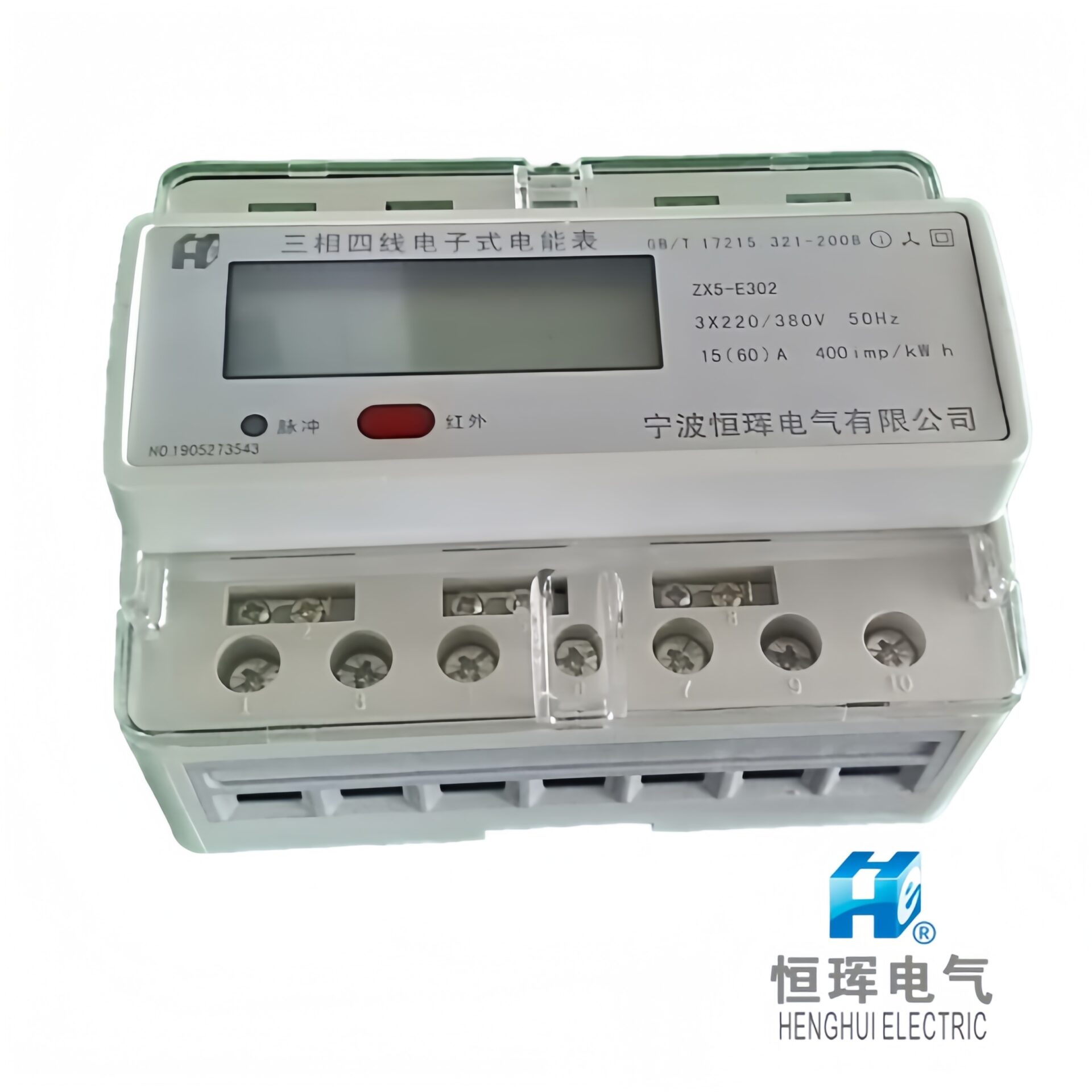
Another important consideration is installation format. A DIN Rail Three-phase Four-wire Electronic Energy Meter can be mounted directly on a standard DIN rail inside a distribution cabinet or electrical enclosure. This compact installation method can save panel space and make equipment arrangement more organized.
Clear indication and status visibility are also valuable. Users need to know whether the meter is operating normally and whether the connected load shows an abnormal condition. A straightforward indication system can help maintenance personnel identify potential issues more quickly.
For procurement teams, the ideal meter should also offer stable operation, clear readings, compact construction, and compatibility with the intended electrical distribution system. These characteristics can reduce unnecessary maintenance work while making energy measurement more convenient.
In short, buyers should evaluate a Three Phase 4 Wire Watt-hour Meter based not only on measurement capability, but also on installation convenience, monitoring practicality, reliability, and system compatibility.
What Functions Can a 3 Phase 4 Wire Energy Meter Provide for Daily Power Monitoring?
The core function of a 3 Phase 4 Wire Energy Meter is electrical energy measurement. It monitors electricity consumption in a three-phase four-wire system and records the amount of electrical energy used over time.
The most basic measurement is active energy in kilowatt-hours (kWh). This provides users with an intuitive indicator of electricity consumption. By checking the accumulated energy value, facility operators can understand how much electrical energy a connected system or distribution circuit has consumed.
Depending on the meter design, additional electrical information may also be available. This can make the device more useful for basic electrical monitoring and operational management, rather than functioning only as a simple electricity counter.
Another useful function is load status indication. If abnormal load conditions or other operating issues can be indicated directly, users may identify potential problems more easily without immediately relying on complicated testing equipment.
The meter can also support local visual reading, allowing personnel to check measurement information directly at the installation location. This is useful during routine inspections, maintenance, and energy-management activities.
For projects requiring remote or infrared reading, buyers should carefully check the communication and reading method supported by the selected model. Infrared meter reading may require compatible reading equipment, so procurement teams should confirm the complete system requirements before purchasing.
A well-selected electronic meter therefore combines several practical functions:
- Electrical energy measurement
- Digital energy display
- Load status monitoring
- Operating-status indication
- Convenient local inspection
- Potential data-reading or communication support, depending on configuration
These functions make the electronic meter more practical for modern distribution systems where operators need both energy data and clearer equipment status information.
Where Are Three-phase Four-wire Electronic Energy Meters Commonly Used?
The structure of a three-phase four-wire system makes this type of meter suitable for many commercial, industrial, and building power-distribution environments.
One common use is in commercial buildings. Shopping centers, office buildings, supermarkets, and other commercial facilities often contain multiple electrical loads distributed across three phases. Installing appropriate energy meters can help operators monitor electricity consumption and understand how different areas or circuits use power.
Industrial facilities are another important application. Factories and production workshops may have motors, lighting systems, control equipment, and other three-phase loads operating simultaneously. A suitable electronic energy meter can provide useful energy-consumption data for electrical management and operational analysis.
The meter can also be used in distribution cabinets and electrical panels. Its compact electronic design, particularly in DIN-rail configurations, allows it to be integrated into electrical distribution equipment without occupying excessive cabinet space.
For property management, metering can help monitor electricity consumption in commercial units, public facilities, and building distribution systems. Energy data can provide a foundation for identifying consumption patterns and supporting more effective electricity management.
It can also be considered for small industrial distribution systems, workshops, equipment rooms, and infrastructure facilities, provided the meter’s electrical specifications match the system.
From a purchasing perspective, application compatibility should always be checked before selecting a meter. Important factors include the system voltage, frequency, current range, wiring configuration, installation method, environmental conditions, and required communication functions.
The key advantage is versatility: a Three Phase 4 Wire Watt-hour Meter can serve wherever a compatible three-phase four-wire system requires practical and reliable electrical energy measurement.
How Does a Three-phase Four-wire Electronic Energy Meter Work in a Power Distribution System?
Understanding the working principle helps buyers evaluate whether a meter is suitable for a specific project.
In a three-phase four-wire electrical system, there are three phase conductors and one neutral conductor. Electrical loads may be distributed across the three phases. The energy meter monitors the electrical parameters associated with these circuits and uses electronic measurement technology to calculate electrical energy consumption.
The meter’s internal measurement system processes electrical signals and determines the amount of energy consumed by the connected load. The accumulated energy is normally expressed in kilowatt-hours (kWh).
Unlike traditional mechanical meters that rely on physical moving components, an electronic energy meter uses electronic sensing and processing circuits. This allows the meter to provide digital measurement and a clearer interface for users.
Correct wiring is particularly important. Because the meter is connected to a three-phase four-wire system, the phase and neutral connections must correspond correctly to the manufacturer’s wiring requirements. Incorrect installation can result in inaccurate measurement or abnormal operation.
This is why professional installation and commissioning remain important, especially in industrial or commercial electrical systems. Although the meter itself can simplify measurement and monitoring, users should not assume that wiring problems can always be diagnosed without electrical expertise.
For buyers, the best approach is to confirm the complete electrical requirements before installation. The selected meter should match the project’s three-phase four-wire configuration, rated electrical parameters, installation space, and required measurement functions.
When correctly selected and installed, the meter becomes a practical interface between the electrical distribution system and the people responsible for energy monitoring, maintenance, and electricity management.
What Application Scenarios Can Benefit Most from a DIN Rail Three-phase Four-wire Electronic Energy Meter?
A DIN Rail Three-phase Four-wire Electronic Energy Meter is particularly attractive when a project needs compact metering inside an existing electrical cabinet.
For example, a commercial distribution cabinet may contain circuit breakers, contactors, protection devices, terminal blocks, and other components. A DIN-rail meter can be integrated into the same enclosure while maintaining a relatively organized internal layout.
In factory workshops, the meter can be used to monitor electricity consumption associated with distribution circuits or equipment groups. This can help facility managers understand energy usage and identify areas where electricity consumption needs further attention.
In building electrical systems, multiple distribution circuits may require independent energy measurement. Compact electronic meters can be incorporated into suitable distribution panels to provide localized measurement points.
Another scenario is equipment-level energy monitoring. Where an electrical installation requires consumption data for a specific three-phase load or distribution branch, an appropriate 3P4W electronic kWh meter can provide a dedicated measurement point.
For energy-management projects, several meters may also be installed at different locations within a power distribution network. The resulting measurement points can help users build a clearer picture of electricity consumption across different areas.
However, application suitability depends on the actual electrical specifications. Buyers should verify rated voltage, current capacity, frequency, wiring configuration, accuracy requirements, enclosure conditions, communication requirements, and installation dimensions before finalizing the product.
This is especially important for international projects because electrical standards and installation practices can differ between markets. A professional technical review before purchasing can reduce compatibility problems during installation.
What Should Buyers Check Before Purchasing a 3P4W Electronic kWh Meter?
Before placing an order, procurement teams should look beyond the product name and carefully review the technical specification.
First, confirm that the meter is designed for a three-phase four-wire system. A three-phase meter designed for another wiring configuration may not be suitable for the intended installation.
Second, check the rated voltage and current range. The meter must be compatible with the electrical parameters of the target distribution circuit.
Third, consider the installation method. If the project requires cabinet installation, a DIN Rail Three-phase Four-wire Electronic Energy Meter may be an appropriate option because of its compact mounting structure.
Fourth, determine what information users actually need. Basic projects may only require accumulated kWh measurement, while more advanced applications may require additional electrical parameters, communication, or remote data collection.
Fifth, consider the operating environment. Temperature, humidity, enclosure conditions, installation location, and electrical interference can all influence long-term equipment performance.
Finally, clarify the reading and communication requirements before purchasing. If infrared reading is required, verify whether additional equipment is needed and whether the meter supports the intended reading method.
A good purchasing decision should therefore consider the complete application rather than selecting a meter based solely on price. Electrical compatibility, measurement requirements, installation convenience, and long-term usability should all be evaluated together.
Conclusion
A Three Phase 4 Wire Energy Meter provides a practical way to measure and monitor electricity consumption in three-phase four-wire systems. With digital measurement, compact installation options, and useful monitoring functions, it can support commercial buildings, industrial facilities, distribution cabinets, and energy-management projects.
 English (UK)
  Bahasa Indonesia
  Tiếng Việt
  Deutsch
  Español
  Français
  Português
  Русский