
How Can a Microcomputer Integrated Protection Device Improve Protection Reliability in Outdoor Box Substations?
Outdoor box substations face large temperature differences, condensation, and electromagnetic interference, which can affect sampling accuracy and cause false operations. When faults occur, difficult fault location and complicated programmable protection logic can delay troubleshooting. Buyers may also worry about long-term spare-parts availability and service response. A suitable Microcomputer Integrated Protection Device addresses these risks through intelligent monitoring, digital protection, and coordinated control, helping improve system reliability and making protection easier to manage throughout its service life.
Table of Contents
ToggleWhat Is a Microcomputer Integrated Protection Device?
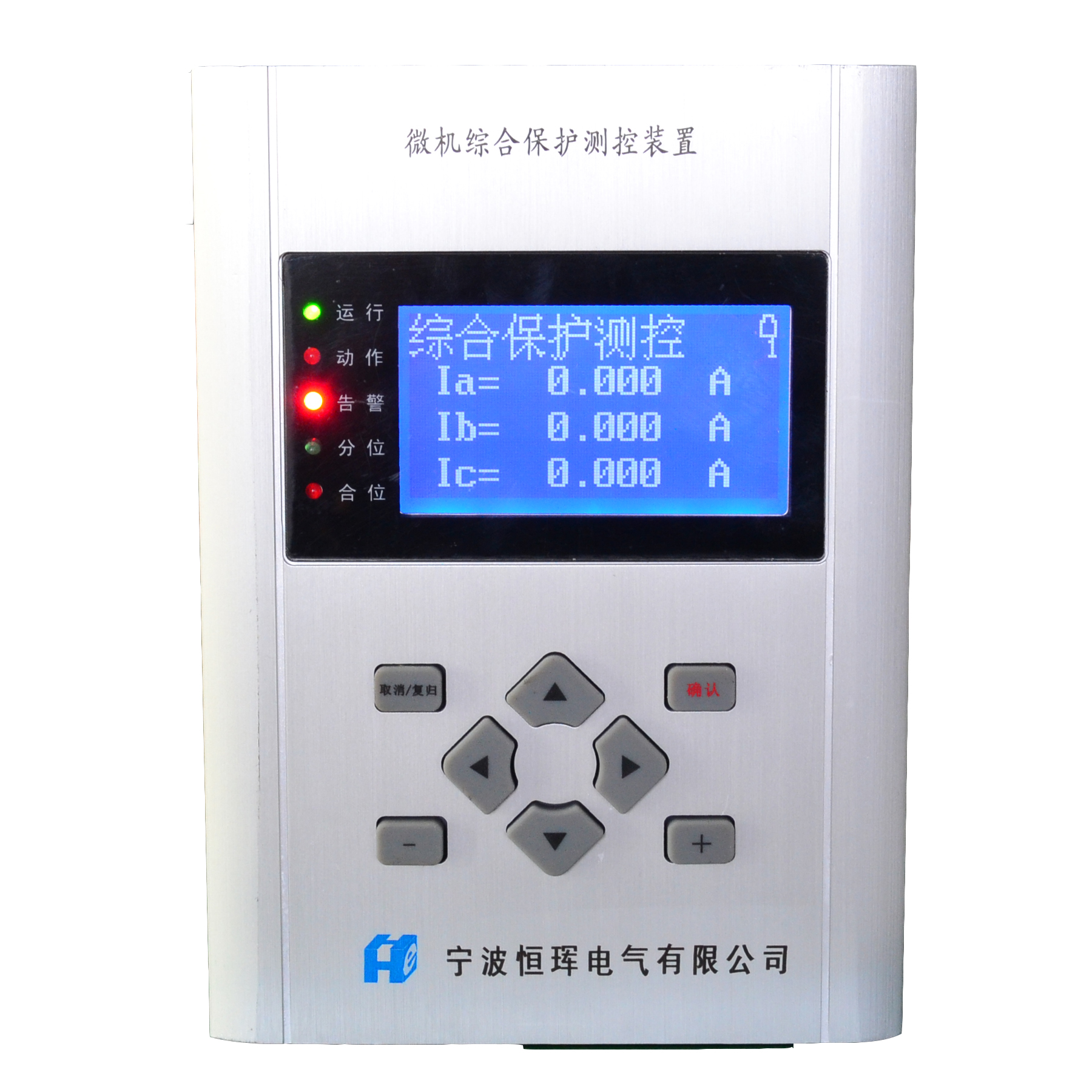
A Microcomputer Integrated Protection Device is an intelligent digital controller designed to monitor, measure, protect, and control electrical power systems. It detects abnormal conditions such as overloads, short circuits, and grounding faults, then applies preset protection logic to help isolate faults quickly and safely. Compared with traditional electromechanical protection relays, a Microcomputer Protection Device uses microprocessor-based digital technology to process electrical signals, support multiple protection functions, and provide clearer operating and fault information.
For modern distribution systems, protection is no longer limited to simply opening a circuit when an abnormal current occurs. A protection device is increasingly expected to combine measurement, protection, control, status indication, and fault information in one coordinated system. This integrated approach is particularly valuable in compact distribution equipment such as box substations, where installation space is limited and fast fault identification can directly influence maintenance efficiency.
A Microcomputer Integrated Protection Device can work as an important part of a broader intelligent distribution system. The company’s product system already covers intelligent monitoring and auxiliary equipment such as multifunctional power meters, wireless collectors, intelligent capacitors, surge protection devices, and intelligent status indicators, reflecting a broader focus on precise, reliable, and intelligent power distribution.
For purchasing managers, the practical value is straightforward: instead of treating protection as an isolated component, the device can become part of a more systematic approach to electrical safety, fault protection, operation monitoring, and maintenance management.
This makes the Microcomputer Integrated Protection Device especially relevant when a project requires stable operation, easier commissioning, clear fault information, and flexible integration with other distribution equipment.
What Key Functions Should Buyers Expect From a Microcomputer Integrated Protection Device?
When selecting a Microcomputer Protection Device, buyers should look beyond the number of protection functions listed in a specification sheet. The more important question is whether the device can support stable protection, accurate monitoring, convenient operation, and efficient troubleshooting under actual project conditions.
1. Intelligent electrical protection
The fundamental role is to identify abnormal electrical conditions and initiate the corresponding protection action according to the configured logic. Typical protection requirements include overload, short circuit, and ground-fault protection. Digital processing allows protection parameters and operating logic to be configured according to different electrical applications.
This is especially useful for distribution systems with different load characteristics. A standardized protection concept can be adapted to the actual operating requirements instead of relying entirely on fixed mechanical relay characteristics.
2. Measurement and monitoring
Protection and measurement are closely connected. Reliable electrical measurement provides the basic information needed to determine whether the system is operating normally.
A Microcomputer Integrated Protection Device can therefore serve as a monitoring point for important electrical conditions, helping operators understand system status and identify abnormal changes. This approach is consistent with the broader development direction of intelligent distribution, where monitoring, acquisition, protection, and compensation work together rather than operating as isolated functions.
3. Programmable protection logic
Different projects may have different protection requirements. Programmable logic provides flexibility for configuring protection relationships and control sequences according to the electrical design.
For buyers, however, flexibility should not mean unnecessary complexity. A practical device should combine configurable functions with a clear operating structure so that engineers can complete commissioning efficiently and maintenance personnel can understand the protection logic when troubleshooting.
4. Fault indication and troubleshooting support
When an electrical fault occurs, the cost is not limited to the damaged component. Unplanned downtime, delayed production, missed operating schedules, and emergency maintenance can create much larger losses.
Clear fault information helps maintenance personnel narrow down the possible problem area more efficiently. This is particularly important inside compact equipment where multiple electrical components may be installed within a limited space.
5. Coordination with distribution equipment
A Microcomputer Protection Device should not be viewed as a standalone product. Its value increases when it works effectively with switchgear, transformers, measuring devices, control circuits, and other intelligent electrical equipment.
The company’s existing product portfolio covers high-, medium-, and low-voltage distribution products and system integration solutions, including transformers, KYN28 series switchgear, GGD low-voltage distribution cabinets, multifunctional power meters, wireless collectors, and intelligent status indicators. This broader product structure can support projects requiring coordinated electrical equipment rather than a single isolated device.
Where Is a Microcomputer Integrated Protection Device Most Valuable?
The application value of a Microcomputer Integrated Protection Device becomes clearer when considering the operating environment and maintenance requirements of modern distribution systems.
Outdoor box substations
Outdoor box substations are one of the most demanding environments for electrical protection equipment. Temperature fluctuations, humidity, condensation, dust, and electromagnetic interference can influence electrical equipment if the overall design is not sufficiently robust.
The company’s transformer products are designed for demanding environments, with oil-immersed models supporting outdoor, indoor, and box-substation installation, while dry-type transformers can be configured with protection against dust, condensation, corrosion, and other special conditions.
In such applications, a Microcomputer Integrated Protection Device provides a digital protection layer around the electrical equipment. Its monitoring and protection functions can help operators respond more systematically to abnormal operating conditions.
Medium-voltage distribution systems
Medium-voltage distribution equipment requires coordinated protection because faults can affect a relatively large portion of the power system. The company’s AC24kV KYN28-24 switchgear, for example, is designed for power distribution, circuit control, fault protection, and status monitoring. It incorporates independent compartments, interlocking, grounding protection, standardized secondary interfaces, and vacuum circuit breakers.
A Microcomputer Protection Device can complement this type of equipment by providing intelligent protection and control functions within the secondary system.
Industrial and commercial power distribution
Factories, commercial buildings, infrastructure facilities, and other power users often require stable electrical operation while keeping maintenance time under control.
The company’s GGD low-voltage distribution cabinet is designed for 50Hz systems with rated working voltage of 380V and rated current up to 3150A. It supports power conversion, distribution, and control and can be configured as incoming, metering, feeder, and reactive-power-compensation cabinets.
In these systems, intelligent protection can help create a more structured relationship between electrical measurement, fault protection, and equipment control.
New energy and intelligent distribution projects
The development of photovoltaic, wind-power, and energy-storage systems is also increasing the need for intelligent electrical protection. The company’s product portfolio includes photovoltaic grid-connected cabinets, energy-storage grid-connected cabinets, prefabricated substation systems, photovoltaic/wind prefabricated substations, and high-voltage dynamic reactive power compensation equipment.
As distribution architectures become more complex, protection equipment needs to provide more than simple circuit interruption. Digital protection, monitoring, communication, and configurable control become increasingly important for maintaining system visibility and operational reliability.
Which Core Components Determine the Performance of a Microcomputer Protection Device?
The performance of a Microcomputer Integrated Protection Device depends on the coordinated operation of several functional parts rather than one component alone. For procurement teams, understanding this structure helps distinguish a complete protection solution from a simple electronic relay.
Microprocessor and digital processing unit
The microprocessor is the central element responsible for processing measured electrical information and executing programmed protection logic. It enables the device to analyze input signals digitally and make protection decisions according to configured parameters.
This architecture is the fundamental difference between a modern Microcomputer Protection Device and traditional electromechanical protection equipment. Digital processing allows multiple functions to be integrated into a compact control platform.
Measurement and signal acquisition section
Accurate protection decisions depend on reliable electrical signals. The measurement and acquisition section receives electrical information from the power system and converts it into usable digital information for the processing unit.
This part is particularly important in environments where temperature, humidity, electromagnetic interference, and other operating conditions may affect equipment performance. The overall design therefore needs to consider not only protection algorithms but also signal quality, electrical isolation, and environmental adaptability.
Protection logic and control software
The software layer determines how the device responds when electrical conditions exceed configured limits. Protection logic may coordinate detection, alarm, control, and circuit isolation functions.
For engineering projects, configurable logic can improve adaptability. However, the configuration process should remain understandable to commissioning and maintenance personnel. A practical protection device needs to balance functional flexibility with operational simplicity.
Human-machine interface
Operators need clear information when checking equipment status or investigating a fault. A suitable human-machine interface can provide operating information, protection status, alarms, and other relevant data in a more accessible format.
This reduces dependence on manual inspection alone and can improve the efficiency of routine operation and troubleshooting.
Communication and integration interfaces
Modern distribution systems increasingly require devices to exchange information with other electrical equipment. Standardized interfaces can support integration between protection devices, monitoring equipment, control systems, and other intelligent distribution components.
This direction is consistent with the company’s broader technical focus on power automation hardware and software, intelligent distribution products, power-quality analysis, and integrated solutions.
Supporting protection and switching equipment
A Microcomputer Integrated Protection Device cannot replace the complete electrical protection chain. Its effectiveness depends on coordinated operation with current transformers, voltage measurement components, circuit breakers, switchgear, and grounding systems.
For example, the company’s KYN28-24 switchgear uses vacuum circuit breakers, matched current transformers, copper busbars, standardized secondary circuits, mechanical and electrical interlocking, and dedicated grounding systems to build a comprehensive protection structure.
This illustrates an important procurement principle: the protection device should be evaluated as part of the complete electrical system, not only as an individual electronic component.
How Should Buyers Evaluate a Microcomputer Integrated Protection Device for Long-Term Use?
For buyers, the initial purchase price is only one part of the total procurement decision. The more important evaluation should cover protection reliability, configuration flexibility, environmental suitability, integration capability, service support, and lifecycle cost.
First, the device should match the electrical system and the protection requirements of the project. Second, its environmental suitability should correspond to the installation location, particularly for outdoor or high-humidity applications. Third, the protection logic and interface should be practical enough for commissioning and maintenance teams to use efficiently.
Service capability is equally important. A technically advanced product can still create procurement risk if spare parts, technical support, commissioning assistance, or troubleshooting support are difficult to obtain.
The company’s business model covers research and development, manufacturing, sales, and service, rather than only product supply. It has operated in the power-related field for more than ten years and maintains a technical team supporting product development, technical solutions, and power-quality applications.
For project buyers, this type of full-cycle capability can reduce communication gaps between product selection, engineering design, installation, commissioning, and after-sales support.
The same principle can be seen across the company’s other electrical products. Its medium-voltage switchgear includes design coordination, factory supervision, installation guidance, commissioning, testing, and after-sales technical service, while its transformers and low-voltage distribution equipment are also positioned around standardized manufacturing and technical support.
Therefore, the best purchasing decision is not simply to select a Microcomputer Protection Device with the longest function list. It is to select a device that fits the electrical architecture, supports reliable protection, simplifies maintenance, and can be supported throughout the equipment lifecycle.
Why Does the Microcomputer Integrated Protection Device Matter for Modern Distribution?
Modern power distribution is moving toward intelligence, precision, safety, and efficiency. As distribution equipment becomes more integrated and operating environments become more demanding, protection devices need to provide reliable digital monitoring and coordinated protection rather than simple fault interruption.
A Microcomputer Integrated Protection Device can form an important intelligent layer within this architecture. By combining digital measurement, protection logic, fault indication, control, and system integration, it can help improve operational visibility and maintenance efficiency.
For buyers evaluating complete distribution solutions, the device should therefore be considered together with transformers, switchgear, low-voltage cabinets, monitoring equipment, and other supporting components. This system-level approach is particularly valuable for outdoor box substations, industrial distribution, infrastructure projects, and new-energy applications.
Conclusion
A Microcomputer Integrated Protection Device provides a digital approach to electrical protection by combining monitoring, measurement, protection, and control. For buyers, its real value lies in reliable fault protection, clearer troubleshooting, flexible integration, and long-term maintainability within the complete power distribution system.
 English (UK)
  Bahasa Indonesia
  Tiếng Việt
  Deutsch
  Español
  Français
  Português
  Русский