
How Can a Local Control Cabinet Improve On-Site Equipment Control, Safety, and Maintenance?
Industrial equipment cannot afford to depend entirely on manual inspection. When operators can only check operating status on site, developing faults may remain unnoticed until they cause downtime, equipment damage, or production losses. At the same time, a control cabinet exposed to dust, moisture, and harsh operating conditions may require frequent inspection and maintenance. These problems make troubleshooting time-consuming and increase operational pressure. A properly configured Local Control Panel Cabinet (LCPC) provides a practical solution by bringing control, status indication, alarm signaling, protection, and parameter monitoring together at the equipment installation site. The following guide explains what an LCC contains, where it is used, and what buyers should consider before selecting one.
What Is a Local Control Cabinet?
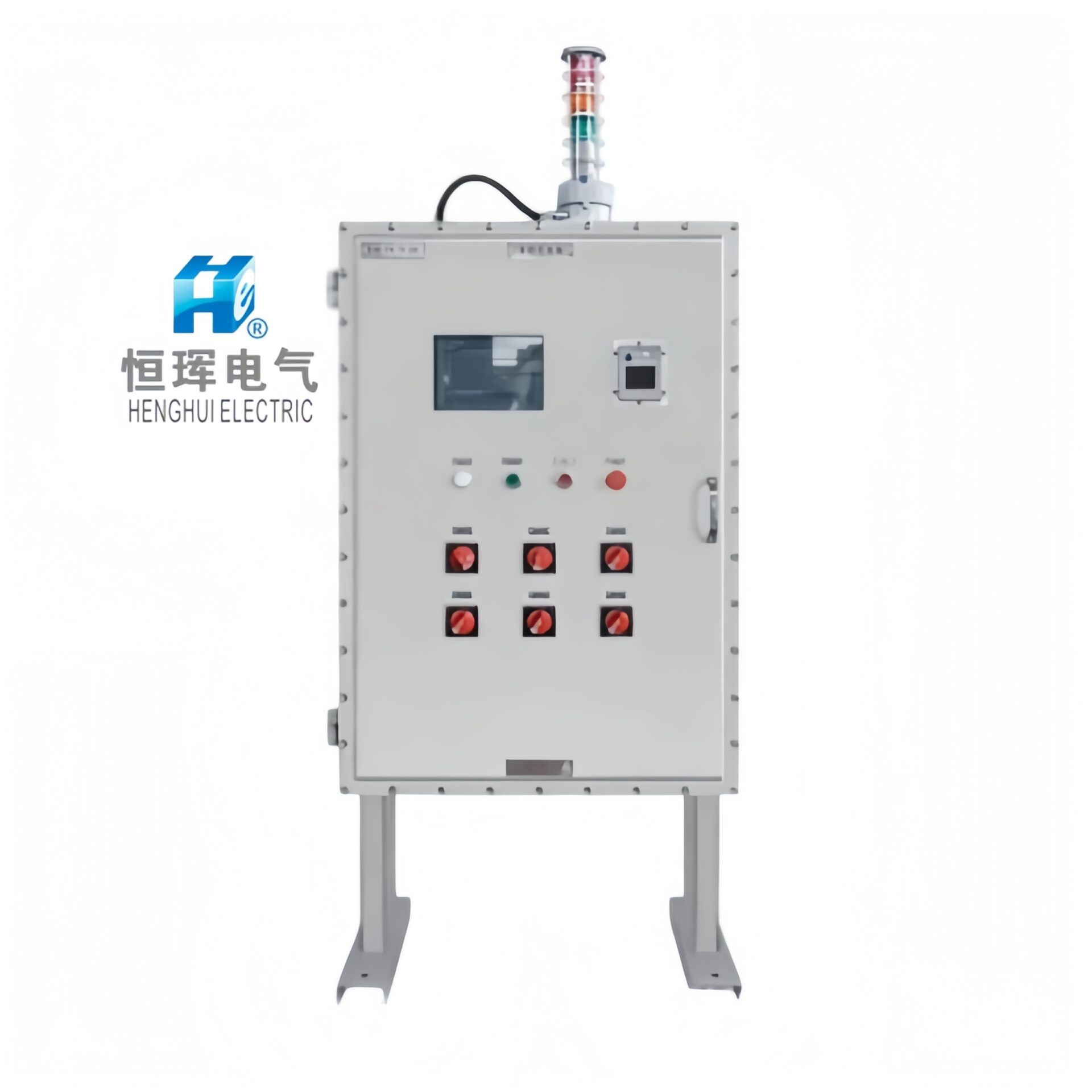
A Local Control Cabinet (LCC), also known as a Local Control Cubicle or Local Control Panel Cabinet (LCPC), is a dedicated enclosure installed next to industrial or electrical equipment to provide on-site operation, monitoring, status indication, alarm signaling, protection, and operating-mode selection. It allows operators to start, stop, or change equipment modes directly at the installation site while monitoring key parameters such as current, voltage, and temperature.
For industrial applications, an LCC therefore functions as a local equipment control center, connecting operators with pumps, compressors, fans, conveyor systems, electrical equipment, transformers, generators, and other technological equipment. Its configuration can be adapted according to the equipment, control requirements, protection needs, and integration requirements of a particular project.
Understanding its structure and application makes it easier to determine whether a specific local control cabinet is suitable for a project.
What Does a Local Control Cabinet Actually Do on Site?
The primary purpose of a Local Control Panel Cabinet (LCPC) is to provide direct and intuitive control over equipment at its installation location. Instead of requiring operators to interact with separate control components, the major operating functions can be arranged within one dedicated cabinet.
The first function is manual control. Operators can use start, stop, and emergency-stop buttons to directly control connected equipment. This is particularly useful when equipment needs to be operated locally during commissioning, maintenance, inspection, or abnormal operating conditions.
The second function is status indication. LEDs, indicator lamps, and digital displays can show whether equipment is operating, stopped, malfunctioning, or in an alarm condition. This allows operators to understand the equipment’s current state without relying only on external inspection.
A third function is alarm signaling. Audible and visual alarms can warn operators when an emergency or abnormal situation occurs. This provides an immediate local indication and helps shorten the time between fault detection and operator response.
The cabinet can also provide automatic/manual mode switching. Depending on the system configuration, operators can select the appropriate operating mode for the equipment.
Another important role is parameter monitoring. Key operating indicators such as current, voltage, and temperature can be monitored through the cabinet.
Finally, an LCC contributes to equipment protection. Circuit breakers and related protective components can help address overload, short-circuit, overheating, and other abnormal conditions. For projects requiring higher-level automation, the cabinet can also support integration with SCADA systems, remote monitoring, event logging, and additional intelligent modules.
Together, these functions make the local control cabinet more than a simple switch box. It becomes a centralized interface between the operator and the equipment.
What Are the Main Parts Inside a Local Control Cabinet?
The internal configuration of an LCC depends on the application, but several components form the basic functional structure of a typical Local Control Panel Cabinet.
Control buttons are among the most visible components. Start, stop, and emergency-stop buttons provide direct access to equipment operation. Their arrangement should be intuitive so that operators can identify and use the required controls quickly.
Mode switches allow the operator to select between automatic and manual control. This is particularly important when equipment needs to transition between automated operation and local intervention.
Status indicators, including LEDs or indicator lamps, provide visual information about operation, faults, and alarms. Digital displays can also be incorporated where more detailed operating information is required.
A circuit breaker provides protection against overloads and short circuits. It is an important part of the cabinet’s electrical protection system.
Signaling devices, such as sirens or audible alarms, provide immediate notification when an emergency condition occurs. When combined with visual indicators, they improve the visibility of abnormal operating conditions.
The terminal blocks provide connection points for power supplies, sensors, actuators, and other external circuits. Proper terminal organization is important for installation, commissioning, and future maintenance.
The enclosure provides the physical protection for the internal electrical components. Depending on project requirements, the enclosure can be made from metal or plastic and can provide protection against dust, moisture, and mechanical damage. The supplied material identifies IP54 or IP65 as applicable enclosure protection levels for this type of local control cabinet.
Additional functions can be added through a modular configuration. For example, a project may incorporate UPS backup power, SCADA communication, intelligent monitoring modules, event logging, or other functional modules.
This modular structure allows buyers to specify an LCC according to the actual equipment and control requirements instead of adopting an unnecessarily fixed configuration.
Where Is a Local Control Cabinet Used?
A local control cabinet is applicable wherever industrial or electrical equipment requires reliable local operation, monitoring, indication, and protection. Its applications cover several major sectors.
In industrial enterprises, LCPCs can be used for pumps, compressors, fans, and conveyor lines. These types of equipment often require operators to start, stop, monitor, or change operating modes directly at the installation site.
In the energy sector, a local control cabinet can support the local control of electrical equipment, transformers, and generators. In these applications, clear status indication, protection, and operating controls can help operators understand equipment conditions during routine operation and maintenance.
In water supply and wastewater systems, local control panels can be applied to pumping stations and treatment systems. Because pumps and related equipment may need both automatic and manual operating modes, the ability to switch modes locally can be particularly useful.
Housing and communal services represent another application area. Local control cabinets can be used for ventilation, lighting, and elevator systems, providing an on-site interface for operation and status monitoring.
In agriculture, LCPCs can control irrigation systems, greenhouse ventilation, and feed distribution equipment. These applications demonstrate the flexibility of the cabinet concept beyond conventional heavy industry.
The broader electrical product portfolio described in the supplied company materials also covers industrial and energy-related distribution equipment across different voltage levels, including transformers, low-voltage distribution cabinets, and medium-voltage switchgear. This creates a wider technical context in which a local control cabinet can serve as an equipment-level control interface alongside other distribution equipment.
How Does the Enclosure Protect the Control System in Real Operating Conditions?
The enclosure is not simply a housing for electrical components. For an LCC, it forms an important part of the protection system because the cabinet may be installed in environments where dust, moisture, and mechanical impacts can affect electrical components.
The supplied LCPC material specifies enclosure protection at IP54 or IP65, depending on configuration. This provides a basis for selecting an enclosure according to the expected environmental conditions.
Protection is particularly important because dust accumulation can affect electrical components and heat dissipation, while moisture can contribute to deterioration of electrical insulation and connections. Mechanical protection is also required where equipment is exposed to physical impacts or demanding installation conditions.
The broader product documentation demonstrates the same design principle across the company’s electrical equipment portfolio. For example, GGD low-voltage distribution cabinets use protective enclosure structures, ventilation arrangements, corrosion-resistant surface treatment, and galvanized or passivated internal mounting components. Medium-voltage KYN28-24 switchgear likewise uses metal-enclosed independent compartments and defined protection levels to manage different operating environments and internal electrical risks.
For buyers, this means enclosure selection should not be treated as a cosmetic decision. Protection level, environmental conditions, ventilation, installation location, and maintenance requirements should all be considered when defining the local control cabinet configuration.
Can a Local Control Cabinet Support Remote Monitoring and Smart Automation?
A local control cabinet is designed primarily for local operation, but modern configurations can extend its role through integration with automation and dispatching systems.
The supplied LCPC information identifies SCADA integration as an available function. Through appropriate communication and monitoring modules, the cabinet can support remote monitoring and control in addition to its local operating functions.
This creates a practical relationship between local and centralized control. At the equipment site, operators can use the buttons, switches, indicators, and displays provided by the LCPC. At a higher control level, compatible automation or SCADA systems can be used for remote monitoring and dispatching.
The material also identifies event logging as an additional feature. This allows information about status changes and emergency events to be stored, providing a record that can support later analysis and maintenance.
UPS backup power can also be incorporated where continued operation of the control system requires additional power continuity.
A modular design provides another advantage. New modules can be added when project requirements expand. Instead of replacing the entire cabinet, the system can be configured with additional functions where the design allows.
For buyers considering future automation upgrades, this flexibility can be important. The most suitable local control cabinet is not necessarily the one with the largest number of components at the time of purchase. A more practical approach is to select a configuration that meets current control requirements while leaving appropriate room for future monitoring, communication, and functional expansion.
How Does a Local Control Cabinet Improve Safety and Maintenance?
Safety is one of the central reasons for using a dedicated Local Control Panel Cabinet. A well-organized control interface allows operators to identify equipment status quickly and perform required operations through clearly arranged controls.
Emergency-stop buttons provide a direct means of stopping equipment when required. Circuit breakers provide protection against overloads and short circuits, while alarm devices provide audible and visual warnings during abnormal conditions.
The cabinet also supports maintenance by bringing important operating information into one location. Status indicators can show operating conditions, while digital displays and monitoring devices can provide key parameters such as current, voltage, and temperature.
The supplied product information emphasizes an intuitive control arrangement, allowing important controls to be accessed quickly. It also identifies ergonomic design and compact dimensions as advantages for installation and operation.
Maintenance requirements should nevertheless be considered during cabinet selection. Connections, electrical components, and external interfaces need to remain accessible to qualified personnel. The design should support efficient inspection, testing, and troubleshooting without unnecessarily complicated procedures.
The company’s wider electrical equipment materials similarly emphasize structured maintenance and testing. GGD cabinets use modular construction to facilitate component installation and commissioning, while KYN28-24 switchgear includes organized secondary terminals, LED lighting, inspection provisions, and maintenance-oriented internal arrangements.
For procurement teams, therefore, safety, accessibility, protection, and maintainability should be evaluated together, rather than focusing only on the initial equipment price.
What Should Buyers Look for When Choosing a Local Control Cabinet Manufacturer?
Selecting a local control cabinet manufacturer requires more than checking whether a supplier can provide a metal enclosure with buttons and indicator lamps. The manufacturer should be evaluated according to its technical capability, customization capacity, quality management, and ability to support the complete project lifecycle.
The first consideration is configuration flexibility. Different pumps, compressors, fans, conveyors, electrical devices, and process systems require different control schemes. The supplier should therefore be able to adapt control buttons, mode switches, protection devices, terminal blocks, monitoring components, and communication functions according to the application.
The second consideration is environmental protection. Buyers should confirm the required enclosure material and protection level based on the installation environment. Where dust, moisture, or mechanical exposure is expected, the appropriate protection configuration should be defined before production.
The third consideration is testing and quality control. The supplied LCPC material states that products are manufactured according to TU U 27.1-33527903-001:2024 and undergo multi-stage testing covering build quality, functionality, and reliability under operating conditions. This provides buyers with a concrete basis for evaluating manufacturing quality rather than relying only on appearance or price.
Technical support is another important factor. The company materials describe a business model covering R&D, production, sales, and service, supported by a professional technical team and a standardized management system. This broader capability is relevant when a control cabinet needs to be coordinated with other electrical equipment or customized for a complete project.
For international buyers, the ability to discuss technical requirements clearly is equally important. A capable supplier should be able to work from equipment requirements, control logic, electrical diagrams, component lists, environmental conditions, and communication requirements.
How Can an LCC Be Customized for Different Projects?
No two equipment-control projects necessarily have identical requirements. For this reason, customization is one of the important advantages of a Local Control Panel Cabinet.
The basic configuration can be adjusted according to the equipment being controlled. Start, stop, and emergency-stop functions can be arranged according to the operating process. Mode switches can be configured to support automatic and manual operation, while indicators and displays can be selected according to the amount of information operators need locally.
Protection requirements can also influence the configuration. Depending on the application, circuit breakers and other protective functions can be incorporated to address overload, short-circuit, overheating, and abnormal operating conditions.
Environmental requirements determine enclosure selection and protection. The supplied material identifies metal or plastic enclosures and IP54/IP65 protection options. Where the installation environment has specific requirements, these factors should be included in the technical specification before manufacturing.
Communication and monitoring functions can be added for projects that require higher levels of automation. SCADA connection, event logging, UPS backup power, and modular expansion are identified as additional features.
The company’s broader product capabilities also indicate experience in customized electrical equipment and system solutions. Its product portfolio covers high-, medium-, and low-voltage distribution equipment and intelligent monitoring products, while its technical team supports product development, solution design, and power-quality-related projects.
This makes configuration planning particularly important: buyers should define the required functions before production so that the final local control cabinet matches the equipment, installation environment, operating method, and future expansion plan.
Why Is a Properly Configured Local Control Cabinet Worth Considering?
For equipment operators and procurement teams, the value of an LCC lies in bringing several practical functions into one coordinated control point. Manual operation, status indication, alarm signaling, mode switching, parameter monitoring, and protection can be integrated into a single cabinet located close to the equipment.
This approach improves the visibility of equipment conditions at the operating site and provides operators with direct access to essential controls. At the same time, options such as SCADA integration, event logging, UPS backup, and modular expansion can extend the cabinet from a basic local control point into part of a broader automation and monitoring system.
The most suitable solution depends on the actual equipment, environment, control philosophy, protection requirements, and project specifications. For buyers, the key is to define these requirements clearly and work with a local control cabinet manufacturer capable of delivering a configuration that is technically appropriate, practical to operate, and suitable for future development.
A Local Control Panel Cabinet (LCPC) provides a compact and configurable way to control and monitor equipment on site. With protection, alarms, status indication, parameter monitoring, and optional SCADA integration, an LCC can support safer operation, easier maintenance, and more flexible equipment management.
 English (UK)
  Bahasa Indonesia
  Tiếng Việt
  Deutsch
  Español
  Français
  Português
  Русский