
Why Is a Temperature and Humidity Controller Essential for Reliable Electrical Equipment Protection?
Electrical control cabinets, switchgear, transformers, and distribution panels often operate in challenging environments where temperature and humidity fluctuate continuously. Excessive humidity can cause condensation, resulting in insulation degradation, corrosion, short circuits, and unexpected equipment failures. Meanwhile, excessive heat accelerates component aging, reduces insulation life, and increases the risk of costly downtime. Many conventional controllers lack dual-channel control, sensor disconnection alarms, and remote communication functions, making hidden risks difficult for maintenance personnel to detect before failures occur. A smart Temperature and Humidity Controller solves these challenges through real-time monitoring, intelligent control, and reliable alarm functions. Continue reading to discover how it improves equipment safety, extends service life, and reduces maintenance costs.
Table of Contents
ToggleWhat Is a Temperature and Humidity Controller?
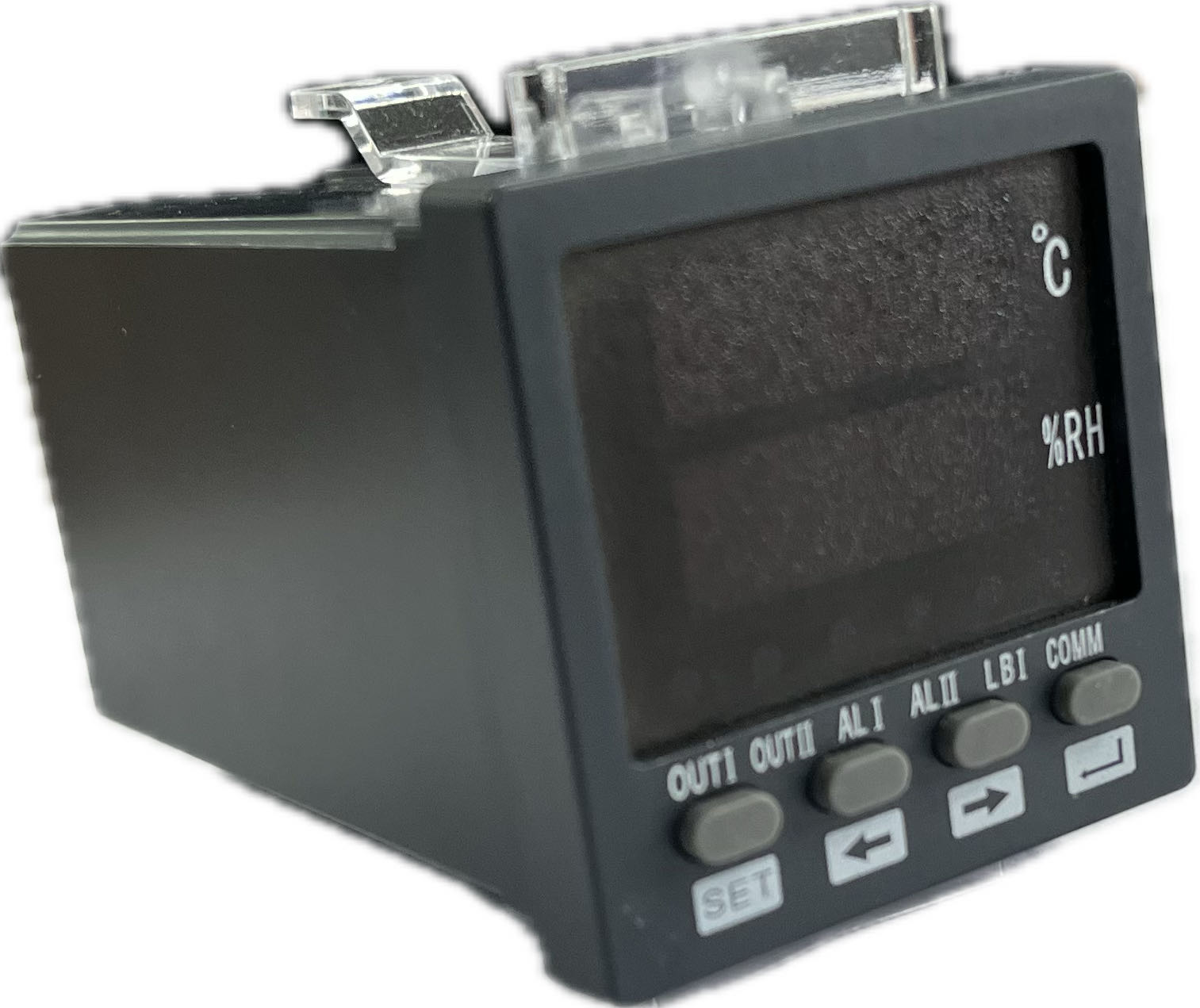
A Temperature and Humidity Controller is an intelligent monitoring and control device designed to maintain stable environmental conditions inside electrical enclosures, switchgear, transformers, distribution cabinets, and other industrial equipment. It receives data from temperature and humidity sensors, compares real-time values with preset limits, and automatically controls heaters, cooling fans, humidifiers, or dehumidifiers to maintain optimal operating conditions. Modern controllers also provide alarm functions, communication interfaces, and intelligent monitoring capabilities, helping prevent condensation, overheating, insulation failure, and equipment damage while improving operational reliability and maintenance efficiency.
Understanding how these controllers work can help you select the right solution for long-term equipment protection and operational efficiency.
How to Use a Temperature and Humidity Controller?
Using a Temperature and Humidity Controller correctly is essential for maximizing the reliability of electrical equipment and preventing costly failures. Although installation procedures may differ slightly depending on the application, most industrial controllers follow similar operating principles.
The first step is selecting an appropriate installation location. The controller is typically mounted inside switchgear cabinets, transformer control boxes, distribution panels, or other enclosed electrical equipment where environmental conditions directly affect sensitive electrical components. Proper positioning ensures the sensors accurately measure the surrounding air instead of localized heat sources.
Next, connect the temperature and humidity sensors according to the manufacturer’s wiring diagram. Accurate sensor installation is critical because incorrect placement may lead to false readings and unnecessary equipment operation. Modern controllers often support independent temperature and humidity probes, providing more precise monitoring across different areas of the cabinet.
After installation, configure the desired temperature and humidity setpoints. For example, operators may program the controller to activate a cabinet heater when humidity exceeds a predetermined level or start cooling fans when internal temperatures rise above safe operating limits. Intelligent controllers continuously compare measured values with preset thresholds and automatically activate connected devices whenever adjustment is required.
Many advanced products also support dual-channel control, allowing independent management of heating and ventilation simultaneously. This significantly improves environmental stability inside electrical cabinets, especially in regions experiencing large seasonal temperature differences.
Regular inspection is equally important. Maintenance personnel should periodically verify sensor accuracy, inspect wiring integrity, clean ventilation openings, and test alarm functions. Some intelligent controllers include sensor disconnection detection, automatically generating alarms when probes become damaged or disconnected, allowing maintenance teams to respond before environmental conditions become dangerous.
Modern industrial applications increasingly require remote supervision. Controllers equipped with communication interfaces can integrate into supervisory control systems, enabling engineers to monitor temperature, humidity, alarm status, and operating history remotely. This greatly reduces manual inspections while improving preventive maintenance planning.
Whether installed in substations, industrial automation systems, renewable energy projects, or commercial buildings, proper installation and configuration ensure a Temperature and Humidity Controller delivers long-term protection, stable operation, and reduced maintenance costs.
How Do You Control Temperature and Humidity?
Effective temperature and humidity control requires continuous monitoring, intelligent decision-making, and automatic environmental adjustment. Unlike manual methods, modern control systems operate around the clock without human intervention, ensuring electrical equipment always remains within safe operating conditions.
The process begins with high-precision sensors that continuously collect environmental data. Temperature sensors measure cabinet heat, while humidity sensors detect moisture levels that may eventually produce condensation. The controller processes these measurements in real time and compares them with user-defined thresholds.
When humidity rises beyond acceptable limits, the controller activates anti-condensation heaters or dehumidification equipment. Gentle heating raises the internal air temperature slightly, preventing moisture from condensing on electrical components. This approach effectively protects insulation systems, relay contacts, busbars, circuit breakers, and electronic modules from corrosion and electrical leakage.
When excessive temperature becomes the primary concern, the controller automatically starts cooling fans or ventilation systems. Improved airflow removes accumulated heat, preventing accelerated insulation aging and reducing thermal stress on electrical components. In applications with higher thermal loads, external cooling equipment may also be integrated into the control system.
Modern controllers often provide independent temperature and humidity control, enabling both heating and cooling functions to operate according to different environmental conditions. This dual-control capability delivers more accurate environmental management than traditional single-function controllers.
Alarm functions further enhance equipment safety. If measured values exceed predefined limits or sensors fail unexpectedly, the controller immediately generates audible, visual, or remote alarms. Maintenance personnel receive early warnings before environmental conditions cause equipment damage.
Communication capabilities have become increasingly important in modern industrial facilities. Controllers supporting industrial communication protocols allow centralized monitoring from control rooms or remote maintenance centers. Operators can review historical environmental data, identify trends, and optimize maintenance schedules based on actual operating conditions rather than fixed inspection intervals.
Industries including power generation, substations, renewable energy systems, manufacturing plants, transportation infrastructure, and commercial buildings all benefit from intelligent environmental control. Stable cabinet conditions significantly improve equipment reliability, minimize unexpected shutdowns, and extend asset service life.
For organizations seeking dependable long-term performance, working with an experienced Temperature and Humidity Controller manufacturer ensures access to advanced technologies, reliable technical support, and customized solutions designed for demanding industrial environments.
What Is the Difference Between Humidity Control and Temperature Control?
Although temperature and humidity are closely related, they affect electrical equipment in different ways and require different control strategies. Understanding their differences helps engineers choose appropriate protection methods for each application.
Temperature control focuses on maintaining equipment within safe operating temperatures. Electrical components naturally generate heat during operation, and insufficient cooling can accelerate insulation aging, reduce electronic reliability, and shorten equipment lifespan. Temperature controllers primarily activate cooling fans, ventilation systems, or air conditioning equipment when temperatures exceed preset limits. In colder environments, they may also control heating devices to prevent excessively low operating temperatures that affect sensitive electronics.
Humidity control, however, concentrates on managing moisture content in the surrounding air. High humidity alone is not always harmful, but when warm, moist air encounters cooler cabinet surfaces, condensation forms. Water droplets on electrical insulation dramatically increase the risk of short circuits, flashovers, corrosion, and insulation failure. Humidity controllers typically activate cabinet heaters or dehumidification devices before condensation develops.
The two control methods often complement each other. Increasing cabinet temperature slightly can reduce relative humidity and eliminate condensation risk without removing moisture from the air. Conversely, improving ventilation lowers temperature but may introduce additional humid air if outdoor conditions are unfavorable. Intelligent controllers continuously evaluate both parameters before determining the most appropriate response.
Traditional controllers often manage only one environmental variable. Modern intelligent products provide simultaneous temperature and humidity regulation, enabling coordinated operation that delivers better equipment protection under changing environmental conditions.
Many advanced industrial controllers also include programmable alarm thresholds, independent relay outputs, communication interfaces, historical data recording, and sensor fault detection. These intelligent features simplify maintenance while improving operational reliability across critical electrical installations.
Applications including medium-voltage switchgear, transformer stations, photovoltaic systems, wind power installations, industrial automation cabinets, and smart distribution networks increasingly require integrated environmental management rather than isolated temperature or humidity control.
Choosing a professional Temperature and Humidity Controller supplier provides access to controllers designed specifically for demanding electrical environments where both temperature stability and moisture prevention are equally critical for long-term operational reliability.
What Is the Best Humidity and Temperature Sensor?
Selecting the best humidity and temperature sensor depends on the application, environmental conditions, required accuracy, and long-term reliability. There is no single universal sensor suitable for every industrial project, but several characteristics distinguish high-quality industrial sensors from ordinary consumer-grade products.
Accuracy is the first consideration. High-quality industrial sensors typically provide precise temperature measurement and reliable humidity detection over wide operating ranges. Stable measurements allow controllers to make accurate decisions, reducing unnecessary equipment cycling while maintaining consistent environmental protection.
Long-term stability is equally important. Low-quality sensors often drift over time, gradually reducing measurement accuracy and requiring frequent recalibration. Industrial-grade sensors are specifically designed to maintain consistent performance throughout years of continuous operation, minimizing maintenance requirements.
Environmental durability also plays a significant role. Electrical distribution equipment frequently operates in dusty, humid, high-temperature, or vibration-prone environments. Quality sensors feature protective housings, corrosion-resistant materials, and robust sealing to ensure reliable operation under harsh industrial conditions.
Response speed is another important factor. Fast-response sensors quickly detect changing environmental conditions, allowing controllers to activate heating or cooling equipment before condensation or overheating develops. This proactive protection significantly reduces equipment failure risks.
Compatibility should also be evaluated carefully. The best sensors integrate seamlessly with intelligent controllers, supporting accurate signal transmission and stable long-distance communication. Some advanced systems also support digital calibration, self-diagnostics, and sensor fault detection for improved maintenance efficiency.
When selecting complete control systems, many buyers prefer working directly with an experienced Temperature and Humidity Controller manufacturer capable of providing integrated controllers, sensors, technical support, and customized solutions. Manufacturers with strong engineering capabilities can recommend sensor configurations optimized for switchgear, transformers, substations, renewable energy installations, and industrial automation equipment.
For international buyers, choosing a Temperature and Humidity Controller made in China has become increasingly attractive. Many Chinese manufacturers now produce high-performance industrial controllers that comply with international quality standards while offering competitive pricing, flexible customization, and efficient global delivery. Reliable Chinese suppliers have become trusted partners for distributors, electrical contractors, and OEM manufacturers worldwide.
Whether sourcing from a Temperature and Humidity Controller seller, manufacturer, or authorized distributor, selecting industrial-grade sensors with proven performance is one of the most effective investments for improving electrical system reliability and extending equipment service life.
Conclusion
A Temperature and Humidity Controller plays a vital role in protecting electrical equipment from condensation, overheating, and premature failure. By combining intelligent monitoring, automatic environmental control, alarm functions, and remote communication, it significantly improves system reliability, reduces maintenance costs, and supports safer long-term operation across modern industrial power distribution applications.
 Français
  English (UK)
  Bahasa Indonesia
  Tiếng Việt
  Deutsch
  Español
  Português
  Русский