
How Can Buyers Choose a Lighting Distribution Box That Is Safe, Easy to Maintain, and Ready for Project Expansion?
A lighting distribution box with inconsistent enclosure quality, inconvenient wiring and maintenance, limited circuit expansion, or unreliable electrical components can turn a routine project into a safety and cost problem. Poor protection may increase the risk of leakage and fire, while difficult fault tracing can extend downtime. Export projects also face certification-matching challenges. A professionally designed solution can address these concerns through reliable enclosure protection, organized wiring, quality-controlled components, and project-oriented configuration.
What Is a Lighting Distribution Box?
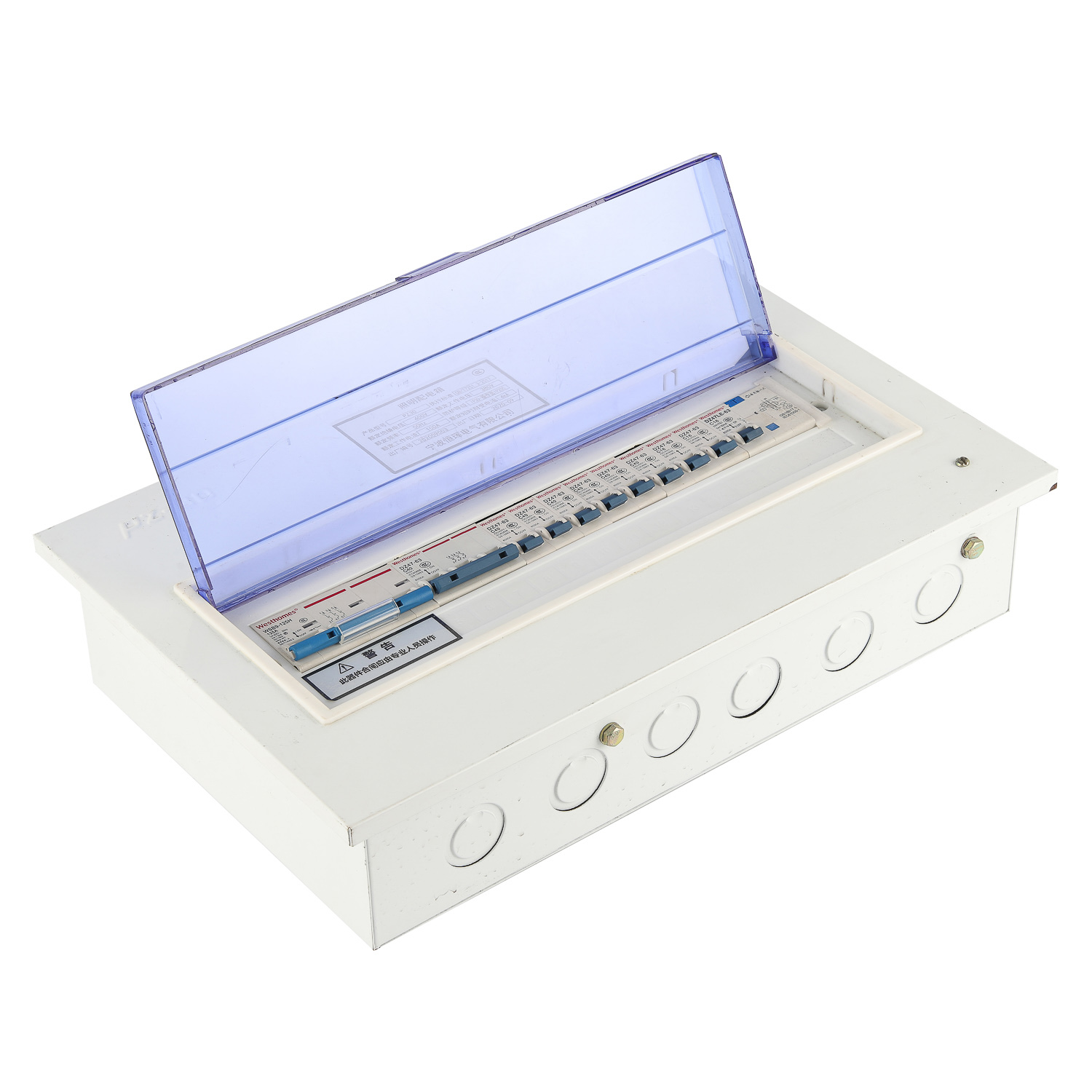
A lighting distribution box is a compact electrical enclosure that safely divides and distributes low-voltage power to multiple lighting circuits while providing protection against overload and short circuits. It typically integrates protective and switching components, organized wiring connections, and an enclosure designed to protect internal electrical equipment. By separating lighting circuits into manageable branches, a lighting distribution box helps improve operational safety, maintenance efficiency, and power distribution control.
For buyers, the value is not simply the box itself. The practical objective is to create a safe, organized, and serviceable low-voltage distribution point for lighting loads.
The following considerations help buyers evaluate the product beyond appearance and initial purchase price.
What Is the Purpose of a Distribution Box?
The fundamental purpose of a distribution box is to receive electrical power and divide it into multiple outgoing circuits that can be independently protected, controlled, and maintained.
Instead of connecting numerous lighting loads directly to one main supply, the distribution box creates a structured distribution point. Each outgoing circuit can be arranged according to the requirements of the project. This makes the electrical system easier to understand and provides a more practical basis for installation, inspection, troubleshooting, and future modification.
For a project buyer, this function has several important consequences.
First, circuit organization becomes clearer. Lighting systems may contain multiple areas, floors, rooms, production zones, offices, corridors, or other functional spaces. Separating these loads into appropriate circuits allows an electrical team to identify the relevant branch more efficiently when maintenance is required.
Second, protection can be organized around individual circuits. The broader low-voltage distribution equipment supplied by an experienced manufacturer is designed around principles such as reliable switching, short-circuit protection, grounding, and stable operation. For example, the company’s GGD low-voltage distribution cabinet is designed for AC distribution systems and can perform power conversion, distribution, and control for power and lighting equipment. Its documentation also emphasizes reliable breaking performance, grounding protection, modular assembly, and convenient maintenance.
Third, a distribution box can make maintenance more manageable. A poorly arranged electrical enclosure may force technicians to spend unnecessary time identifying cables and components. An organized internal layout, clear circuit identification, and accessible connections can make inspection and fault diagnosis more efficient.
Finally, the distribution box provides a practical foundation for future changes. Lighting requirements may change when a building is renovated, a production area expands, or additional equipment is installed. A well-planned distribution arrangement can make these modifications easier than a system with tightly packed or poorly organized circuits.
This is particularly relevant for a Lighting Distribution Box supplier serving engineering contractors, electrical distributors, and project buyers. The product should be considered as part of the overall distribution architecture rather than as an isolated metal enclosure.
What Is a Lighting Distribution Board, and How Is It Different From a Distribution Box?
A Lighting Distribution Board, often used interchangeably with a lighting distribution box in commercial purchasing discussions, is designed to organize and distribute electrical power to lighting-related branch circuits. Its role is therefore closely connected with the practical requirements of low-voltage power distribution.
The distinction in terminology can depend on the market, project specifications, and local electrical practices. A buyer may encounter terms such as Lighting Distribution Board, lighting panel, distribution box, or Lighting Distribution Panel. The important point is to evaluate the actual electrical configuration and required specifications rather than relying only on the product name.
A lighting distribution board generally contains the enclosure and the internal electrical components required to manage incoming and outgoing circuits. Depending on the project, the configuration may include circuit protection, switching devices, busbars or terminals, wiring assemblies, grounding arrangements, and identification elements.
For procurement teams, this means that the enclosure alone should not be treated as the complete product value.
The GGD low-voltage distribution equipment described in the product documentation demonstrates the importance of the complete assembly. Its structure uses modular installation dimensions to improve the compatibility of electrical component installation, while its main busbar uses a dedicated busbar clamp structure. The cabinet can also be configured into different forms, including incoming, metering, and feeder cabinets according to project requirements.
This system-oriented approach is useful when evaluating a lighting distribution product. A professional Lighting Distribution board seller should be able to discuss not only enclosure dimensions but also circuit configuration, protection requirements, component selection, installation conditions, and maintenance considerations.
Another important consideration is protection. The referenced low-voltage cabinet documentation specifies a basic IP30 protection level and allows customization within IP20–IP40 according to user requirements. Its ventilation openings are designed to provide natural heat dissipation while maintaining the required protection level.
Therefore, buyers should ask whether the proposed Lighting Distribution Panel is properly matched to the project’s environment. Indoor commercial applications, industrial facilities, and other locations may have different requirements for dust protection, ventilation, temperature, corrosion resistance, and installation arrangement.
For export projects, the same principle applies to standards and documentation. The selected equipment should be evaluated against the standards and certification requirements specified by the destination market and project owner rather than assuming that one certification automatically applies everywhere.
What Are the Key Features and Functions of a Lighting Distribution Box?
A high-quality Lighting Distribution Box should be evaluated as a combination of mechanical protection, electrical protection, circuit organization, maintainability, adaptability, and quality control. For buyers comparing different suppliers, the following features deserve particular attention.
1. Protective Enclosure and Suitable Protection Level
The enclosure is the first physical barrier protecting internal electrical components.
A suitable enclosure should provide the protection level required by the installation environment while allowing adequate heat dissipation and practical access for maintenance. The exact protection rating should be selected according to the project specification rather than simply choosing the highest available rating.
The GGD product documentation illustrates this approach by providing a defined basic protection level and allowing the enclosure protection to be customized according to user requirements.
For procurement teams, enclosure quality should therefore include more than sheet-metal appearance. Material quality, structural strength, surface treatment, door construction, sealing, ventilation, and corrosion resistance can all affect long-term performance.
2. Organized Wiring and Circuit Identification
Lighting systems can contain numerous outgoing circuits. If wiring is crowded or poorly organized, installation and future maintenance become unnecessarily difficult.
A well-configured distribution box should provide sufficient internal space for wiring and component installation, with circuit arrangements that are easy for electricians to understand.
Clear identification is equally important. When a fault occurs, technicians should be able to determine which circuit is involved without spending excessive time tracing unidentified wires.
The GGD documentation emphasizes modular installation, convenient cabinet access, removable top covers, and easily removable doors, all of which contribute to more efficient assembly and maintenance.
For a Lighting Distribution Box manufacturer, this means the internal arrangement deserves as much attention as the external enclosure.
3. Reliable Electrical Protection
One of the most important functions of a lighting distribution system is protecting branch circuits from abnormal electrical conditions.
Depending on the project configuration, protective devices can be selected and arranged to provide appropriate overload and short-circuit protection. Reliable switching and protective components are essential because a low-quality component can undermine the performance of the entire distribution assembly.
The company’s low-voltage distribution equipment is documented with strong breaking capability and short-circuit withstand performance, together with a complete grounding protection structure.
When purchasing a lighting distribution product, buyers should therefore pay attention to the quality and specifications of internal components, not only the cabinet itself.
4. Reliable Grounding and Electrical Safety
Grounding is another fundamental safety consideration.
The GGD product documentation describes connections between the instrument door, cabinet frame, and internal installation components to establish a reliable grounding protection circuit. It also highlights clearly defined electrical isolation points as part of safe operation and maintenance.
A lighting distribution box should similarly be configured with an appropriate grounding arrangement according to the project design and applicable standards.
This is especially important because a distribution enclosure is not merely a container for electrical components. The enclosure, internal components, wiring, and grounding system must work together as one electrical assembly.
5. Convenient Maintenance and Fault Diagnosis
Maintenance efficiency directly influences the total cost of ownership.
If technicians must dismantle multiple components simply to reach one circuit, routine inspection becomes slower and the probability of installation errors can increase. A practical design should therefore consider access to components, wiring space, door opening, terminal connections, circuit identification, and inspection procedures.
The GGD documentation specifically identifies removable cabinet covers and doors, modular component installation, and relatively straightforward maintenance procedures as advantages that can reduce installation and maintenance effort.
For buyers, the question should be simple: Can an electrician quickly understand the circuit arrangement and safely access the required component?
6. Expansion and Customization Capability
Lighting requirements are rarely guaranteed to remain unchanged throughout a project’s entire life.
Additional lighting circuits may be required during building expansion or renovation. A distribution box with a rigid configuration may then require substantial modification or replacement.
A more flexible solution can be configured according to the actual number of circuits, electrical capacity, installation environment, component requirements, and project specifications.
The company’s broader electrical product portfolio demonstrates a customization-oriented approach. Its low-voltage distribution equipment can be configured into different cabinet forms and adapted to different distribution capacities and project requirements.
This project-oriented capability can be particularly valuable when working with an experienced Lighting Distribution Box supplier, because the buyer may need more than a standard catalog item.
7. Quality-Controlled Components and Standardized Manufacturing
A distribution box is only as reliable as its weakest critical component.
For this reason, buyers should consider the manufacturer’s production and quality-control capabilities. A supplier with a standardized manufacturing process can provide greater consistency between batches and configurations.
The company behind the referenced electrical products has more than ten years of development experience and covers R&D, manufacturing, sales, and service within the power distribution field. Its product strategy covers high-, medium-, and low-voltage distribution products and integrated solutions.
Its stated management system is also intended to support standardized production and stable product quality, while its technical team supports product development and solution design.
For an international buyer, this broader capability can help reduce the communication gap that often occurs when purchasing electrical equipment from overseas suppliers.
8. Standards, Testing, and Export Documentation
For export projects, technical compliance can be just as important as the physical product.
Buyers should clarify the applicable standards, required certificates, test reports, component specifications, and project documentation before placing an order. Certification should match the actual destination market and project requirements.
The company’s electrical product documentation demonstrates a standards-based manufacturing approach. For example, its GGD low-voltage distribution cabinet is developed according to IEC and Chinese low-voltage switchgear standards, while its medium-voltage products are designed and tested against corresponding national and industry standards.
For this reason, an experienced Lighting Distribution board seller should be able to provide clear technical information rather than simply quoting a price.
9. Project-Oriented Technical Support
The final feature worth considering is the supplier’s ability to support the project before and after delivery.
Electrical distribution products often require communication about circuit diagrams, component lists, installation conditions, technical parameters, and project-specific configurations. The company’s documented service model includes technical support from product selection and installation through commissioning and maintenance for its electrical equipment portfolio.
This approach is particularly relevant to B2B procurement, where delivery reliability, documentation accuracy, technical communication, and after-sales support can influence the total project cost as much as the initial unit price.
Conclusion
A reliable Lighting Distribution Box should provide more than basic circuit distribution. Buyers should evaluate enclosure protection, wiring organization, electrical safety, component quality, maintenance access, expansion capability, compliance, and supplier support together. Choosing an experienced manufacturer can help turn a basic distribution box into a dependable part of the project’s long-term electrical infrastructure.
 Français
  English (UK)
  Bahasa Indonesia
  Tiếng Việt
  Deutsch
  Español
  Português
  Русский