
Why Is the CKSG Series Reactor Essential for Reliable Harmonic Suppression and Reactive Power Compensation?
Ordinary series reactors on the market often suffer from inaccurate electrical parameters, excessive temperature rise, high operating noise, non-standard dimensions, poor harmonic suppression, and premature aging. These issues increase assembly costs for panel builders, complicate installation, and reduce overall system reliability. For end users, the consequences can include capacitor failures, production downtime, power quality penalties, and expensive maintenance. Choosing a high-quality CKSG Series Reactor designed for precision, durability, and effective harmonic filtering is the most practical way to improve reactive power compensation performance. This guide explains everything buyers need to know before selecting the right solution.
Table of Contents
ToggleWhat Is a CKSG Series Reactor?
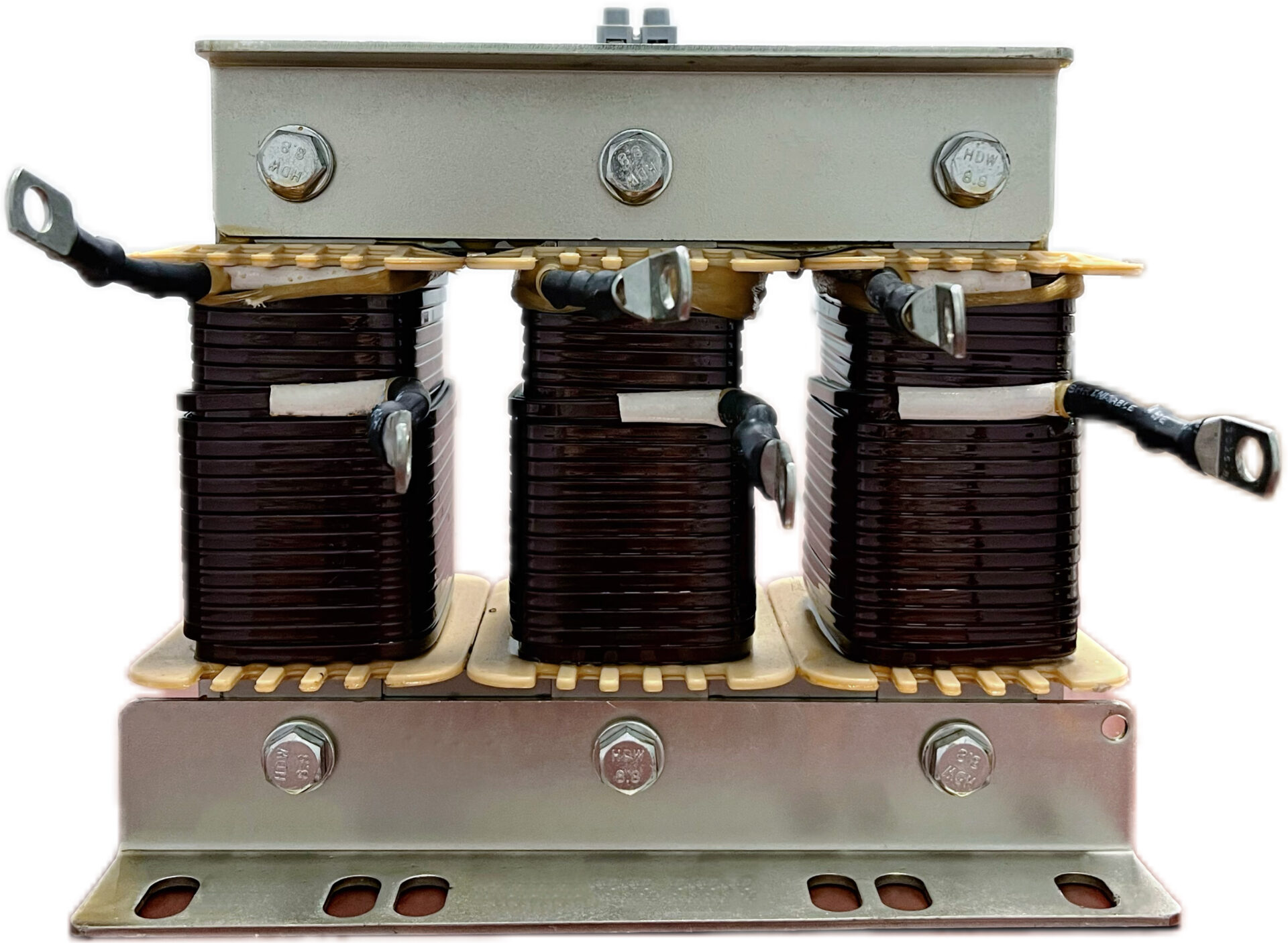
A CKSG Series Reactor is a three-phase series reactor designed for low-voltage reactive power compensation cabinets. It is connected in series with power capacitors and operates in a three-phase total compensation switching system. Its primary function is to suppress harmonic currents, limit capacitor inrush current, protect capacitors from overload, improve power factor, and enhance the stability of power distribution systems. By reducing harmonic distortion and extending capacitor service life, the CKSG Series Reactor helps industrial and commercial facilities maintain reliable, efficient, and compliant electrical operation.
Continue reading to discover how a CKSG Series Reactor protects power systems, improves efficiency, and reduces long-term operating costs.
What Is the Purpose and Scope of Application of a Series Reactor?
A series reactor is an essential component in modern power distribution systems where reactive power compensation and harmonic mitigation are required. Installed in series with capacitor banks, it performs several critical functions that significantly improve electrical system reliability and efficiency.
The primary purpose of a series reactor is to limit harmonic currents generated by nonlinear loads such as variable frequency drives (VFDs), UPS systems, rectifiers, welding machines, photovoltaic inverters, and industrial automation equipment. Without adequate harmonic suppression, these harmonics can overload capacitors, increase transformer losses, overheat cables, and reduce the lifespan of electrical equipment.
Another important function is limiting capacitor switching inrush current. When capacitor banks are energized, extremely high transient currents may occur. A CKSG Series Reactor effectively limits these currents, preventing capacitor damage and reducing stress on switching devices such as contactors and circuit breakers.
Series reactors also prevent harmonic resonance between capacitors and the power grid. Resonance can dramatically amplify harmonic voltages and currents, leading to capacitor explosions, insulation breakdown, protective device malfunction, and costly system failures. Properly designed reactors shift the resonant frequency away from dominant harmonic frequencies, ensuring stable operation.
Typical applications include:
- Low-voltage reactive power compensation cabinets
- Automatic power factor correction (APFC) systems
- Industrial manufacturing plants
- Steel mills
- Mining operations
- Petrochemical facilities
- Commercial buildings
- Hospitals
- Airports
- Data centers
- Renewable energy systems
- Water treatment plants
- Municipal infrastructure
- Large shopping malls
Because harmonic pollution continues to increase with modern electronic equipment, a high-quality CKSG Series Reactor has become an indispensable component for maintaining power quality and protecting valuable electrical assets.
When selecting a reliable CKSG Series Reactor supplier, buyers should consider manufacturing quality, electrical accuracy, compliance with international standards, customization capability, and long-term technical support rather than simply comparing prices.
What Is the Difference Between a Shunt Reactor and a Series Reactor?
Although both shunt reactors and series reactors are inductive devices, they serve entirely different purposes in electrical power systems.
A series reactor is connected directly in series with capacitors or electrical loads. Its main objective is to control current flow, suppress harmonics, reduce inrush current, and protect compensation equipment. In low-voltage power factor correction systems, the CKSG Series Reactor is specifically engineered to work together with capacitor banks, creating a harmonic filtering system that maintains safe operating conditions.
By contrast, a shunt reactor is connected in parallel with transmission or distribution lines. Its primary function is to absorb excessive reactive power generated by long transmission cables or lightly loaded overhead lines. This prevents excessive voltage rise and stabilizes system voltage during light-load conditions.
Their working principles differ significantly.
A series reactor increases inductive reactance within the circuit, reducing the impact of unwanted harmonic currents while limiting transient current peaks. It directly protects capacitors and switching equipment.
A shunt reactor absorbs surplus reactive power produced by the transmission network itself, maintaining voltage stability over long-distance power transmission.
Their application environments also differ.
Series reactors are widely used in:
- Low-voltage capacitor banks
- Harmonic filter systems
- Industrial compensation cabinets
- Power quality improvement equipment
Shunt reactors are commonly installed in:
- High-voltage substations
- Ultra-high voltage transmission systems
- Long-distance cable networks
- Utility transmission infrastructure
For industrial facilities experiencing harmonic distortion, capacitor failures, or unstable reactive power compensation, the CKSG Series Reactor is the appropriate solution. Shunt reactors, on the other hand, are designed primarily for utility-level voltage regulation rather than harmonic suppression.
Working with an experienced CKSG Series Reactor manufacturer ensures the reactor parameters are accurately matched with capacitor ratings, system voltage, harmonic content, and compensation capacity, maximizing operational performance.
Structural Features of a CKSG Series Reactor
The performance of a CKSG Series Reactor depends heavily on its structural design and manufacturing quality. Premium reactors are engineered to deliver stable inductance, excellent heat dissipation, low operating noise, and long service life even under demanding industrial conditions.
The core typically consists of high-quality silicon steel laminations with optimized magnetic characteristics. Precision stacking techniques minimize magnetic losses while maintaining stable inductance throughout the operating range.
The winding is generally manufactured using high-purity copper conductors with excellent electrical conductivity. Copper windings reduce power losses, improve thermal performance, and enhance long-term mechanical strength. Depending on project requirements, aluminum windings may also be available for cost-sensitive applications.
Advanced insulation systems employ high-temperature insulating materials capable of withstanding continuous operation under elevated temperatures. Vacuum pressure impregnation (VPI) technology or high-quality resin treatment enhances insulation performance, improves moisture resistance, and significantly extends equipment lifespan.
Mechanical construction is equally important. A well-designed CKSG Series Reactor features:
- Compact dimensions
- Standardized installation sizes
- Robust supporting brackets
- Reinforced coil fixation
- Strong vibration resistance
- Low electromagnetic noise
- Excellent mechanical stability
Effective ventilation design allows natural air cooling while minimizing operating temperature rise. Lower operating temperatures directly contribute to longer insulation life and improved equipment reliability.
The reactor is also designed to maintain precise inductance tolerance, ensuring that harmonic filtering performance remains consistent throughout years of operation. Accurate electrical parameters are especially important for capacitor protection and harmonic suppression.
Many professional CKSG Series Reactor factories also offer customized solutions, including:
- Different detuning rates (5%, 6%, 7%, 12%, 14%)
- Customized inductance values
- Various voltage ratings
- Multiple capacity options
- Special installation dimensions
- Enhanced corrosion-resistant coatings
- High-altitude designs
- Tropical climate adaptations
These structural improvements enable the reactor to operate reliably in factories, mining sites, renewable energy projects, commercial buildings, and other demanding electrical environments while reducing maintenance requirements and total ownership costs.
Working Conditions of a CKSG Series Reactor
To ensure optimal performance and maximize service life, a CKSG Series Reactor should operate within its specified environmental and electrical conditions.
The reactor is generally designed for 50Hz or 60Hz AC power systems and is installed inside low-voltage reactive power compensation cabinets. It operates together with capacitor banks under three-phase total compensation switching mode.
Typical environmental conditions include:
- Ambient temperature: -25°C to +45°C
- Relative humidity below 90%
- Altitude generally below 2000 meters (higher elevations can be customized)
- Indoor installation with adequate ventilation
- Locations free from conductive dust, explosive gases, and corrosive chemicals
- Stable mounting surface with minimal vibration
During operation, sufficient ventilation should be maintained to allow proper heat dissipation. Overheating may reduce insulation life and negatively affect inductance stability.
Electrical operating conditions are equally important. The reactor should be correctly matched with:
- System voltage
- Capacitor capacity
- Harmonic spectrum
- Reactive power compensation requirements
- Expected load fluctuations
Improper reactor selection may lead to insufficient harmonic filtering or excessive reactor losses. Therefore, electrical system analysis is recommended before selecting reactor specifications.
Routine maintenance is relatively simple. Operators should periodically inspect:
- Terminal connections
- Surface cleanliness
- Coil condition
- Insulation integrity
- Temperature rise
- Ventilation passages
- Mechanical fasteners
Any unusual vibration, abnormal temperature increase, or excessive operating noise should be investigated promptly.
Industrial environments containing large numbers of nonlinear loads often experience continuously changing harmonic conditions. In these applications, selecting products from an experienced CKSG Series Reactor seller with strong engineering support allows customers to obtain customized reactor configurations that precisely match actual operating conditions.
Reliable manufacturers also perform comprehensive factory testing before shipment, ensuring every reactor meets strict quality standards for inductance accuracy, temperature rise, insulation performance, and operational stability.
Conclusion
A CKSG Series Reactor plays a vital role in protecting capacitor banks, suppressing harmonics, improving power quality, and extending equipment life. Choosing an experienced CKSG Series Reactor supplier, CKSG Series Reactor manufacturer, CKSG Series Reactor seller, or CKSG Series Reactor factory ensures long-term reliability, lower maintenance costs, and more efficient reactive power compensation systems.
 Español
  English (UK)
  Bahasa Indonesia
  Tiếng Việt
  Deutsch
  Français
  Português
  Русский