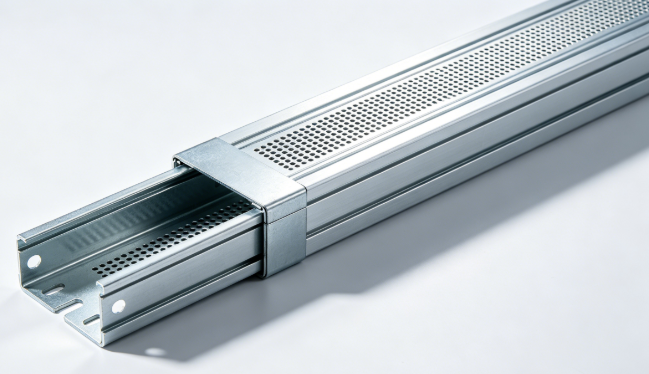
Why Is Choosing the Right Busway So Important for Safety, Cost Control, and Reliable Power Distribution?
Electrical distribution systems often face several persistent challenges: overheated joints that can lead to fire hazards, expensive renovation costs when facilities expand, difficulty identifying high-quality products, and time-consuming maintenance procedures. Many buyers also struggle with non-standard products that use inferior materials, resulting in reduced efficiency and shorter service life.
The consequences can be severe—unexpected downtime, damaged equipment, safety incidents, and significant financial losses. Fortunately, a properly designed busway system offers a safer, more flexible, and more efficient solution for modern power distribution. This guide explains everything buyers need to know before selecting a busway and how to avoid costly mistakes.
What Is a Busway?
A busway is a prefabricated electrical distribution system consisting of bus bars enclosed within a protective housing, together with fittings, accessories, devices, and connection components. It is designed to efficiently distribute electrical power throughout buildings, industrial facilities, and infrastructure projects. In power distribution networks, a bus duct or busway serves as a reliable conductor that transfers electricity between transformers, switchgear, distribution panels, and other electrical equipment. Compared with conventional cable systems, busways provide higher current-carrying capacity, easier installation, greater flexibility for future expansion, and improved operational reliability.
Continue reading to discover how busways improve power distribution efficiency and whether they are the right solution for your project.
What Does a Busway Do?
A busway serves as the main electrical highway within a power distribution system. Its primary function is to transport large amounts of electrical energy safely and efficiently from one point to another. Instead of relying on multiple parallel cables, a busway uses insulated or non-insulated conductors enclosed within a protective metal housing.
In commercial buildings, manufacturing plants, data centers, hospitals, airports, and renewable energy projects, busways provide a streamlined method of power distribution. They connect transformers, switchboards, low-voltage distribution panels, motor control centers, and other critical equipment.
One of the biggest advantages of a busway is its ability to simplify installation. Traditional cable systems often require extensive cable trays, supports, and labor-intensive wiring work. A busway arrives as a prefabricated assembly, allowing faster installation and reducing project timelines.
Busways also improve flexibility. As facilities grow, additional tap-off units can often be added without major rewiring. This makes busways particularly valuable in manufacturing facilities and commercial buildings where electrical loads frequently change.
From a maintenance perspective, modern busways are designed to provide reliable operation with fewer connection points than traditional cable systems. Fewer connections typically mean fewer opportunities for loose terminations and overheating.
For businesses seeking long-term reliability, a high-quality Busway manufacturer can provide systems engineered to meet international standards while supporting future expansion requirements. Many global buyers also choose a trusted Busway supplier capable of delivering customized solutions for specific applications.
Ultimately, a busway’s primary purpose is to deliver electrical power safely, efficiently, and economically while supporting the evolving needs of modern electrical infrastructure.
What Is the Difference Between a Busbar and a Busway?
Although the terms are sometimes used interchangeably, a busbar and a busway are not the same thing.
A busbar is simply a conductive metal bar, typically made of copper or aluminum, that carries electrical current within electrical equipment. Busbars are commonly found inside switchgear, control panels, substations, transformers, and distribution boards. Their purpose is to collect and distribute electrical power among various circuits.
A busway, on the other hand, is a complete power distribution system. It contains one or more busbars housed inside a protective enclosure and includes accessories such as joints, supports, fittings, tap-off units, and expansion sections.
Think of a busbar as a component, while a busway is the entire system built around that component.
Several important differences exist:
Construction
A busbar is typically exposed or enclosed within electrical equipment. A busway includes conductors, insulation, housing, joints, and installation accessories.
Aplicación
Busbars are usually installed inside electrical devices. Busways are used to distribute power between devices and across larger distances within facilities.
Flexibility
Busways can be easily extended or modified using standardized sections and fittings. Busbars generally require more custom engineering when modifications are needed.
Installation Speed
Busway systems are prefabricated, reducing installation time compared with many traditional busbar arrangements.
Seguridad
Modern busways feature protective enclosures that reduce accidental contact and environmental exposure, enhancing safety in industrial and commercial environments.
When evaluating options, buyers should consider not only the conductor material but also the overall system design. A reputable Busway factory typically performs extensive testing on insulation performance, temperature rise, short-circuit withstand capability, and mechanical strength to ensure long-term reliability.
Understanding the distinction between a busbar and a busway helps project engineers make better decisions regarding system architecture, installation requirements, and future scalability.
What Is the Point of a Busway?
The purpose of a busway extends far beyond simply carrying electricity. It addresses many of the challenges associated with traditional cable-based distribution systems.
Improved Energy Efficiency
Busways are designed with optimized conductor arrangements that minimize electrical losses. This can contribute to improved overall system efficiency, particularly in facilities with high current demands.
Space Savings
Large cable installations often require extensive cable trays and support structures. Busways typically occupy less space, making them ideal for modern buildings where efficient use of available space is critical.
Faster Installation
Since busways are manufactured in standardized sections, installation is often faster than pulling and terminating multiple power cables. Reduced installation time can lower labor costs and accelerate project completion.
Enhanced Safety
Quality busway systems are engineered to reduce the risk of overheating, short circuits, and accidental contact. Properly designed joints help maintain consistent electrical performance throughout the system’s service life.
Easy Expansion
As businesses expand, electrical requirements frequently increase. Busways allow additional loads to be connected through tap-off units without major modifications to the existing distribution infrastructure.
Lower Maintenance Requirements
Traditional cable systems may require frequent inspections of cable terminations and support structures. Busways generally feature accessible inspection points and standardized connection methods that simplify maintenance.
Long-Term Cost Benefits
Although initial procurement costs may sometimes be higher than cable systems, busways often reduce lifetime ownership costs through lower maintenance expenses, improved efficiency, and easier future expansion.
For facilities such as data centers, manufacturing plants, commercial complexes, and renewable energy projects, these advantages can translate into substantial operational savings over decades of service.
Many international buyers source products from a professional Busway supplier or Busway manufacturer offering advanced engineering capabilities and comprehensive technical support. Today, numerous high-quality busway systems are made in China, combining competitive pricing with compliance to international quality standards.
In essence, the point of a busway is to provide a safer, smarter, and more adaptable method of distributing electrical power while supporting the long-term growth of modern facilities.
When Should You Use a Busbar?
Although busways offer many advantages, there are situations where a standalone busbar remains the preferred solution.
Inside Electrical Equipment
Busbars are commonly used within switchgear, distribution boards, motor control centers, and transformer connections. In these applications, they efficiently distribute power between internal components.
High-Current Applications
When very large currents must be distributed within a compact area, busbars can provide excellent conductivity while minimizing voltage drop.
Short-Distance Connections
For short electrical runs within equipment enclosures, busbars often provide a simpler and more economical solution than installing an entire busway system.
Custom Electrical Designs
Certain industrial processes require customized electrical layouts. Busbars can be fabricated to accommodate unique configurations where standard busway sections may not be practical.
Substations and Power Plants
Electrical substations frequently use rigid busbar systems to connect transformers, circuit breakers, disconnect switches, and other high-voltage equipment.
Cost Considerations for Small Projects
In smaller installations with limited expansion requirements, busbars may offer a lower initial investment compared with busway systems.
However, engineers should carefully evaluate future growth plans. What appears cost-effective today may become expensive if major modifications are required later. In many modern facilities, busways are selected because they provide scalability, flexibility, and simplified maintenance that traditional busbar installations cannot always match.
When choosing between a busbar and a busway, factors such as current capacity, installation distance, available space, maintenance requirements, safety standards, and future expansion plans should all be considered.
Working with an experienced Busway manufacturer, Busway supplier, or Busway factory can help buyers identify the most appropriate solution for their specific application. Many globally exported systems made in China now offer advanced engineering, strict quality control, and competitive value for international projects.
Conclusion
A busway provides a flexible, efficient, and safe solution for modern power distribution, while busbars remain essential components within electrical equipment. Understanding their differences, applications, and benefits helps buyers select the right system, reduce operational risks, and achieve long-term reliability in commercial and industrial power networks.
 Español
  English (UK)
  Bahasa Indonesia
  Tiếng Việt
  Deutsch
  Français
  Português
  Русский