
How Can an Active Power Filter Cabinet Reduce Harmonics, Cut Electricity Penalties, and Improve Power Quality?
Power quality problems are becoming increasingly costly for industrial facilities. Harmonic pollution in the power grid can lead to expensive utility penalties, frequent failures of electrical equipment, overheating of transformers and cables, and abnormal operation of precision machinery. In severe cases, production interruptions, unexpected downtime, and shortened equipment lifespan can significantly impact profitability. Fortunately, an Active Power Filter Cabinet (APF) provides a proven solution by dynamically eliminating harmonics, compensating reactive power, and improving overall power quality. Read on to discover how an Active Power Filter can protect your electrical system and reduce operating costs.
What is an Active Power Filter?
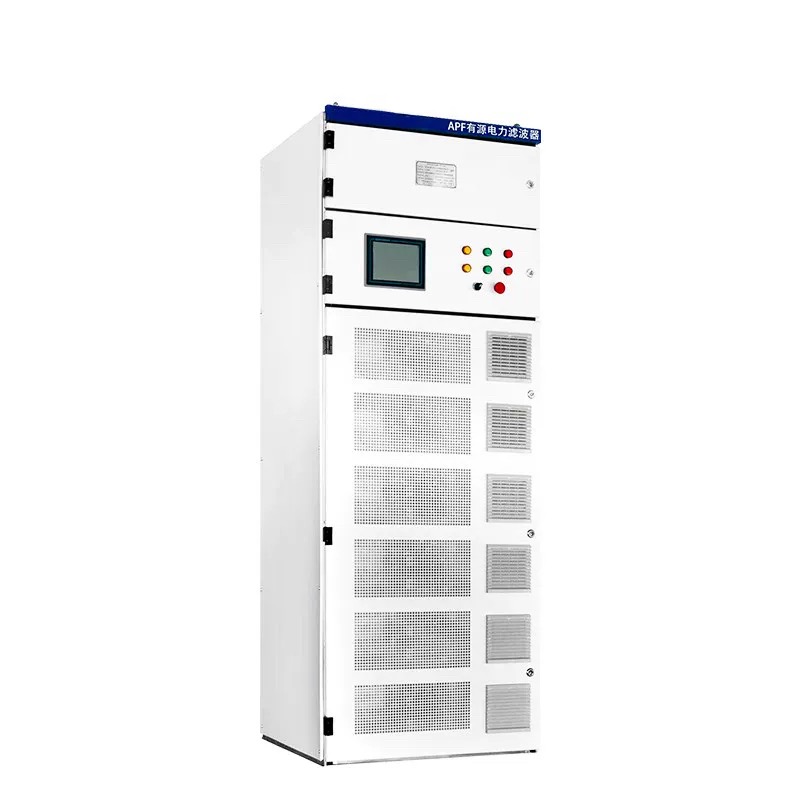
An Active Power Filter (APF), also known as an active power line conditioner, is a power quality device that detects harmonic currents in real time and injects equal but opposite compensation currents into the electrical network. Active filters can compensate current and voltage harmonics, provide reactive power compensation, regulate terminal voltage, suppress voltage flicker, and improve voltage balance in three-phase systems. Modern Active Power Filters are developed using pulse-width modulation (PWM) converter technology, enabling fast and accurate compensation across a wide range of power quality disturbances.
Power quality improvement involves more than harmonic reduction. The following sections explain the key performance capabilities of an Active Power Filter Cabinet and how it benefits industrial users.
How Many Orders of Harmonics Can This APF Active Power Filter Suppress?
One of the most common concerns among industrial users is the harmonic suppression capability of an Active Power Filter Cabinet. Harmonics are electrical distortions generated by nonlinear loads such as variable frequency drives, photovoltaic inverters, UPS systems, welding machines, rectifiers, and other power electronic equipment.
A modern APF can typically compensate harmonics ranging from the 2nd order up to the 50th order, and in some advanced configurations even higher-order harmonics can be addressed. Unlike passive filters that are tuned to specific frequencies, an Active Power Filter continuously monitors the electrical network and automatically identifies changing harmonic components in real time.
This capability is particularly important because industrial loads rarely remain constant. Production lines start and stop, motor speeds change, and renewable energy systems continuously vary their output. Traditional filtering methods may become ineffective under such dynamic conditions, while an Active filter adapts instantly to changing harmonic profiles.
By suppressing a wide range of harmonic orders, the APF can significantly reduce:
- Transformer overheating
- Cable overheating
- Capacitor bank failures
- Circuit breaker nuisance tripping
- Excessive neutral currents
- Motor vibration and noise
- Premature equipment aging
Many facilities can reduce Total Harmonic Distortion (THD) from levels exceeding 20% down to below 5%, helping meet international power quality standards and utility requirements. This comprehensive harmonic mitigation ensures safer operation, greater equipment reliability, and longer service life throughout the electrical distribution system.
How Fast Is the Response Compensation Speed of the Equipment?
Response speed is one of the most important advantages of an Active Power Filter Cabinet compared with conventional compensation technologies.
Industrial electrical loads can change within milliseconds. For example, frequency converters, robotic manufacturing equipment, automated production lines, and photovoltaic inverters can introduce rapid fluctuations in harmonic currents. To effectively mitigate these disturbances, compensation equipment must react almost instantly.
Modern APF systems typically achieve response times of less than 10 milliseconds, with some advanced models responding within 5 milliseconds or faster. This rapid response is made possible through high-speed digital signal processors (DSPs), intelligent control algorithms, and PWM converter technology.
The operating process generally includes:
- Real-time detection of load current.
- Harmonic component analysis.
- Calculation of required compensation current.
- Immediate generation of inverse compensation current.
- Injection of compensation current into the power system.
Because the entire process occurs continuously and automatically, the Active Power Filter can adapt to sudden load changes without human intervention.
Fast compensation delivers several important benefits:
- Stable power quality during load fluctuations.
- Reduced voltage distortion.
- Improved production continuity.
- Enhanced performance of sensitive equipment.
- Lower risk of process interruptions.
- Better compliance with utility power quality standards.
For industries such as semiconductor manufacturing, data centers, medical facilities, and automated factories, fast response capability is often essential to maintaining operational stability and preventing costly downtime.
Can It Be Used for Photovoltaic Power Stations and Frequency Converter Workshops at the Same Time?
Yes. One of the greatest strengths of an Active Power Filter Cabinet is its versatility across multiple applications. It can effectively operate in both photovoltaic power stations y frequency converter workshops, even when both environments exist within the same facility.
Photovoltaic systems rely heavily on power electronic inverters. While these inverters efficiently convert DC power into AC power, they also generate harmonic currents and can contribute to power quality issues such as voltage fluctuations and reactive power demand.
Similarly, frequency converter workshops contain numerous variable frequency drives (VFDs) that create substantial harmonic distortion. In large manufacturing plants, these drives may represent one of the primary sources of electrical pollution.
An APF Active Power Filter is designed to address both scenarios simultaneously because it does not target a single harmonic source. Instead, it continuously monitors the entire electrical network and compensates for all detected harmonic currents regardless of their origin.
Typical applications include:
- Solar photovoltaic power plants
- Energy storage systems
- Industrial manufacturing facilities
- Water treatment plants
- Commercial buildings
- Data centers
- Mining operations
- Steel mills
- Chemical processing plants
In hybrid energy environments where photovoltaic systems coexist with industrial loads, an Active filter can provide multiple benefits:
- Harmonic suppression
- Reactive power compensation
- Improved power factor
- Voltage stabilization
- Reduced transformer loading
- Enhanced grid compliance
This flexibility makes the Active Power Filter Cabinet an ideal solution for modern facilities integrating renewable energy systems while maintaining high production efficiency.
How Much Electricity Bill and Power Grid Penalty Can Be Reduced After Putting It Into Use?
The financial benefits of installing an Active Power Filter Cabinet are often one of the primary reasons companies invest in power quality improvement.
Although the exact savings vary depending on load characteristics, utility tariff structures, and existing power quality conditions, many facilities experience substantial reductions in both direct and indirect costs after implementing an APF.
Reduction of Utility Penalties
Many utility companies impose penalties when customers exceed harmonic distortion limits or maintain poor power factors. Excessive harmonics can increase apparent power demand and negatively affect overall system efficiency.
By reducing harmonic distortion and improving power factor, an Active Power Filter helps facilities avoid:
- Harmonic pollution penalties
- Low power factor charges
- Excess demand charges
- Grid compliance violations
In some cases, power factor improvements alone can reduce utility penalties by 20% to 50%.
Lower Energy Losses
Harmonics create additional losses throughout the electrical system, including:
- Transformer losses
- Cable losses
- Motor losses
- Switchgear losses
When harmonics are eliminated, these losses decrease significantly. As a result, the overall efficiency of the electrical distribution network improves, leading to measurable energy savings.
Reduced Equipment Maintenance Costs
Poor power quality accelerates equipment aging and increases maintenance requirements. Harmonic-related overheating can shorten the lifespan of:
- Transformers
- Capacitors
- Motors
- UPS systems
- Switchgear
- Power cables
After installing an APF Active Power Filter, many facilities report fewer equipment failures and lower maintenance expenses.
Improved Production Efficiency
Perhaps the greatest financial benefit comes from avoiding production interruptions. Unexpected downtime caused by power quality issues can cost thousands of dollars per hour in manufacturing environments.
By stabilizing the electrical system, the Active Power Filter Cabinet helps maintain continuous operation, protecting both productivity and profitability.
For many industrial users, the combined savings from reduced penalties, lower energy losses, decreased maintenance costs, and improved uptime can result in a return on investment within a relatively short period.
Conclusion
An Active Power Filter Cabinet provides comprehensive harmonic suppression, ultra-fast compensation, compatibility with photovoltaic and industrial applications, and significant reductions in utility penalties and operating costs. For facilities seeking improved power quality, higher equipment reliability, and lower energy expenses, an Active Power Filter (APF) is one of the most effective long-term solutions available.
 Español
  English (UK)
  Bahasa Indonesia
  Tiếng Việt
  Deutsch
  Français
  Português
  Русский