
How Can a Power Factor Correction Capacitor Improve Energy Efficiency and Reduce Electricity Costs?
Low-voltage reactive power compensation systems often face persistent challenges. Conventional power factor correction capacitors may suffer from bulging, oil leakage, short service life, poor heat dissipation, difficult installation, and even fire hazards. These issues not only increase maintenance costs but also reduce system reliability, cause unexpected downtime, and expose facilities to safety risks. Fortunately, choosing the right PFC capacitor with advanced design and reliable manufacturing can solve these problems while improving energy efficiency, extending equipment life, and reducing electricity bills. This guide explains everything you need to know before selecting a reactive power compensation capacitor.
A power factor correction capacitor (PFC capacitor) is a component used in AC electrical systems to improve energy efficiency by supplying reactive power. It offsets the lagging reactive power generated by inductive loads such as motors, transformers, compressors, and pumps. By reducing unnecessary reactive current, a power factor correction capacitor lowers energy losses, decreases utility penalty charges, improves voltage stability, increases available system capacity, and extends the service life of electrical equipment. It is one of the most cost-effective solutions for reactive power compensation in industrial and commercial power distribution systems.
Let’s explore how the right PFC capacitor can maximize your electrical system’s efficiency and reliability.
How Does a Power Factor Correction Capacitor Work?
A power factor correction capacitor works by supplying leading reactive power to offset the lagging reactive power produced by inductive electrical loads. In industrial and commercial electrical systems, equipment such as induction motors, transformers, welding machines, air compressors, elevators, HVAC systems, and pumps require magnetic fields to operate. Creating these magnetic fields consumes reactive power, which does not perform useful work but still flows through the electrical network.
As reactive current increases, the total current drawn from the power source also increases. Higher current causes additional losses in cables, transformers, and switchgear while reducing the effective capacity of the entire distribution system. Many utility companies also impose penalty charges when the power factor falls below specified limits.
A PFC capacitor generates reactive power with an opposite phase angle. When connected to the electrical network, it compensates for the reactive demand locally instead of requiring the utility to supply it. As a result, the reactive current flowing through the system decreases significantly.
This process delivers several important improvements:
- Higher power factor
- Lower line current
- Reduced voltage drop
- Lower cable and transformer losses
- Improved voltage stability
- Increased usable transformer capacity
- Reduced electricity penalties
Modern reactive power compensation capacitors are commonly installed inside automatic capacitor banks controlled by intelligent power factor controllers. These controllers continuously monitor system load and switch capacitor stages on or off as demand changes, ensuring accurate compensation under varying operating conditions.
High-quality capacitor designs also incorporate advanced safety technologies such as self-healing dielectric film, overpressure disconnect mechanisms, flame-retardant housings, dry-type construction, and efficient heat dissipation. Compared with traditional oil-filled capacitors, modern designs greatly reduce risks associated with oil leakage, swelling, overheating, and fire, making them a safer choice for long-term industrial operation.
What Are the Key Benefits of a Power Factor Correction Capacitor?
Installing a high-quality power factor correction capacitor provides measurable financial, operational, and technical benefits for virtually every low-voltage power distribution system.
Lower Electricity Costs
Many electricity suppliers charge penalties when a facility operates with a low power factor. By increasing the power factor closer to unity, a PFC capacitor minimizes these penalties and lowers monthly electricity expenses.
Reduced Energy Losses
Lower reactive current means less current flowing through conductors. This reduces I²R losses throughout the electrical distribution network, improving overall system efficiency.
Increased Transformer Capacity
When transformers no longer carry excessive reactive current, additional capacity becomes available for productive loads without replacing existing equipment. This can delay expensive infrastructure upgrades.
Improved Voltage Stability
Voltage drops become smaller when reactive current decreases. Stable voltage improves the performance of sensitive electronic equipment, motors, automation systems, and production machinery.
Extended Equipment Life
Lower operating temperatures reduce stress on transformers, cables, circuit breakers, contactors, and motors. Less heat generally means fewer failures and longer service life.
Improved System Reliability
A properly selected reactive power compensation capacitor helps maintain stable operating conditions even during load fluctuations, reducing unexpected shutdowns and maintenance requirements.
Fast Return on Investment
Compared with many energy-saving technologies, capacitor banks usually deliver one of the shortest payback periods. Facilities often recover their investment through reduced electricity bills within a relatively short operating period.
Enhanced Safety
Choosing products from an experienced Capacitor Manufacturer significantly improves operational safety. Advanced capacitors typically feature:
- Self-healing metallized film technology
- Dry-type dielectric construction
- Excellent heat dissipation
- Low temperature rise
- Overpressure protection
- Flame-retardant housing
- Long operational life
- Minimal maintenance requirements
These improvements effectively address common problems found in traditional low-quality capacitors, including swelling, oil leakage, overheating, complicated maintenance, and potential fire hazards.
For industrial plants, commercial buildings, renewable energy systems, and public infrastructure, investing in a premium power factor correction capacitor is both an energy-saving measure and a long-term reliability improvement.
What Are the Sizing and Installation Considerations for a Power Factor Correction Capacitor?
Selecting the correct power factor correction capacitor requires more than simply choosing the largest available capacity. Proper sizing directly affects compensation performance, equipment lifespan, and overall system stability.
The first step is determining the facility’s existing power factor and identifying the desired target value. Most industrial facilities aim for a power factor between 0.95 and 0.99, balancing efficiency with system stability.
Engineers typically calculate the required reactive power compensation (kVAR) based on:
- Active power demand (kW)
- Existing power factor
- Target power factor
- Load characteristics
- Daily operating profile
Facilities with highly variable loads generally benefit from automatic capacitor banks rather than fixed capacitor installations. Automatic systems continuously adjust compensation according to changing demand, preventing both under-compensation and over-compensation.
Several installation factors should also be considered:
Installation Location
Capacitors should be installed as close as practical to inductive loads or centralized distribution panels to maximize compensation efficiency.
Ventilation
Proper airflow is essential because excessive operating temperature shortens capacitor life. High-quality capacitor cabinets should provide sufficient natural or forced ventilation.
Harmonic Environment
Facilities using variable frequency drives, UPS systems, inverters, or other nonlinear loads often produce harmonics. In these environments, detuned reactors should be used together with PFC capacitors to prevent harmonic resonance and capacitor damage.
Protection Devices
Reliable installations include:
- Circuit breakers
- Fuses
- Contactors
- Thermal protection
- Overvoltage protection
- Discharge resistors
Maintenance Accessibility
Modern capacitor banks are designed for simplified inspection and component replacement, reducing maintenance downtime.
Choosing an experienced Capacitor Supplier is equally important. A reputable supplier not only provides certified products but also assists with system analysis, capacitor sizing, harmonic evaluation, installation guidance, and after-sales technical support.
Working with an experienced Capacitor Manufacturer ensures consistent product quality, reliable performance, compliance with international standards, and long-term operational stability.
Does a Capacitor Improve Power Factor?
Yes. A properly selected power factor correction capacitor is specifically designed to improve power factor by compensating for reactive power generated by inductive loads.
Without compensation, inductive equipment continuously draws reactive current from the electrical grid. Although this reactive current performs no useful work, it increases the total current flowing through the system, resulting in higher energy losses, reduced equipment capacity, increased heating, and possible utility penalty charges.
A reactive power compensation capacitor supplies the required reactive power locally. Instead of the utility providing this reactive energy, the capacitor generates it within the facility. This significantly reduces reactive current flowing through transformers and cables while increasing the proportion of useful active power.
For example, improving power factor from 0.75 to 0.98 can provide substantial operational benefits:
- Lower utility penalty charges
- Reduced transformer loading
- Lower cable losses
- Better voltage regulation
- Improved motor performance
- Increased distribution capacity
- Reduced operating temperatures
- Longer equipment lifespan
However, simply adding more capacitance is not always beneficial. Oversized capacitor banks may create leading power factor conditions or interact with harmonic frequencies, potentially causing resonance and equipment damage.
Therefore, accurate engineering calculations and proper system design are essential. Automatic capacitor banks with intelligent controllers provide the best long-term solution because they continuously adjust compensation to match changing load conditions.
Selecting products from a trusted Capacitor Manufacturer and experienced Capacitor Supplier ensures high-quality components featuring advanced dielectric materials, stable capacitance, excellent thermal performance, long service life, and comprehensive safety protection. Combined with proper installation and regular inspection, these systems can deliver reliable reactive power compensation for many years while maximizing energy efficiency and minimizing operating costs.
Conclusion
A high-quality power factor correction capacitor is one of the most effective investments for improving electrical efficiency, reducing operating costs, and enhancing system reliability. By selecting the correct PFC capacitor, working with a professional Capacitor Supplier, and partnering with an experienced Capacitor Manufacturer, businesses can achieve safe, stable, and long-lasting reactive power compensation with maximum return on investment.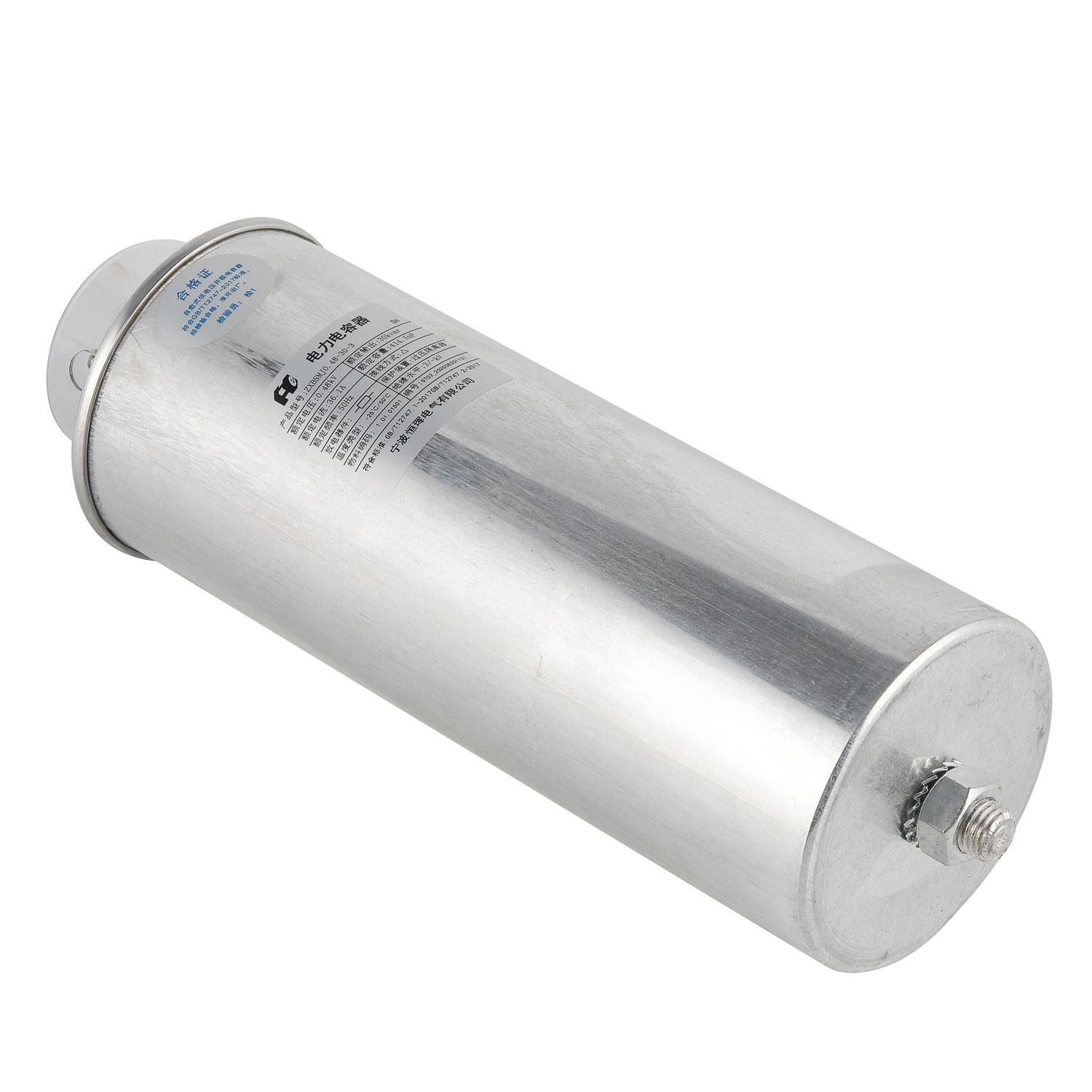
 Español
  English (UK)
  Bahasa Indonesia
  Tiếng Việt
  Deutsch
  Français
  Português
  Русский