
Why Is an Intelligent Composite Switch Better Than Traditional Capacitor Switching Devices?
Power factor correction systems are essential for improving energy efficiency, but selecting the wrong switching device can create more problems than benefits. Traditional AC contactors are inexpensive but generate high inrush currents, contact wear, and voltage transients, while thyristor switches often produce continuous heat and require additional cooling systems. Meanwhile, some buyers hesitate to adopt an Intelligent Composite Switch because its purchase cost is higher, its internal circuitry is more complex, maintenance can be less convenient, and it requires compatible controllers. Fortunately, understanding how a Reactive Power Compensation Hybrid Switch works reveals why its long-term reliability, protection, and energy savings often outweigh the initial investment.
What is an Intelligent Composite Switch?
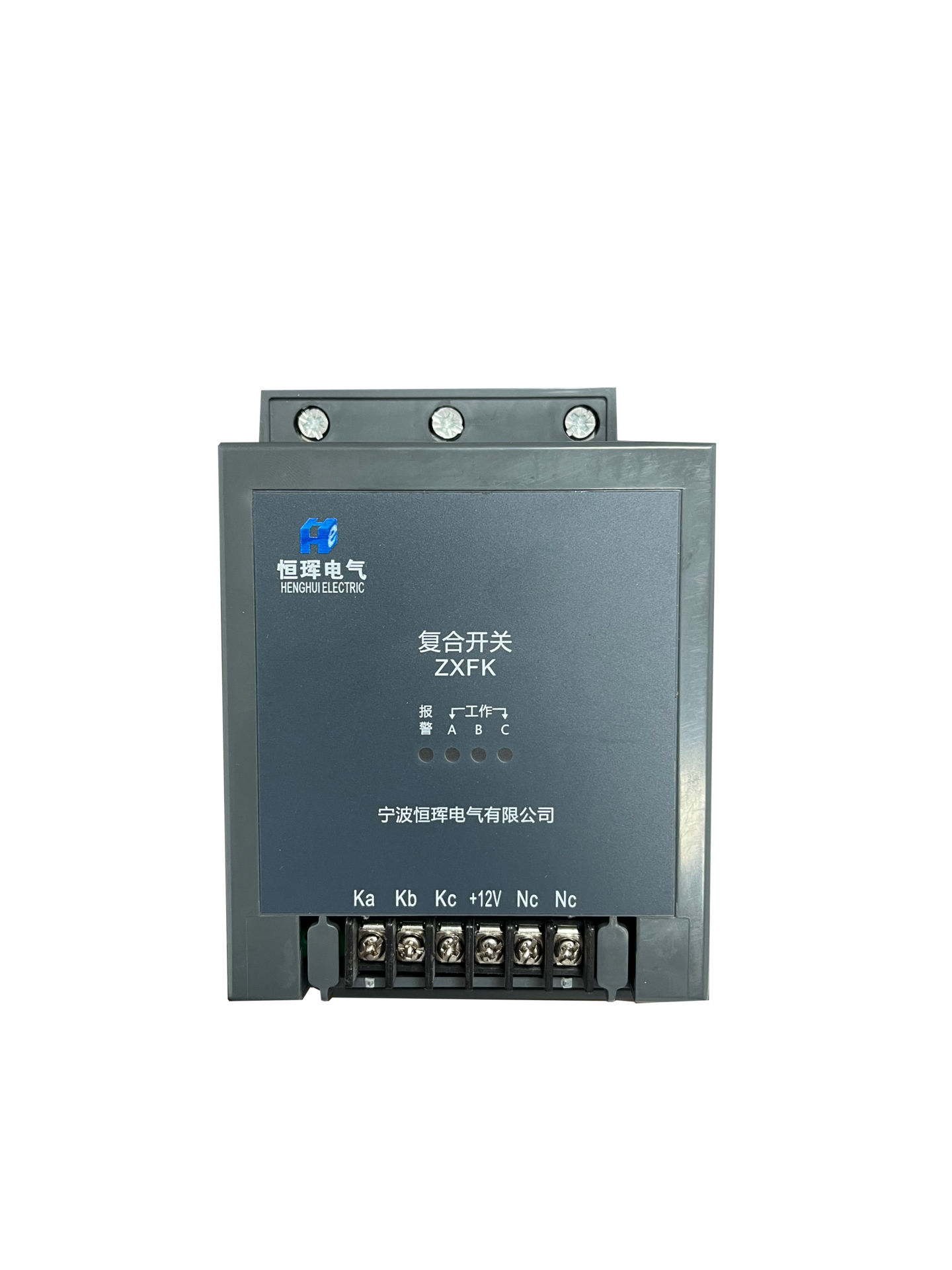
An Intelligent Composite Switch is an advanced electrical switching device designed primarily for low-voltage reactive power compensation systems, especially capacitor banks. It combines the zero-crossing switching capability of thyristors with the ultra-low power consumption and reliable holding characteristics of magnetic latching relays. This hybrid design enables capacitor banks to connect at voltage zero crossing and disconnect at current zero crossing, eliminating inrush current and switching overvoltage while minimizing energy consumption. Also known as a Composite Switch, Hybrid Capacitor Switch, or Reactive Power Compensation Hybrid Switch, it delivers safer, longer-lasting, and more efficient capacitor switching than conventional contactors or standalone thyristor switches.
Continue reading to discover how an Intelligent Composite Switch operates, why it outperforms conventional switching technologies, and where it delivers the greatest value.
Table of Contents
ToggleHow Does the Composite Switch Work?
An Intelligent Composite Switch combines two different switching technologies into one coordinated control device. Instead of relying solely on mechanical contacts or semiconductor devices, it intelligently utilizes both technologies at different stages of the switching process.
During capacitor engagement, the thyristor section first monitors the AC waveform. When the system voltage reaches the zero-crossing point, the thyristor instantly conducts, allowing the capacitor bank to connect without generating the large inrush current commonly associated with conventional AC contactors. Immediately afterward, the magnetic latching relay closes and assumes the responsibility for carrying the operating current. Because the relay consumes virtually no holding power after latching, the thyristor can stop conducting, dramatically reducing heat generation.
When disconnecting the capacitor bank, the relay opens only after the current naturally reaches its zero-crossing point. This coordinated sequence prevents electrical arcing, suppresses switching overvoltage, and protects both the capacitor bank and surrounding electrical equipment.
Unlike ordinary contactors, the Composite Switch does not create significant contact erosion caused by repeated inrush currents. Unlike pure thyristor switches, it does not continuously dissipate heat or require oversized heat sinks for normal operation.
Modern Reactive Power Compensation Hybrid Switches also integrate intelligent protection functions directly into the device. These commonly include:
- Voltage zero-crossing closing
- Current zero-crossing opening
- Phase-loss protection
- Undervoltage protection
- Power failure protection
- Internal self-diagnostic functions
- Optical isolation between control signals and power circuits
- High EMC immunity against electrical interference
- Built-in control power supply without requiring an external auxiliary source
- LED indicators for switching status, phase condition, and operating delay
These integrated features allow the switch to operate automatically while minimizing stress on both the capacitor bank and the electrical distribution system.
What Are the Key Benefits of Composite Switch?
The primary advantage of an Intelligent Composite Switch is that it eliminates the weaknesses of both traditional AC contactors and conventional thyristor switching devices.
One of its most significant benefits is zero-crossing switching. Since capacitors are energized exactly when the voltage crosses zero and disconnected when current naturally reaches zero, damaging inrush currents are virtually eliminated. This greatly extends capacitor life while reducing stress on transformers, circuit breakers, cables, and other connected equipment.
Another important benefit is extremely low power consumption. Conventional thyristor switches continuously generate heat because current always flows through semiconductor devices. This typically requires large heat sinks or even forced cooling systems. A Hybrid Capacitor Switch transfers the operating current to a magnetic latching relay after switching is completed, resulting in very little heat generation and significantly lower energy losses.
The switch also improves overall power quality. Because it does not continuously conduct through semiconductor components, it introduces no additional harmonics into the electrical system. Many installations therefore do not require additional series reactors solely for switching purposes, simplifying system design and reducing installation costs.
Reliability is another major advantage. The control input is isolated using optical coupling technology, improving resistance to electromagnetic interference in industrial environments. Combined with comprehensive protection functions such as phase-loss detection, undervoltage monitoring, power outage protection, and self-diagnostics, the Reactive Power Compensation Hybrid Switch delivers highly dependable long-term operation.
Maintenance requirements are also reduced. The absence of frequent contact arcing significantly extends relay life, while the elimination of large cooling systems reduces the number of components requiring routine inspection. Although the internal circuit is more sophisticated than a standard contactor, the actual maintenance frequency is generally much lower over the product’s service life.
Finally, the switch integrates seamlessly with dynamic reactive power compensation controllers, allowing capacitor banks to respond rapidly to changing load conditions while maintaining stable power factor correction.
What Are the Common Applications of Composite Switch?
An Intelligent Composite Switch is primarily used wherever capacitor banks must switch frequently, accurately, and reliably within low-voltage reactive power compensation systems.
Industrial manufacturing plants represent one of the largest application areas. Facilities operating welding machines, injection molding equipment, compressors, rolling mills, or heavy motors experience constantly changing reactive power demand. Conventional contactors wear rapidly under these operating conditions, whereas a Composite Switch provides fast, stable capacitor switching with minimal equipment stress.
Commercial buildings also benefit significantly from this technology. Shopping malls, office towers, hotels, hospitals, airports, and exhibition centers contain large HVAC systems, elevators, lighting equipment, and variable-speed drives that continuously change electrical loading. Intelligent switching enables capacitor banks to respond smoothly without creating voltage disturbances.
Power utilities frequently install Reactive Power Compensation Hybrid Switches inside automatic capacitor banks at substations and distribution networks. Stable switching improves voltage regulation, enhances power factor, reduces distribution losses, and increases overall grid efficiency.
Renewable energy systems have also become an increasingly important application. Solar photovoltaic plants and wind farms often experience fluctuating reactive power caused by inverter operation and changing generation conditions. Intelligent capacitor switching helps stabilize voltage while supporting modern smart grid operation.
Data centers require extremely stable power quality to protect sensitive servers and networking equipment. The zero-crossing switching capability minimizes electrical disturbances that could otherwise affect mission-critical operations.
Additional applications include:
- Industrial automation systems
- Mining facilities
- Petrochemical plants
- Water treatment stations
- Steel manufacturing
- Cement production
- Textile factories
- Railway electrification systems
- Smart buildings
- Intelligent power distribution cabinets
Although an Intelligent Composite Switch generally costs more than a conventional contactor, its ability to extend capacitor life, reduce maintenance, lower energy losses, and improve overall system reliability often delivers a substantially lower total cost of ownership over many years of operation.
Conclusion
An Intelligent Composite Switch combines intelligent control, zero-crossing technology, low power consumption, and comprehensive protection into one reliable solution. For modern reactive power compensation systems, a Composite Switch, Hybrid Capacitor Switch, or Reactive Power Compensation Hybrid Switch offers superior performance, longer equipment life, and improved power quality compared with traditional switching technologies.
 Deutsch
  English (UK)
  Bahasa Indonesia
  Tiếng Việt
  Español
  Français
  Português
  Русский