
What Is a Pad-Mounted Substation and How Can It Improve Safety, Reliability, and Power Distribution Efficiency?
Many traditional American type substations rely on an integrated oil-immersed design, which can make maintenance and capacity expansion difficult. Oil leakage, fire hazards, and poor heat dissipation under high-temperature or heavy-load conditions often increase operational risks. When failures occur, replacing or repairing the entire unit can be expensive and time-consuming, leading to unexpected outages, project delays, and increased lifecycle costs. A modern Pad-Mounted Substation addresses these challenges through compact design, safer enclosure structures, optimized distribution layouts, and flexible configuration options. Understanding how to select, operate, and maintain the right solution is essential for reliable power distribution.
What is a Pad-Mounted Substation?
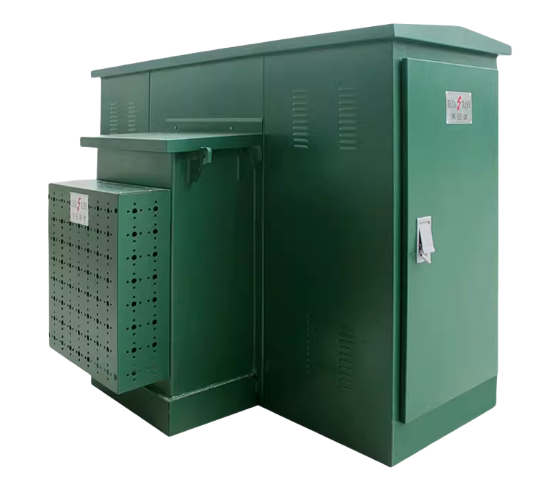
A pad-mounted substation (or pad-mounted transformer) is a fully enclosed, ground-level electrical distribution transformer housed in a locked steel cabinet. It safely steps down medium-voltage electricity to usable levels for homes, commercial complexes, and industrial parks, while eliminating the need for overhead wires and large, fenced-off infrastructure. As a type of Pad-mounted distribution transformer and American type substation, it integrates switching, protection, and transformation functions into a compact outdoor unit, making it ideal for modern Outdoor residential power distribution equipment and Box Substation applications.
Choosing the right pad-mounted solution involves much more than selecting a transformer rating. The following sections explain the key considerations.
How to choose the right kVA pad-mounted transformer for residential & commercial projects?
Selecting the appropriate kVA rating is one of the most critical decisions when specifying a Pad-mounted distribution transformer. An undersized unit may suffer from overload conditions, voltage drops, excessive temperature rise, and reduced service life. Conversely, an oversized transformer increases initial investment costs and may operate inefficiently at low load levels.
For residential communities, load calculations should include household demand, future development plans, electric vehicle charging infrastructure, public lighting systems, and common facilities. Commercial projects require additional consideration of HVAC systems, elevators, data centers, manufacturing equipment, and peak operational demands.
Engineers typically begin by evaluating the total connected load and applying realistic demand factors. Future expansion should also be considered because replacing an entire Pad-Mounted Substation later can be significantly more expensive than selecting an appropriately sized unit from the beginning.
Common transformer capacities range from 50kVA to 2500kVA, covering most residential, commercial, and industrial distribution applications. For example:
- Small residential developments: 100kVA–500kVA
- Apartment complexes: 500kVA–1250kVA
- Shopping centers and commercial buildings: 500kVA–2000kVA
- Industrial facilities: 1000kVA–2500kVA
Environmental conditions also influence selection. Areas with high ambient temperatures, heavy loading cycles, or limited ventilation may require additional thermal margins.
Modern Box Substation configurations often integrate medium-voltage switchgear, transformers, and low-voltage distribution equipment into a single enclosure. This integrated approach reduces installation time, improves safety, and minimizes land requirements.
Ultimately, the ideal kVA rating should balance present demand, future growth, energy efficiency goals, and total lifecycle cost rather than simply focusing on the lowest purchase price.
How often does a pad-mounted transformer require maintenance?
One of the biggest advantages of modern Pad-Mounted Substations is their relatively low maintenance requirement compared with traditional open-type distribution systems.
Routine inspections are generally recommended every 6 to 12 months, depending on environmental conditions, loading patterns, and local utility regulations. Facilities operating in coastal areas, industrial zones, or locations with high dust levels may require more frequent inspections.
Typical maintenance procedures include:
- Visual inspection of enclosure integrity
- Checking door locks and security mechanisms
- Verifying grounding connections
- Inspecting cable terminations
- Monitoring operating temperatures
- Cleaning ventilation passages
- Checking for corrosion or moisture intrusion
For oil-filled Pad-mounted distribution transformers, periodic oil testing may be conducted to evaluate insulation quality and identify potential issues before failures occur. Parameters such as dielectric strength, moisture content, and dissolved gas analysis provide valuable insight into transformer health.
Modern sealed transformer designs significantly reduce maintenance requirements. Fully sealed tanks help prevent moisture ingress and oil oxidation, extending insulation life while lowering operational costs.
Advanced monitoring technologies further improve maintenance efficiency. Many modern American type substations can be equipped with temperature sensors, load monitoring systems, fault indicators, and remote communication modules. These smart features allow operators to transition from scheduled maintenance toward condition-based maintenance strategies.
Preventive maintenance is particularly important because transformer failures can lead to costly downtime, service interruptions, and emergency replacement expenses. A relatively small investment in routine inspection can significantly extend equipment lifespan, which often exceeds 20 years under normal operating conditions.
When maintained properly, a Pad-Mounted Substation can provide decades of reliable service while maintaining high levels of safety and operational efficiency.
Can pad-mounted transformers be used for ring main power supply?
Yes. Pad-mounted transformers are widely used in ring main power supply systems, particularly in urban distribution networks, industrial parks, residential developments, and commercial districts where service continuity is essential.
A ring main system creates multiple power flow paths between substations. If a fault occurs on one section of the network, power can continue flowing through an alternate route. This configuration significantly improves system reliability compared with radial distribution systems.
Many modern Pad-Mounted Substations incorporate:
- Ring Main Units (RMUs)
- Load break switches
- Fault interrupters
- Protective relays
- Sectionalizing switches
These components allow utilities and facility operators to isolate faulty sections without interrupting power to the entire network.
For residential developments, ring main configurations reduce outage durations and improve customer satisfaction. In commercial and industrial facilities, improved reliability helps prevent production losses, equipment damage, and revenue interruptions.
A typical American type substation used in ring networks consists of three separate compartments:
- Medium-voltage switching compartment
- Transformer compartment
- Low-voltage distribution compartment
This compartmentalized design enhances operational safety while simplifying maintenance procedures.
Ring main systems also provide excellent scalability. As communities expand or industrial loads increase, additional substations can be integrated into the network with minimal disruption.
The growing demand for resilient infrastructure has made ring main applications one of the fastest-growing markets for Pad-mounted distribution transformers. Their compact footprint, safety features, and integration capabilities make them an ideal solution for modern smart-grid development.
Are pad-mounted transformers suitable for solar and construction sites?
Absolutely. Pad-Mounted Substations have become increasingly popular in both renewable energy projects and temporary construction power systems.
In solar applications, generated electricity must be stepped up or stepped down before integration into utility networks or local distribution systems. A properly designed Box Substation can integrate transformers, switchgear, metering systems, and protection equipment into a single compact unit.
For solar farms, key advantages include:
- Compact installation footprint
- High operational reliability
- Reduced civil engineering requirements
- Enhanced personnel safety
- Simplified grid connection
- Easy integration with monitoring systems
Many photovoltaic projects utilize specialized Pad-mounted distribution transformers designed to handle fluctuating generation profiles and outdoor operating conditions. Their enclosed structure protects critical equipment from dust, moisture, UV exposure, and unauthorized access.
Construction sites also benefit significantly from pad-mounted solutions. Temporary power requirements often change as projects progress, making flexibility essential.
Compared with traditional transformer installations, Outdoor residential power distribution equipment based on pad-mounted designs offers:
- Faster deployment
- Reduced installation labor
- Improved site safety
- Better protection against accidental contact
- Lower maintenance requirements
Construction environments frequently involve dust, vibration, weather exposure, and changing load conditions. The robust steel enclosure of an American type substation provides excellent protection while maintaining reliable operation.
Additionally, many modern projects emphasize sustainability and environmental compliance. Compact Box Substation solutions help minimize land usage, reduce visual impact, and support renewable energy integration objectives.
As solar generation, battery storage, and distributed energy resources continue to expand globally, pad-mounted transformer technology is expected to play an increasingly important role in modern power infrastructure.
Conclusion
A Pad-Mounted Substation combines safety, compact design, reliability, and operational flexibility into a single solution. Whether used for residential developments, commercial facilities, ring main networks, solar farms, or construction projects, the right Pad-mounted distribution transformer, American type substation, or Box Substation can significantly improve long-term power distribution performance while reducing maintenance and lifecycle costs.
 Deutsch
  English (UK)
  Bahasa Indonesia
  Tiếng Việt
  Español
  Français
  Português
  Русский