
Temperature & Humidity Controller: How Can It Prevent Condensation Damage in Electrical Cabinets?
Uncontrolled temperature and humidity inside electrical cabinets can cause condensation, corrosion, insulation problems, and electrical failures. Traditional devices may not continuously monitor environmental conditions or automatically start heating and dehumidifying equipment when conditions change. A temperature and humidity controller addresses this problem through real-time monitoring and automatic control, helping maintain a more stable cabinet environment and reduce moisture-related risks.
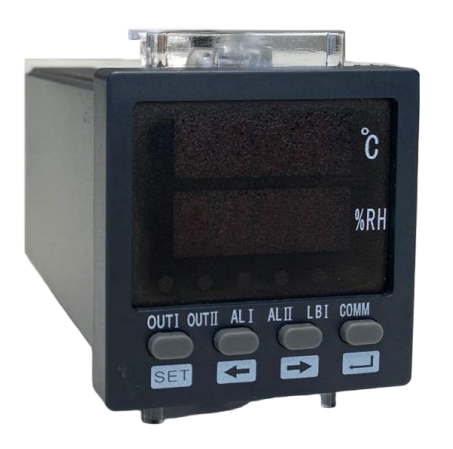
A temperature and humidity controller is an electronic device that monitors temperature and humidity in real time and automatically controls connected heating, cooling, humidifying, or dehumidifying equipment according to preset conditions. It helps maintain suitable environmental conditions, reduce condensation and moisture-related risks, and support the stable operation of electrical equipment.
Understanding its working principle, control logic, and practical applications can help buyers evaluate where this device fits into a complete electrical protection system.
What Does a Temperature & Humidity Controller Actually Do in an Electrical Cabinet?
A temperature and humidity controller is primarily designed to monitor environmental conditions inside an electrical cabinet and provide automatic control when temperature or humidity reaches a preset level. Rather than functioning as an independent power distribution device, it acts as an auxiliary monitoring and control component that works with heating, dehumidification, and related equipment.
This function is particularly relevant to medium- and low-voltage electrical equipment installed in environments where temperature differences and moisture can affect electrical components. The product information for KYN28-24 AC24kV switchgear, for example, specifies temperature and humidity controllers linked with continuously operating anti-moisture heaters in the cabinet compartments. The heating power is designed around air convection, with the heater kept at an appropriate distance from surrounding components.
From a buyer’s perspective, the key value is therefore not simply displaying temperature and humidity values. The controller can form part of an automatic environmental-control system. Sensors detect changes in cabinet conditions, while the controller determines whether the connected equipment needs to operate.
This approach can help reduce dependence on manual inspection. In a conventional cabinet, operators may periodically inspect equipment, but environmental conditions can change between inspections. A controller temperature humidity system provides continuous sensing and automatic response based on configured thresholds.
It can also complement the protection design of electrical equipment. The KYN28-24 switchgear documentation highlights condensation testing, temperature and humidity control, LED lighting, independent compartments, and other safety-oriented configurations as part of its overall design.
For procurement teams, this means the controller should be considered as part of the cabinet’s broader temperature & humidity control strategy, rather than evaluated only as an individual accessory.
How Does a Temperature and Humidity Controller Work?
The operating principle of a temperature and humidity controller can be understood as a simple closed-loop process: sense → compare → control → respond.
First, the controller obtains environmental information through temperature and humidity sensing. The measured conditions are then compared with preset control values. When the detected temperature or humidity reaches a defined threshold, the controller can activate the corresponding connected equipment.
For example, if humidity inside a switchgear compartment rises to a level that may increase condensation risk, the controller can trigger an associated anti-moisture heater. The heater raises the local air temperature, helping create a more suitable internal environment. When conditions return to the configured range, the control system can respond accordingly.
Temperature is also important because condensation is strongly associated with temperature differences and moisture. Electrical cabinets may be exposed to changing outdoor temperatures, high humidity, or different operating conditions. Without environmental monitoring, moisture can remain unnoticed until it affects electrical components.
The KYN28-24 product information specifically includes temperature and humidity controllers linked with anti-moisture heating equipment in its cable and instrument compartments. This configuration demonstrates how controller temperature humidity functions can be integrated into a complete medium-voltage switchgear design.
The controller therefore serves as an interface between environmental sensing and automatic equipment control. Its practical effectiveness depends not only on the controller itself, but also on correct sensor installation, suitable threshold settings, compatible heating or dehumidification equipment, and the overall cabinet design.
For procurement, these details matter. A buyer evaluating temperature & humidity control should consider the complete application: what conditions must be monitored, what equipment will be controlled, where the sensors will be installed, and what environmental conditions the cabinet must withstand.
Where Are Temperature & Humidity Controllers Commonly Used?
Temperature and humidity controllers are commonly relevant wherever electrical equipment needs additional protection against moisture, condensation, or unfavorable environmental conditions. Their applications are particularly associated with electrical cabinets, switchgear, control equipment, and other enclosed electrical systems.
Medium-Voltage Switchgear
One important application is medium-voltage switchgear. The KYN28-24 AC24kV switchgear product information specifies temperature and humidity control as part of its internal cabinet configuration. The equipment includes temperature and humidity controllers connected with anti-moisture heaters, supporting environmental management inside individual compartments.
This is significant because medium-voltage switchgear contains critical components such as vacuum circuit breakers, busbars, current transformers, insulation components, and control equipment. The product documentation also emphasizes insulation performance, condensation testing, independent compartments, and protection against internal faults.
Electrical Distribution Cabinets
The controller can also be incorporated into low-voltage distribution cabinet systems where environmental conditions need to be monitored and controlled. GGD-type AC low-voltage distribution cabinets are designed for power distribution, conversion, and control in applications including power plants, substations, industrial and mining enterprises, and other electrical users. Their design includes ventilation openings to support heat dissipation while maintaining the required enclosure protection level.
In such installations, temperature & humidity control can complement the cabinet’s ventilation, protection, and electrical safety arrangements.
Transformer-Related Electrical Systems
Temperature and humidity monitoring can also be considered in transformer-related installations, especially where environmental conditions affect electrical equipment surrounding the transformer. The supplied transformer product materials emphasize temperature monitoring, environmental adaptability, moisture protection, and customized temperature-control configurations.
For example, the 20kV dry-type transformer documentation states that optional systems can include temperature-control systems, forced-air cooling fans, intelligent monitoring modules, and enclosure protection, providing functions such as temperature monitoring and overload protection.
This illustrates that environmental monitoring can form part of a broader equipment-management system rather than operating as an isolated function.
High-Humidity and Challenging Environments
Environmental control becomes especially relevant in installations exposed to high humidity, coastal salt mist, dust, large temperature variations, or other demanding conditions. The supplied dry-type transformer documentation describes applications involving high-humidity, dusty, and coastal environments and notes that customized anti-corrosion, dustproof, and anti-condensation measures can be provided.
For buyers sourcing equipment for these environments, the controller should therefore be evaluated together with the enclosure, heater, ventilation, insulation, and environmental protection measures.
What Should Buyers Consider When Selecting a Temperature & Humidity Controller?
For procurement teams, selecting a temperature and humidity controller is not simply a matter of choosing a device with a temperature and humidity display. The controller needs to match the electrical cabinet, connected equipment, installation environment, and required control strategy.
The first consideration is the application environment. A controller used in indoor low-voltage distribution equipment may have different requirements from one installed in medium-voltage switchgear exposed to significant temperature and humidity variation.
The second consideration is the control target. Buyers should identify whether the controller will operate anti-condensation heaters, dehumidification equipment, cooling equipment, or another environmental-control device. The required output configuration and control logic should correspond to the connected equipment.
The third consideration is sensor placement. Temperature and humidity measurements are meaningful only when the sensing position represents the actual cabinet environment that needs to be monitored. Cabinet structure, ventilation paths, heat sources, and component arrangement can all influence local conditions.
The fourth consideration is integration. A controller can provide greater value when it is incorporated into a broader electrical protection and monitoring architecture. The supplied KYN28-24 switchgear documentation demonstrates this integrated approach by combining temperature and humidity controllers, anti-moisture heaters, independent compartments, protection devices, grounding systems, and standardized secondary interfaces.
Finally, buyers should consider customization and technical support. The company materials describe customization capabilities across its electrical product range, including temperature-control upgrades and intelligent monitoring modules for dry-type transformers. The company also positions itself as a provider covering research and development, manufacturing, sales, service, and electrical automation solutions.
How Does Temperature & Humidity Control Support Electrical Equipment Reliability?
The main purpose of temperature & humidity control is to manage environmental conditions that can negatively affect electrical equipment. Moisture is particularly important because condensation can create unfavorable conditions for insulation, metal components, terminals, and other electrical parts.
The supplied KYN28-24 switchgear documentation specifically identifies condensation testing among its qualification and type-testing requirements. It also incorporates temperature and humidity controllers with anti-moisture heaters into the cabinet configuration.
This combination demonstrates an important principle: environmental control should be considered alongside the electrical and mechanical protection of the cabinet.
A controller does not replace insulation, grounding, enclosure protection, or other safety measures. Instead, it provides an additional layer of environmental monitoring and automatic control. The goal is to keep internal conditions within an appropriate range and reduce the possibility that moisture-related environmental changes will compromise equipment operation.
This becomes increasingly relevant as electrical installations become more compact and integrated. Modern switchgear may contain multiple electrical and control components within enclosed compartments. The supplied KYN28-24 design, for example, uses independent breaker, busbar, cable, and control compartments, while also incorporating environmental-control equipment and other protective measures.
From a purchasing perspective, the controller should therefore be viewed as part of the reliability architecture of the electrical cabinet. Its value is closely related to the environmental conditions, cabinet structure, heating or dehumidification equipment, and maintenance requirements of the complete system.
Can Temperature and Humidity Control Be Customized for Different Projects?
Different electrical projects have different environmental conditions, cabinet structures, electrical ratings, and control requirements. As a result, controller temperature humidity solutions may need to be configured according to the actual application rather than treated as a universal standard package.
The supplied product materials show that customization is already an important part of the company’s broader electrical-equipment offering. The 20kV oil-immersed transformer documentation describes options including special capacities, special tap ranges, enhanced corrosion protection, temperature-control upgrades, and intelligent monitoring modules.
The dry-type transformer documentation similarly describes customized voltage levels, capacities, insulation heat-resistance grades, temperature-control systems, forced-air cooling, intelligent monitoring modules, and enclosure protection.
For switchgear, the KYN28-24 documentation also emphasizes configurable components, standardized interfaces, different wiring arrangements, auxiliary trucks, and application-specific configurations.
This project-based approach can be useful for buyers who need temperature & humidity control as part of a complete electrical package. Instead of evaluating the controller separately, procurement teams can assess sensor requirements, control equipment, cabinet dimensions, environmental conditions, electrical interfaces, installation method, and maintenance requirements together.
Such an approach can also simplify supplier communication. The company describes its business as covering R&D, manufacturing, sales, and service, with technical capabilities extending from individual products to electrical automation systems and power-quality solutions.
For B2B purchasing, this means the relevant question is not only whether a controller is available, but whether its technical configuration matches the intended cabinet and project requirements.
What Role Does the Controller Play in a Complete Electrical Protection System?
A temperature and humidity controller is one component within a larger electrical protection and monitoring system. It does not independently provide all of the functions required for safe and reliable power distribution.
The supplied KYN28-24 switchgear illustrates this layered approach. Its design combines high-standard insulation, independent metal-enclosed compartments, pressure-relief channels, five-prevention interlocking, grounding systems, vacuum circuit breakers, temperature and humidity controllers, anti-moisture heaters, LED lighting, and standardized secondary interfaces.
Similarly, GGD low-voltage distribution cabinets incorporate structural protection, ventilation, grounding, short-circuit withstand capability, modular installation, and corrosion-resistant treatment.
The controller’s role is therefore specific: monitor environmental conditions and support automatic environmental management. It complements rather than replaces the cabinet’s primary electrical protection functions.
For buyers, this distinction helps clarify product selection. If the project has a high risk of condensation or significant environmental fluctuations, environmental control may need to be specified alongside the main electrical equipment. If the project operates under more stable conditions, the required configuration may be different.
The appropriate solution ultimately depends on the cabinet design, installation environment, electrical equipment, required control function, and project specifications. A properly configured temperature & humidity control system can then become one practical part of maintaining stable operating conditions inside electrical enclosures.
In summary, a temperature and humidity controller provides real-time environmental monitoring and automatic control for electrical cabinets. When integrated with suitable heating or dehumidification equipment, it can support condensation prevention and more stable operating conditions across switchgear and other electrical applications.
 Deutsch
  English (UK)
  Bahasa Indonesia
  Tiếng Việt
  Español
  Français
  Português
  Русский