
How Can a Prefabricated Substation Improve the Reliability of Outdoor Power Distribution?
Outdoor power distribution projects often face heat dissipation, corrosion and moisture, difficult maintenance, limited expansion space, operating noise, and inconsistent product quality. If these issues are not controlled, insulation performance can deteriorate, equipment downtime can increase, maintenance costs can rise, and project operators may face costly interruptions during critical operating periods. A properly engineered Prefabricated Substation provides a more integrated solution by combining transformers, switchgear, protection, and other electrical equipment within a controlled enclosure. Understanding its service life, failure risks, selection criteria, and noise-control methods can help buyers make a more reliable investment.
Table of Contents
ToggleWhat is a Prefabricated Substation?
A prefabricated electric substation is an electric unit assembled within a factory and sealed in a protective casing for delivery to the site for use. It mainly consists of transformers together with their switchgear and even control panels, all enclosed in a protective housing. Depending on the project, the transformer can use an oil-immersed or dry-type design, while the overall system can integrate medium- and low-voltage distribution equipment. This factory-integrated approach helps simplify installation, improve quality consistency, and shorten the time required for on-site commissioning.
The following four considerations are especially important when evaluating an outdoor Packaged Substation.
How Long Is the Service Life of Outdoor Box-Type Substations?
The service life of an outdoor box-type substation is not determined by the enclosure alone. It depends on the transformer type, insulation system, thermal conditions, environmental protection, electrical loading, manufacturing quality, and maintenance practices. For example, the product information indicates that the company’s 20kV oil-immersed distribution transformers can achieve a service life of more than 20 years under normal maintenance, while its dry-type transformer products can achieve more than 30 years under normal operation and maintenance.
For outdoor applications, environmental conditions are particularly important. Oil-immersed transformers use a sealed corrugated oil tank to isolate the insulating oil from external air, moisture, and dust. Their oil provides insulation, heat dissipation, and arc-extinguishing functions, while the corrugated structure increases the heat-dissipation area. The documented products are designed for an ambient temperature range of -25°C to +40°C, with special high-altitude conditions available for customization.
Dry-type transformers use a different approach. They eliminate insulating oil and use epoxy-resin casting or impregnation technology. Their insulation system is designed to resist moisture, dust, salt mist, and aging. The documented products can operate from -30°C to +40°C, with optional corrosion, dust, and condensation protection for special environments.
The enclosure and maintenance strategy are equally important. Outdoor equipment should be protected against rain, sunlight, condensation, salt spray, dust, and corrosion. The source material specifically recommends protective housings and appropriate rain, sunlight, and salt-spray protection for outdoor dry-type transformer installations. It also recommends maintaining ventilation, cleaning heat-dissipation passages, monitoring winding temperature, and avoiding long-term overload.
Electrical loading also has a direct influence on longevity. Continuous operation beyond rated conditions can accelerate insulation aging and increase temperature. By contrast, appropriate capacity selection, effective cooling, and regular inspection help keep operating temperatures under control.
For buyers, therefore, it is better to evaluate expected service life as a complete system rather than focusing on one component. A high-quality transformer installed inside a poorly protected enclosure may still experience premature aging. A well-designed enclosure combined with an appropriately selected transformer, reliable switchgear, good ventilation, and disciplined maintenance creates a much stronger foundation for long-term operation.
This is one reason why choosing an experienced Box Substation Manufacturer matters. Factory manufacturing allows the transformer, enclosure, switchgear, protection devices, and auxiliary systems to be considered as one integrated solution rather than as disconnected components.
What Are the Common Failure Risks of Box-Type Substations for Solar Projects?
Solar projects place particular demands on electrical equipment because power generation varies with solar irradiance, ambient temperature, and operating conditions. A box-type substation used in a photovoltaic project must therefore manage not only conventional electrical risks but also outdoor environmental and load-related challenges.
The first major risk is thermal stress. Solar equipment can experience significant temperature increases during strong sunlight, particularly when the substation is installed outdoors. Transformer losses, switchgear heating, insufficient ventilation, and high ambient temperature can combine to increase internal temperatures. If heat cannot be removed effectively, insulation aging can accelerate and electrical components may operate outside their preferred conditions.
The second risk is moisture and condensation. Outdoor substations may experience large temperature changes between day and night. High humidity can affect insulation and electrical connections, while condensation can become a serious concern in enclosed equipment. The company’s dry-type transformer documentation specifically emphasizes ventilation and avoiding long-term exposure to enclosed, waterlogged, high-humidity, or condensation-prone environments.
The third risk is corrosion, especially in coastal or high-humidity solar projects. Salt mist can gradually affect metal surfaces, fasteners, electrical connections, and enclosure components. Proper anti-corrosion treatment is therefore an important purchasing consideration. The documented transformer products include corrosion-resistant treatment for demanding environments and allow upgraded protection for special operating conditions.
The fourth risk is overloading or inappropriate capacity selection. A transformer should be selected according to the project’s actual electrical requirements rather than simply using a standard capacity. The available 20kV transformer range covers 50kVA to 2500kVA, providing multiple capacity options for different distribution requirements.
The fifth risk is short-circuit and abnormal-load impact. Transformers and switchgear must withstand electrical disturbances without suffering unacceptable mechanical or thermal damage. The documented transformer designs use reinforced winding structures and have undergone dynamic and thermal stability checks, while the associated medium- and low-voltage equipment is designed for short-circuit and thermal stability.
Finally, poor manufacturing consistency can become a project-level risk. A solar developer may purchase a substation based on nominal specifications but later encounter problems caused by assembly quality, inadequate testing, or inconsistent components. Factory inspection and complete testing are therefore important. The company’s 24kV switchgear documentation states that complete type testing and factory testing are performed before delivery, with technical support extending from design coordination through installation and commissioning.
For solar projects, a reliable Packaged Substation should therefore be evaluated as a complete electrical system, with attention to thermal performance, environmental protection, transformer capacity, short-circuit resistance, protection coordination, and factory quality control.
What Factors Should I Consider Before Buying a European-Type Prefabricated Substation?
Before buying a European-type prefabricated substation, the most important step is to define the project’s electrical, environmental, installation, and maintenance requirements. A low purchase price alone does not necessarily represent the lowest total cost.
First, buyers should confirm the transformer voltage and capacity. The documented 20kV transformer products support a high-voltage level of 20kV and a low-voltage level of 0.4kV, with capacities ranging from 50kVA to 2500kVA. The standard connection group is Dyn11, with a tapping range of ±2×2.5%.
Second, buyers should choose between oil-immersed and dry-type transformers according to the application. Oil-immersed transformers provide strong natural cooling and are suitable for a broad range of distribution environments. Their sealed construction helps prevent moisture and dust from entering the oil system. Dry-type transformers eliminate insulating oil and are particularly suitable where fire safety, environmental protection, and installation near people or buildings are important.
Third, environmental protection should be considered carefully. For outdoor projects, buyers should examine temperature range, humidity, salt mist, dust, corrosion, altitude, ventilation, and condensation. If the project is located in a coastal area, enhanced anti-corrosion treatment may be more important than a small difference in initial purchase price.
Fourth, the buyer should examine the switchgear configuration and protection system. A complete substation may integrate medium-voltage switchgear, transformers, low-voltage distribution cabinets, measurement, protection, and monitoring equipment. The documented GGD low-voltage cabinet, for example, can be configured as incoming, metering, feeder, bus-tie, and reactive-power-compensation cabinets according to project requirements.
For medium-voltage applications, the KYN28-24 switchgear uses independent metal-enclosed compartments, vacuum circuit breakers, grounding systems, and comprehensive interlocking. Its five-prevention system is designed to prevent incorrect switching, unsafe grounding operations, and accidental access to energized compartments.
Fifth, maintenance accessibility should be considered before purchase. A compact substation may save installation space, but technicians still need sufficient access to transformers, switchgear, cable connections, and control equipment. Clear internal organization can reduce inspection time and simplify troubleshooting.
Sixth, buyers should evaluate factory quality control and technical service. A capable Box Substation Factory should be able to provide standardized production, inspection records, technical documentation, electrical drawings, test reports, and installation support. The company’s documented service model covers design, production, factory supervision, installation, commissioning, and after-sales technical support.
Finally, customization capability can be valuable. The transformer products support customized capacity, voltage, tapping range, corrosion protection, temperature control, intelligent monitoring, and other configurations.
A good European-type Prefabricated Substation should therefore be selected according to the complete project specification, not simply by comparing enclosure dimensions or initial quotations.
How to Reduce Noise from Outdoor Prefabricated Substations Near Residential Areas?
Noise becomes an important consideration when an outdoor prefabricated substation is installed near residential buildings, commercial properties, schools, hospitals, or other noise-sensitive areas. The most effective approach is not to rely on one sound-reduction measure but to control noise at the equipment, enclosure, installation, and operating levels.
The transformer is normally one of the main sources of continuous operating noise. Transformer noise can be influenced by the core structure, magnetic flux, winding vibration, cooling system, and mechanical installation. Selecting a transformer designed for low-noise operation is therefore the first step. The company’s 20kV oil-immersed transformer documentation specifically describes the products as having low operating noise and low vibration, while its dry-type transformer documentation also emphasizes optimized core and winding structures for low-noise operation.
The second consideration is installation quality. Mechanical vibration can be transferred from the transformer into the enclosure or foundation, increasing perceived noise. A stable foundation, appropriate fixing method, and suitable vibration-control measures can help prevent structural resonance.
The third consideration is enclosure design. A prefabricated enclosure should provide sufficient protection while maintaining the ventilation required for heat dissipation. Simply sealing the enclosure to reduce sound may create a thermal problem. The better solution is to balance acoustic control with airflow and thermal performance.
The fourth consideration is cooling equipment. If a dry-type transformer uses forced-air cooling, fans can become an additional noise source. Where fans are required, their operating strategy, placement, vibration isolation, and maintenance should be considered. The dry-type transformer documentation notes that forced-air versions require reliable fan operation and that temperature monitoring is important.
The fifth consideration is equipment selection and operating conditions. Transformers should not be operated continuously beyond their rated conditions simply to meet short-term demand. Excessive thermal stress can affect both equipment performance and long-term reliability.
Finally, the substation should be considered as part of the surrounding site. The location of the equipment relative to residential buildings, walls, roads, and other structures can affect how sound is perceived. Where necessary, acoustic barriers or appropriate architectural screening can be incorporated without blocking essential ventilation paths.
For buyers, the practical objective is to achieve a balance between low-noise transformer design, proper mechanical installation, effective enclosure ventilation, controlled cooling, and appropriate site planning. This approach is more reliable than adding soundproofing after the substation has already been installed.
Conclusion
A well-designed Prefabricated Substation can address many challenges associated with outdoor power distribution. Long service life depends on transformer selection, environmental protection, thermal management, and maintenance. For solar projects, buyers should prioritize reliability and quality control, while residential applications require additional attention to low-noise design and installation.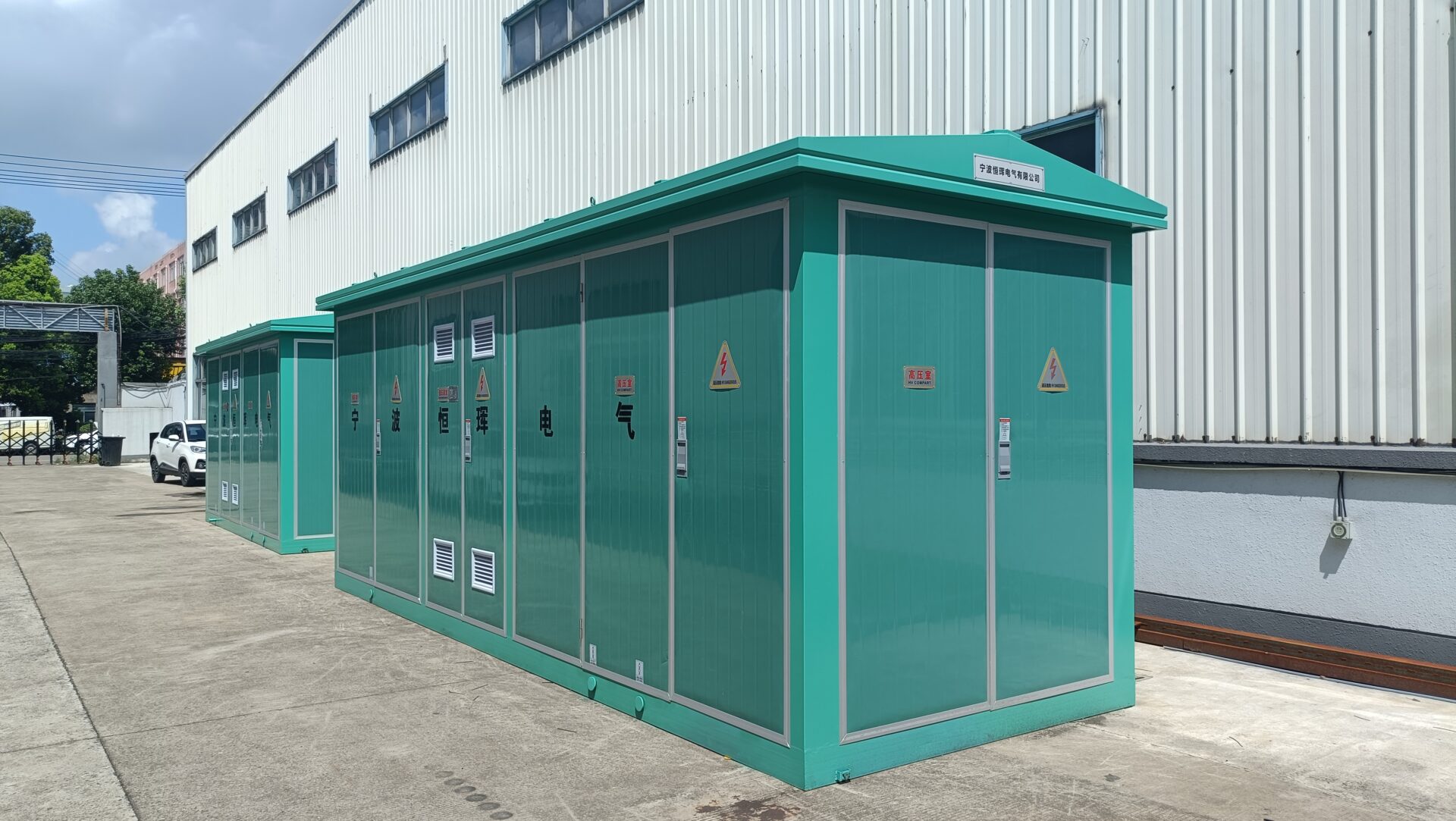
 Deutsch
  English (UK)
  Bahasa Indonesia
  Tiếng Việt
  Español
  Français
  Português
  Русский