
How Can a Microcomputer Anti-Islanding Protection Device Prevent Safety Risks and Power Generation Losses?
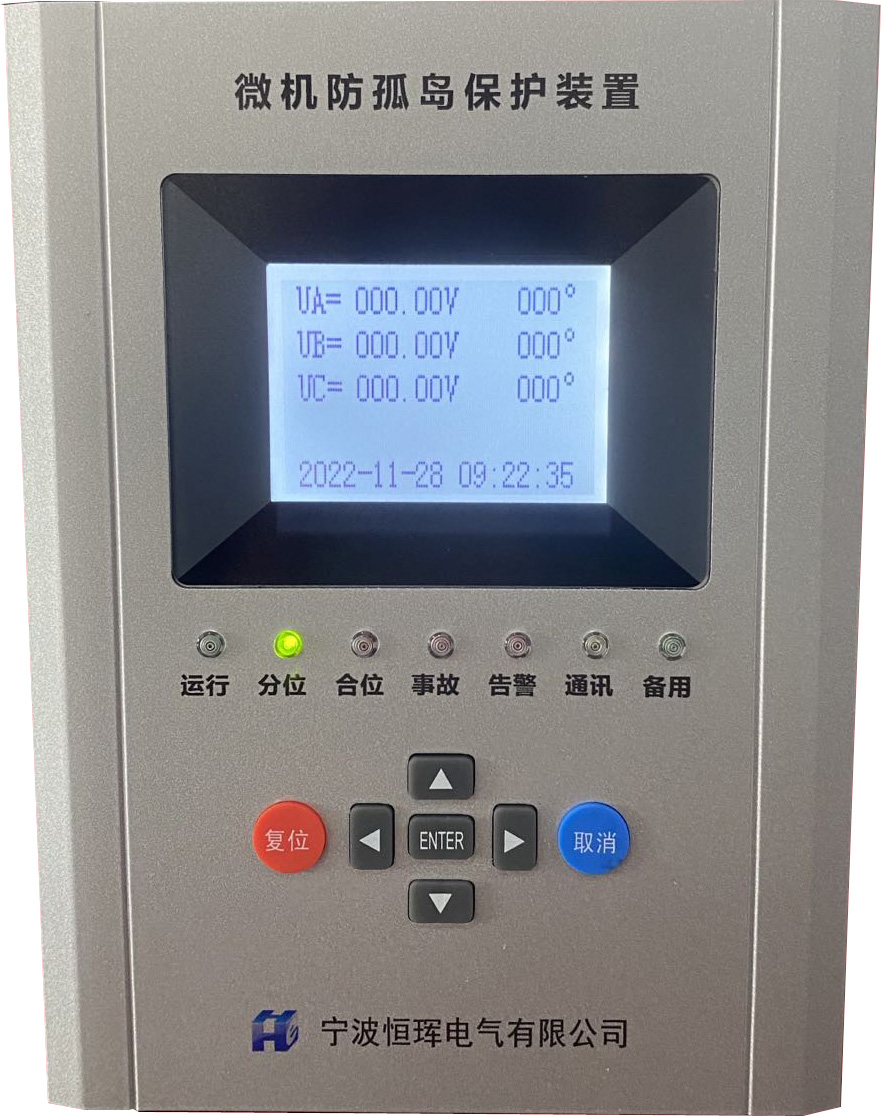
Many distributed energy projects struggle with acceptance failures, anti-islanding malfunctions, unexpected shutdowns, and complicated commissioning procedures. When an islanding condition is not detected correctly, it can endanger maintenance personnel, damage electrical equipment, and violate grid connection requirements. On the other hand, false trips can significantly reduce power generation revenue and disrupt system stability. These issues often increase installation costs, troubleshooting time, and long-term maintenance expenses. A microcomputer anti-islanding protection device provides a reliable solution by delivering accurate detection, fast protection actions, simplified configuration, and intelligent monitoring, helping operators improve safety, compliance, and overall system performance.
What is an Anti-Islanding Protection Device?
Anti-Islanding Protection is a safety mechanism used in grid-tied inverters and distributed energy systems (such as solar PV or wind) to detect when the utility grid fails and automatically shut down power generation to prevent an “island” from forming. A modern microcomputer anti-islanding protection device continuously monitors voltage, frequency, phase angle, power flow, and other electrical parameters. When abnormal grid conditions are detected, it rapidly disconnects distributed generators from the grid, protecting personnel, equipment, and power system stability while ensuring compliance with utility regulations and grid codes.
Understanding how anti-islanding technology works can help project owners improve safety, reduce risks, and maximize operational efficiency.
Why is Anti-Islanding Protection Required?
Anti-islanding protection is required because distributed energy resources such as solar photovoltaic systems, wind turbines, battery energy storage systems, and small generators can continue supplying power even after the utility grid has been disconnected. This unintended power supply creates an isolated section of the network known as an island.
The primary concern is human safety. Utility technicians often assume that a disconnected line is de-energized before performing maintenance. If a distributed generation system continues energizing the line during a grid outage, maintenance personnel may face severe electric shock hazards. In extreme situations, injuries or fatalities may occur.
Equipment protection is another critical reason. Electrical equipment is designed to operate within specific voltage and frequency ranges controlled by the utility grid. During islanding conditions, voltage and frequency can drift outside acceptable limits, causing transformers, switchgear, protection relays, inverters, and customer equipment to malfunction or become damaged.
Grid compliance also plays an important role. Most countries and utility companies require anti-islanding protection as part of their interconnection standards. Systems that fail anti-islanding tests may not receive approval for grid connection, resulting in project delays, additional engineering costs, and operational restrictions.
Modern microcomputer anti-islanding protection devices provide highly accurate detection using intelligent algorithms and multiple protection criteria. They continuously monitor electrical parameters and rapidly isolate generation sources when abnormal conditions occur. Many made in China protection devices now offer advanced communication interfaces, remote monitoring capabilities, event recording functions, and flexible protection settings, making them suitable for solar farms, wind power plants, energy storage projects, and industrial distributed generation systems.
Ultimately, anti-islanding protection is not merely a regulatory requirement; it is a fundamental safeguard that protects people, equipment, and the reliability of the entire electrical network.
How to Test Anti-Islanding Protection?
Testing an anti-islanding protection device is essential to verify that the system can detect islanding conditions accurately and disconnect the power source within the required timeframe. Proper testing helps ensure compliance with utility standards and confirms the effectiveness of the protection scheme before commercial operation.
The testing process generally begins with a thorough inspection of wiring, protection settings, communication functions, and equipment status. Engineers verify that voltage transformers, current transformers, circuit breakers, and communication interfaces are connected correctly and operating normally.
A common testing method involves simulating a grid outage while the distributed generation system remains operational. During the test, the utility supply is intentionally disconnected, creating conditions that resemble an island. The microcomputer protection device should recognize the abnormal operating state and issue a trip command to disconnect the generator from the network.
Several parameters are typically evaluated during testing:
- Trip response time
- Voltage protection accuracy
- Frequency protection accuracy
- Phase angle detection performance
- Communication and alarm functions
- Event recording capability
- Breaker operation reliability
Advanced testing equipment can generate controlled voltage and frequency variations to evaluate different operating scenarios. Engineers may also perform active and passive anti-islanding tests to ensure comprehensive verification.
Documentation is equally important. Test reports usually include protection settings, measured response times, waveform recordings, and verification results. These records are often required during project acceptance and regulatory inspections.
Many modern made in China microcomputer anti-islanding protection devices include built-in self-diagnostic functions, event logs, fault records, and remote monitoring capabilities. These features simplify testing procedures and reduce commissioning time while improving long-term maintenance efficiency.
Regular periodic testing is also recommended after commissioning. As distributed energy systems expand and operating conditions change, routine verification helps maintain reliable anti-islanding performance throughout the equipment lifecycle.
How Does Anti-Islanding Protection Work?
The operating principle of anti-islanding protection involves continuously monitoring electrical characteristics to determine whether the distributed generation system remains properly connected to the utility grid.
Under normal conditions, the utility grid acts as a large and stable power source that controls voltage and frequency. Distributed generators synchronize their output with the grid and operate within defined parameters. When the utility supply is interrupted due to equipment failure, maintenance work, storms, or other events, the anti-islanding protection system must quickly identify the change.
A modern microcomputer anti-islanding protection device typically combines multiple detection methods to improve accuracy and reliability.
Passive Detection Methods
Passive methods monitor electrical quantities such as:
- Voltage magnitude
- Frequency
- Rate of frequency change (ROCOF)
- Phase angle
- Harmonic distortion
- Active and reactive power flow
When these parameters exceed preset thresholds, the device determines that abnormal grid conditions exist and initiates a trip command.
Active Detection Methods
Active methods intentionally introduce small disturbances into the power system. The device observes how the system responds to these disturbances. If the grid is present, the large utility network absorbs the disturbance with minimal effect. If an island has formed, the disturbance causes measurable changes that can be detected quickly.
Hybrid Detection Strategies
Many advanced devices combine passive and active techniques to minimize both missed detections and nuisance trips. Hybrid strategies offer higher reliability in complex operating environments where generation and load levels may closely match.
Once islanding is confirmed, the protection device sends a signal to disconnect the distributed generator through a circuit breaker or inverter shutdown command. This process usually occurs within milliseconds to a few seconds, depending on local regulations and protection settings.
Modern made in China protection solutions often integrate communication protocols, remote supervision, intelligent diagnostics, and event recording systems. These capabilities allow operators to analyze faults, optimize protection settings, and improve overall grid integration performance.
Through continuous monitoring and intelligent decision-making, anti-islanding protection ensures that distributed energy systems remain safe, reliable, and compliant with grid requirements.
Why Is It Called Anti-Islanding?
The term anti-islanding originates from the concept of an electrical island.
In power engineering, an island refers to a portion of the electrical network that becomes electrically separated from the main utility grid but continues receiving power from local generation sources. This isolated section effectively operates as an independent electrical system, even though it was originally designed to function as part of the larger grid.
Imagine a solar power plant connected to a utility network. If a fault occurs and the utility supply is disconnected, the solar plant may continue supplying nearby loads. The affected area becomes an electrical island because it remains energized despite being separated from the main grid.
While intentional islanding is sometimes used in specialized microgrid applications, unintentional islanding presents significant challenges. Voltage and frequency regulation become unstable, protection coordination may fail, equipment can be damaged, and maintenance personnel may face unexpected hazards.
The word anti-islanding therefore describes the protective function designed to prevent or eliminate these unintended islands. Rather than allowing the distributed generator to continue operating independently, the protection system detects the condition and disconnects the generation source.
A microcomputer anti-islanding protection device performs this task automatically. By continuously analyzing voltage, frequency, phase relationships, and power flow conditions, it identifies island formation and initiates rapid disconnection. This prevents dangerous operating conditions while maintaining compliance with utility interconnection standards.
As renewable energy installations continue growing worldwide, anti-islanding technology has become an essential component of modern power systems. Whether installed in solar photovoltaic plants, wind farms, battery energy storage projects, or industrial distributed generation facilities, anti-islanding protection helps ensure safe and reliable grid operation.
Conclusion
A microcomputer anti-islanding protection device plays a vital role in protecting personnel, equipment, and grid stability. By accurately detecting islanding conditions and disconnecting generation sources quickly, modern anti-islanding solutions help distributed energy projects achieve safer operation, easier grid compliance, and improved long-term performance.
 Deutsch
  English (UK)
  Bahasa Indonesia
  Tiếng Việt
  Español
  Français
  Português
  Русский